Personal Finance
When an Algorithm Decides Your Loan: The Rise of AI Credit Scoring
AI underwriting is quietly reshaping who gets credit, who pays more, and what consumers can do to protect themselves.
P
Pedro Marini
June 2, 2026 · 4 min read
AI underwriting is quietly reshaping who gets credit, who pays more, and what consumers can do to protect themselves.

Illustration by IMF Alpha editorial · Reviewed by Pedro Marini
Banks and fintechs are increasingly handing lending decisions to machine learning models. That can speed things up — and sometimes it does — but it also pushes a huge chunk of Americans financial lives into systems that are hard to see into, that change without much notice, and that sit in a patchwork of weak regulation.
A short primer. Classic credit scores like FICO used a few familiar inputs: payment history, utilization, account age, new accounts, and credit mix. Over the past decade, a lot of startups started using AI and nontraditional data — rent and utility records, education and employment signals, even device and behavioral metadata — promising credit for thin-file borrowers and fewer surprises for lenders.
Why this matters. Regulators and consumer advocates are paying attention because models can amplify bias, are difficult to explain when someone is denied, and can alter outcomes overnight when retrained. Lenders, for their part, point to real gains: finer risk differentiation, lower operational costs, and faster decisions for people who previously showed up as invisible to the system.
Concrete examples. A 34-year-old with spotty credit but steady rent payments might get a better price from an AI-driven model than from FICO alone. On the flip side, someone who frequently visits certain job sites on their phone, or has jittery geolocation data, could be nudged into a worse risk bucket by models that pick up spurious correlations. It happens. And it often feels unfair.
The regulatory squeeze. Current rules require lenders to give an adverse action notice explaining why credit was denied or priced higher. Those notices assume human-readable reasons. Black-box models do not fit that mold neatly. That mismatch creates headaches for compliance teams and real costs for consumers trying to contest decisions.
Why you should care. This is not abstract. Your mortgage rate, credit-card limit, or approval for an auto loan might depend on signals you cannot see or control. The system tends to favor predictability; people with nontraditional careers, gig work, or frequent moves can be penalized even when they are good credit risks.
Practical steps to protect yourself
A constructive note. Done carefully, these models can expand access. Thin-file borrowers, immigrants, younger adults — they can gain credit they otherwise would not have. The catch: accuracy and fairness are not automatic. Good outcomes require rigorous testing, clear documentation, and meaningful human oversight.
What comes next. Expect more regulatory guidance and enforcement, pressure from investors and partners for transparency, and a market correction where lenders that cannot explain or defend their models lose business. For most people the immediate risk is manageable if you stay informed and proactive.
AI is changing how credit is assessed the way credit once changed commerce. That shift will create winners and losers. Your job is to understand where you sit on that map and to push back when the ground moves beneath you.

As lawsuits and privacy rules squeeze scraped training sets, synthetic data firms are drawing capital and corporate deals. Practical wins, hidden risks.
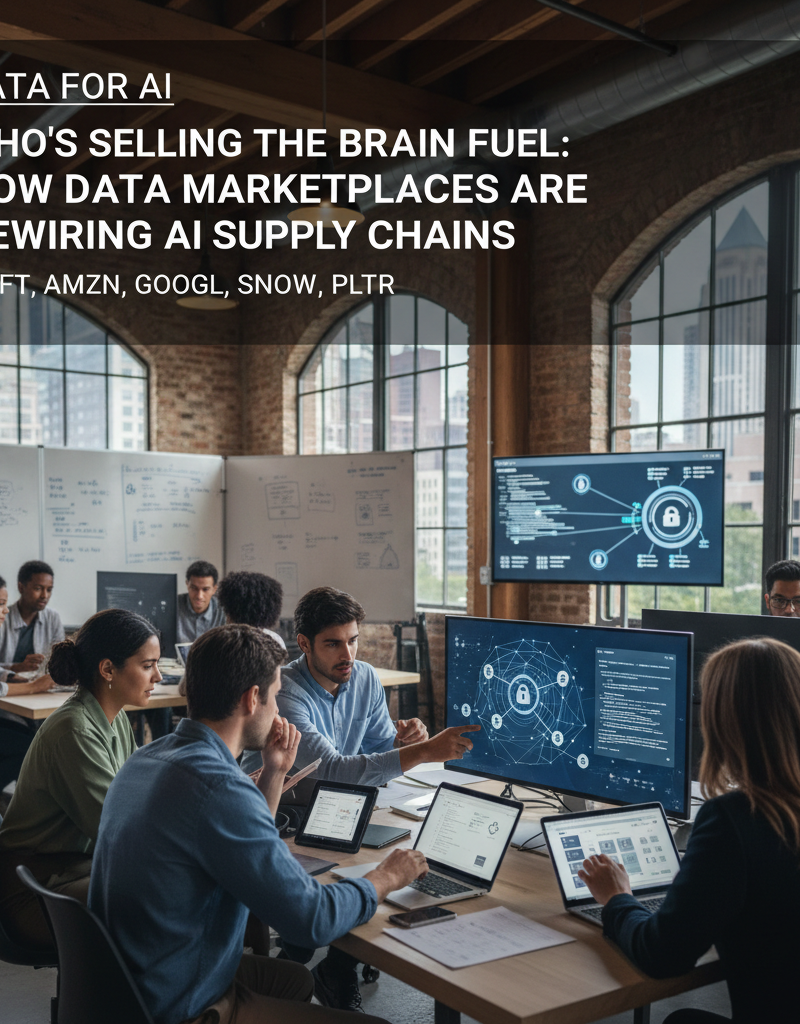
From web-scraping lawsuits to paid, privacy-preserving feeds and synthetic substitutes — firms are buying better data to train safer, more valuable models.

Smaller models, smarter chips and privacy-first apps are turning phones and PCs into autonomous AI hubs — and the ripple effects will hit chips, apps and search.