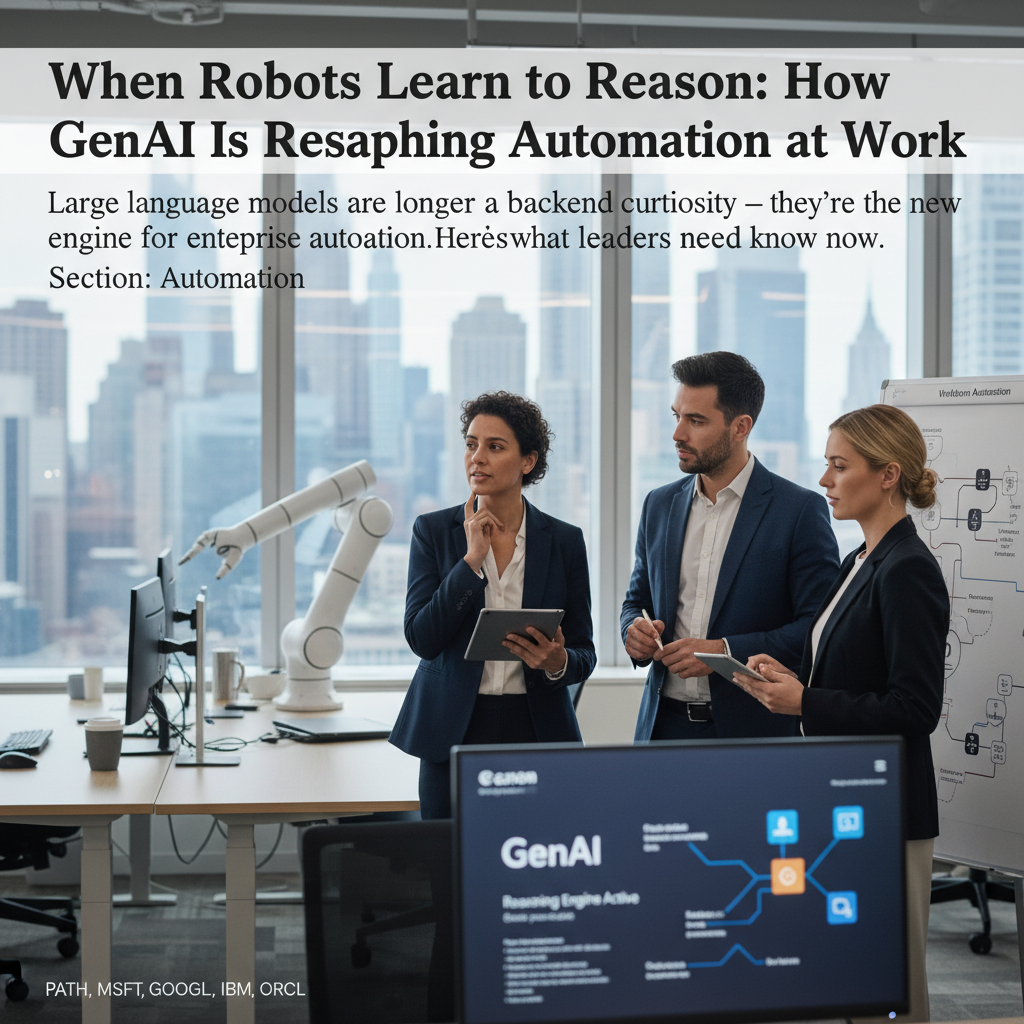
GenAI has gone from lab novelty to business-grade tool in under two years, and that shift is already bending the automation market. What used to be a stack of scheduled scripts and rule-based bots is becoming systems that can read and summarize contracts, draft emails, triage support issues and even suggest code changes — sometimes all inside a single workflow.
This is not just shaving minutes off tasks. It changes what we mean by automation.
Why this wave matters
- You can now automate judgment and pattern recognition, not only repetitive clicks. That pushes automation into knowledge work in a way previous waves did not.
- Pilots cost less. Between low-code platforms and pretrained models, the time from idea to visible result has shortened — which changes who can test and scale.
- Vendors are blurring together: RPA firms, cloud providers and incumbent software companies are embedding LLMs into orchestration tools. The market is consolidating around composable stacks.
Of course, opportunity brings real hazards. Models hallucinate. Data lineage becomes opaque. Regulators are paying attention. If leaders treat GenAI as a simple productivity plug-in, they will probably write a compliance and quality bill they have to pay later.
A short history for context
Automation has had false starts. Spreadsheets in the 1980s displaced clerical work but created new analytical roles. RPA in the 2010s automated UI interactions but remained brittle. What’s different now is a cognitive layer: systems that can reason across documents and context instead of only imitating clicks.
Concrete examples
- Claims processing: rather than routing by keywords, models can read claim text, infer intent and draft case summaries for adjusters.
- Customer support: hybrid bots can resolve first-touch queries and hand off with a concise rationale for the human agent, cutting handle time and easing training.
- Software development: code suggestions plus test generation speed iterations — but reviewers shoulder more responsibility for subtle security or correctness issues.
What executives should do this quarter
- Treat data pipelines as the primary automation asset. Bad inputs still produce bad decisions.
- Start a guardrails program: model evaluation, human-in-the-loop thresholds and audit trails that actually trace decisions.
- Track different KPIs: measure not only time saved, but error rates, regulatory exposure and how people are being redeployed.
- Hire for orchestration skills. The urgent role is not another bot builder or a stack of junior coders, but integrators who map processes end-to-end and stitch systems together.
A few counterpoints
- Small businesses will lag. The best GenAI automation tends to need clean data and disciplined processes — luxuries many SMBs lack.
- Not every task should be automated. Work that creates discretionary value or depends on negotiation and empathy can be harmed by overautomation.
The real point
GenAI is more than faster macros; it adds a cognitive layer that lets automation touch judgment-heavy work. Companies that invest now in data, traceability and sensible controls stand to gain. The rest risk building brittle systems that amplify mistakes.
If you run operations, treat the next six months as a window to pilot responsibly. Move fast, yes — but build traceable controls as you go. Those who balance speed with accountability will capture the productivity gains; others will end up rebuilding trust and processes when the inevitable errors surface.