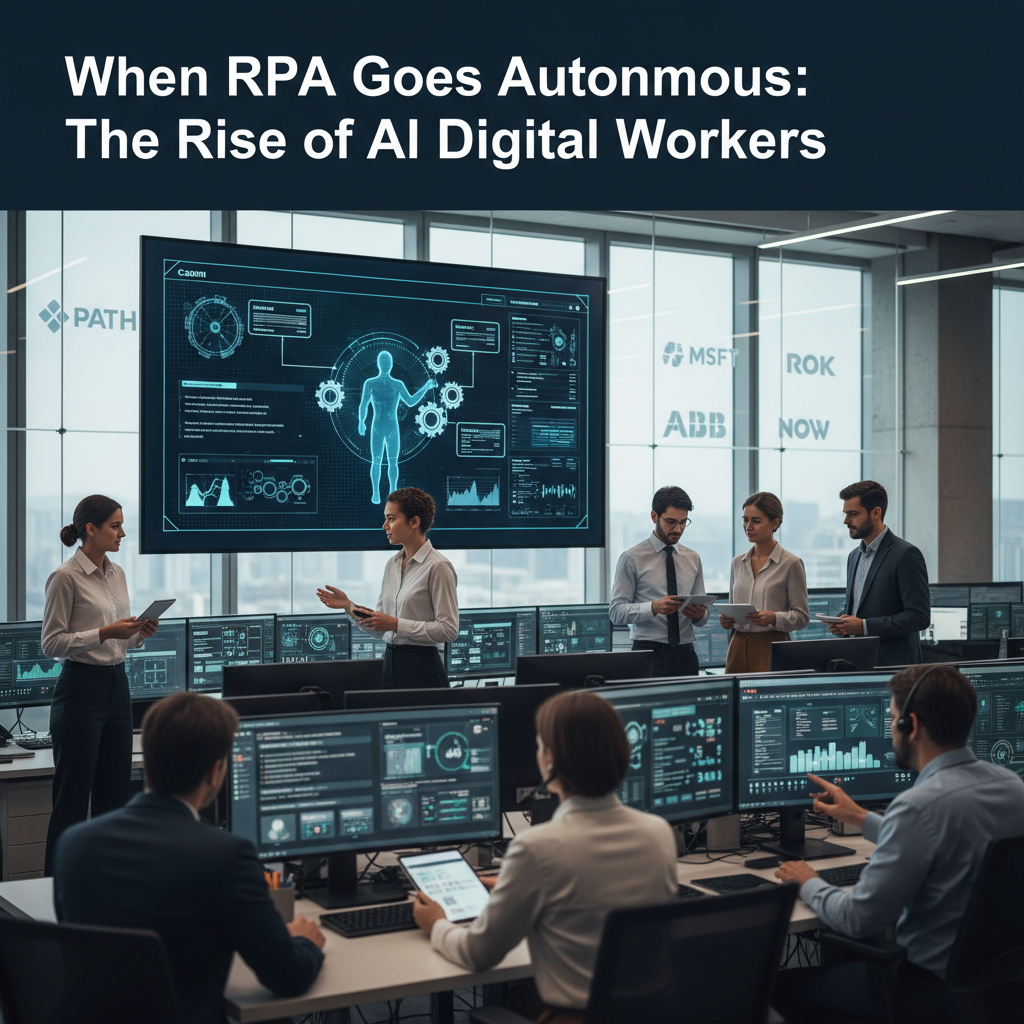
A short story you already know: RPA used to mean scripted button-clicking and form-filling. It cut down boring work, saved time, and gave rise to a cottage industry of orchestration dashboards. Now imagine those bots not just following fixed scripts but deciding when to escalate, drafting explanations for auditors, and negotiating exceptions with customers.
Call that autonomous RPA: a marriage of classic robotic process automation with generative models and lightweight agents. This isn't a sci‑fi promise. It's an operational shift happening quietly inside banks, insurers and shared-services centers.
Why this matters now
- Context, not just rules. LLMs let bots read emails, pull out ambiguous facts, and write human-facing messages — things rule-based RPA always stumbled over.
- End-to-end handling. Instead of dumping odd cases on a person, an agent can triage, summarize and often resolve exceptions without constant babysitting.
- Faster pilots. Early adopters report shorter pilot cycles because there are fewer brittle rule maps and less manual exception handling to design.
Concrete examples
- A mid-sized bank scrapped a three-step mortgage triage workflow. An AI agent now reads documents, spots missing disclosures and drafts outreach — fewer handoffs, faster cycles.
- AP teams use LLM-augmented bots to reconcile mismatched invoices, proposing likely suppliers and suggested memos that humans only lightly review.
- Compliance teams pair AI workers with observability tooling to unearth odd patterns and produce readable incident summaries regulators can actually parse.
Reality check — the catch
Autonomy is conditional. Models hallucinate. Performance drifts. Regulators are paying attention. So:
- Human-in-the-loop controls remain non-negotiable for high‑risk decisions.
- Observability, versioning and audit trails matter as much as model accuracy.
- Training data and prompt design now sit inside IT governance, not just R&D.
Who wins, who loses
- Winners: vendors that bake governance into their products, enterprises that standardize observability, and firms with repeatable, high-volume processes.
- Losers: teams that treat these tools as drop-in script replacements and skip change management.
Practical moves for this quarter
- Start with high-volume, low-brand-risk workflows: invoice processing, internal ticket routing, first-level support.
- Measure resolution accuracy and rework, not only time saved. That exposes hidden costs early.
- Build a staged escalation ladder: automated fix → suggested human approval → full human handling.
The longer run
Think of it like the jump from calculator to spreadsheet — a small interface shift that changed roles and workflows. Autonomous digital workers won't erase jobs overnight, but they will reorder which skills matter: judgment, data stewardship and orchestration over rote execution.
One blunt piece of advice: treat autonomy as a systems problem, not a single-model upgrade. The winners will stitch together models, RPA, governance and a nervous but adaptable workforce into something repeatable.
Expect quiet pilots now and broader operational rewrites within three years. If you work in ops, this is worth paying attention to.