Quieter than a press release, bigger than a version bump.
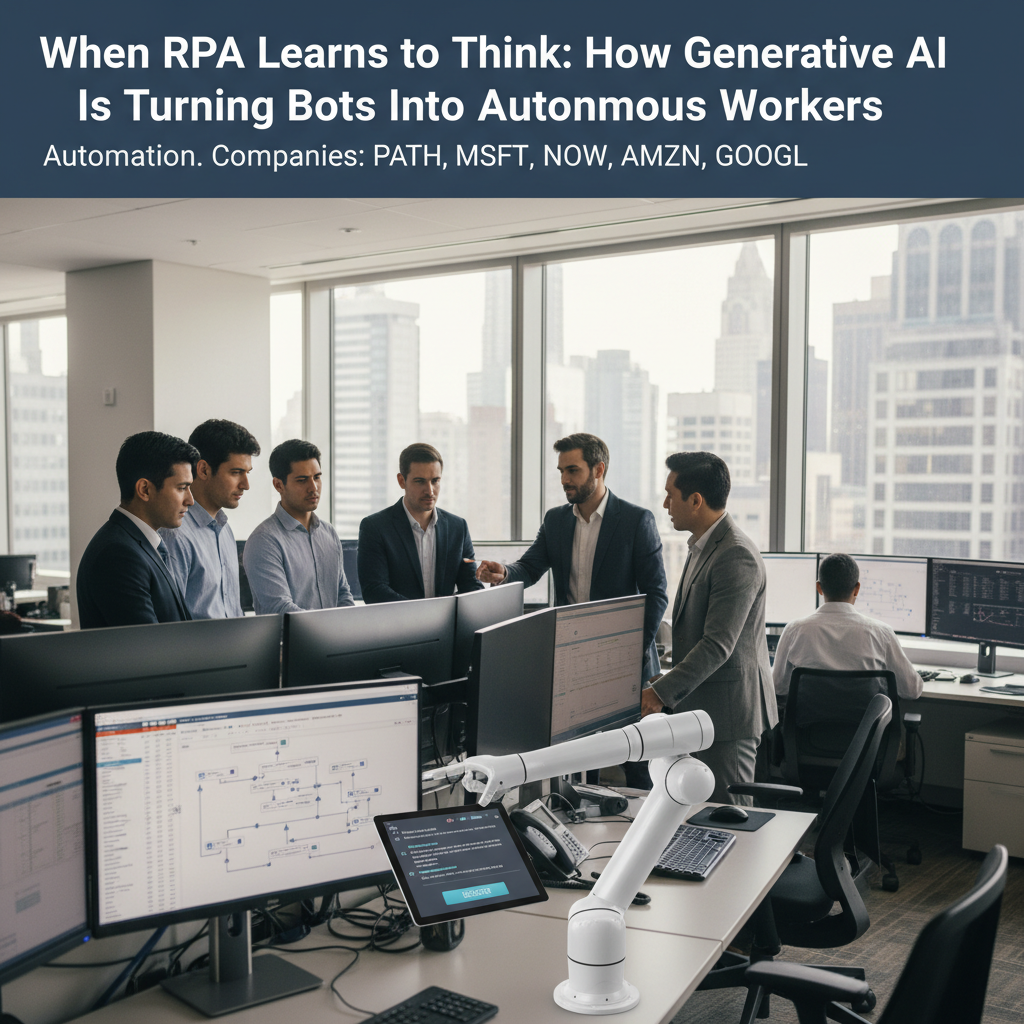
What used to be rule-bound RPA — brittle if-then scripts that click, copy and paste — is being retrofitted with generative models that infer intent, summarize policy and even make judgment calls. Call it hyperautomation 2.0, autonomous process agents, or just smarter bots. The change hits finance and operations fast, but unevenly.
Automation waves have always promised productivity and provoked anxiety. Think ERP rollouts in the 1990s: costly, unpopular, and eventually reshaping jobs and firms. What's different now is that same systemic impact combined with the speed of cloud SaaS and the creative reach of generative models. The outcome is more than marginal efficiency gains — it redefines what we consider routine work.
Concrete shifts worth watching
- Finance and accounting: month-end close and reconciliations are increasingly handled by multi-step agents that ingest invoices, reconcile ledgers and flag exceptions — and they produce narrative explanations, not just a laundry list of error codes.
- Procurement and contracts: AI-augmented bots can pull clauses, suggest redlines and route approvals, compressing cycle times from days to hours.
- Customer operations: conversational agents resolve more tickets end-to-end and escalate only the true edge cases.
These advances matter for firms that want faster decision cycles, but they carry real trade-offs. A CFO I spoke with likened the new bots to autopilots: superb in routine conditions, fragile when things go off-script. That metaphor points to three uncomfortable truths.
- Opacity: Generative layers can sound convincing while being wrong. In finance that can mean misposted entries or compliance gaps.
- Concentration: Vendors increasingly bundle models, workflow engines and data connectors, which raises lock-in risk.
- Workforce change: Mid-skill roles will morph faster than most training programs can adapt.
Still, history reminds us this is not pure displacement. Automation has often created higher‑skilled roles: controllers who validate models, analysts who manage agent portfolios, engineers building observability stacks. The economics are nuanced, not predetermined.
A practical playbook for leaders
- Start with narrow pilots that measure error rates, time saved and auditability, not just headcount impact.
- Build observability: logs, decision trails and human-in-the-loop checkpoints for any financial action.
- Set aside a reskilling budget focused on hybrid roles — model validators, automation designers and compliance integrators.
- Design to avoid single-vendor lock-in: standardize connectors and make process metadata exportable.
A loose rule of thumb: treat generative-enabled bots like semi-autonomous systems, not finished employees. They amplify strengths — and they magnify weaknesses. The winners will be the firms that pair bold pilots with rigorous governance and a realistic plan for changing human work.
Where this goes next
Expect a proliferation of prebuilt industry agents for close books, claims adjudication and procurement. Regulators will follow, and the first significant audit findings around AI-augmented processes are probably a matter of when, not if. For now the sensible stance is clear: don't fear the bots so much as manage them — quickly, transparently and with human judgment in the loop.