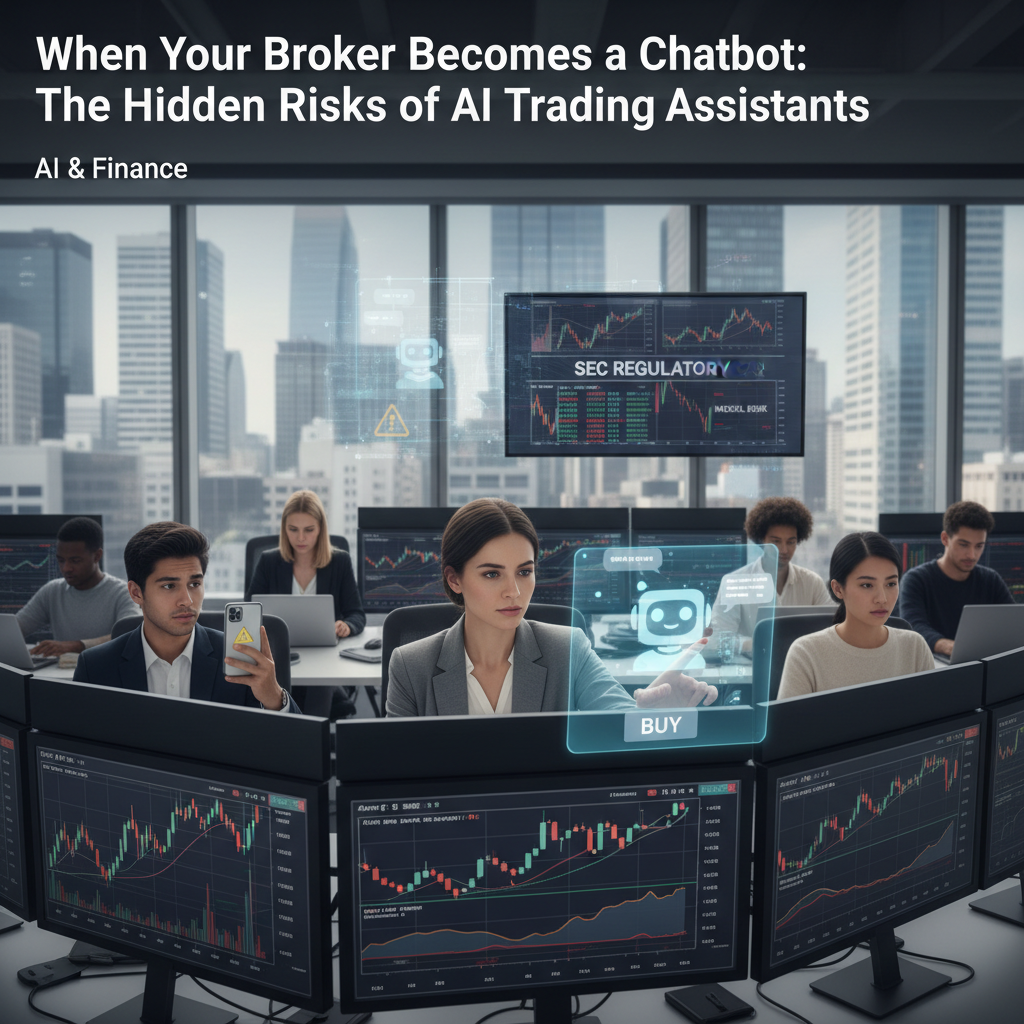
The pitch is hard to resist: personalized investing, an instant strategy, and a chatbot that explains market moves in plain English. Over the past two years a number of big brokers and fintech apps have quietly shifted from simple algorithmic nudges toward conversational, generative-AI assistants that suggest trades, build model portfolios, and even sketch tax-loss harvesting plans.
This is more than a new feature. It changes how retail order flow is created.
Why this matters
- These assistants put convincing, high-level analysis in front of millions of accounts with a single UI tweak. The gap between institutional quant work and everyday retail decision‑making narrows.
- The practical effect is faster, more synchronized decisions across a much larger pool of investors. That creates tighter feedback loops and a greater chance of sharp, short-term moves.
Think less human advisor and more social-app recommendation engine. The risk isn’t necessarily that the advice is awful. The bigger worry is mass coordination.
Historical context: a familiar pattern with a twist
Algorithmic strategies have surprised markets before. Think of the 2010 flash crash, when automated selling and thin liquidity produced a sudden plunge. What’s different now is a layer that’s been trained to produce persuasive narratives and to promote engagement as much as accuracy. Add push notifications, and small signals can spread like a meme.
There’s an echo of 2008 too. Back then, model assumptions about mortgages went largely unchallenged until they collapsed together. Today’s retail AI assistants could amplify similar blind spots if their training data or commercial incentives are off.
Concrete concerns regulators and investors should watch
- Model opacity. Many assistants are effectively black boxes. People may follow recommendations without knowing the assumptions or limits behind them.
- Herding and liquidity fragility. If assistants favor popular momentum plays, liquidity can dry up in unexpected market corners.
- Consumer protection. Are suggestions actually suitable for an individual’s risk profile? And who is responsible when an assistant nudges someone into a bad trade?
- Data bias and confident fabrications. Generative models can produce plausible-sounding rationales that are simply wrong.
There are real upsides
It’s not all downside. These tools can make investing less opaque, lower the cost of basic portfolio services, and help novice investors avoid obvious mistakes like failing to diversify. Many founders argue democratized advice is a net positive — and I tend to agree, in principle. The catch is the safeguards. Without them, the benefits are brittle.
Practical steps for investors
- Treat AI recommendations as one input among many. Don’t accept them as gospel; cross-check with fundamentals and independent sources.
- Watch for concentration signals. If many accounts or platforms are steering toward the same handful of securities, pause and reassess liquidity risk.
- Ask for transparency. Demand to know how models are tested, audited, and updated.
What to expect from regulators and the market
Regulators — SEC, FINRA, and state authorities — will accelerate guidance on algorithmic advice and model risk. Enforcement will probably focus on disclosure failures and suitability. Firms that document strong model governance will win trust; those that don’t will pay in fines and damaged reputations.
A practical posture
AI trading assistants are a watershed: they ease access to advice but also rewire market behavior. For curious retail investors the sensible stance is skeptical engagement — use the tools, but understand their limits. For firms and policymakers the urgent task is governance: clearer disclosure, rigorous stress testing, and defined accountability before a localized model error becomes a marketwide problem.
This is another phase of democratization. Without guardrails, democratization can start to look a lot like a stampede.