Why this matters now
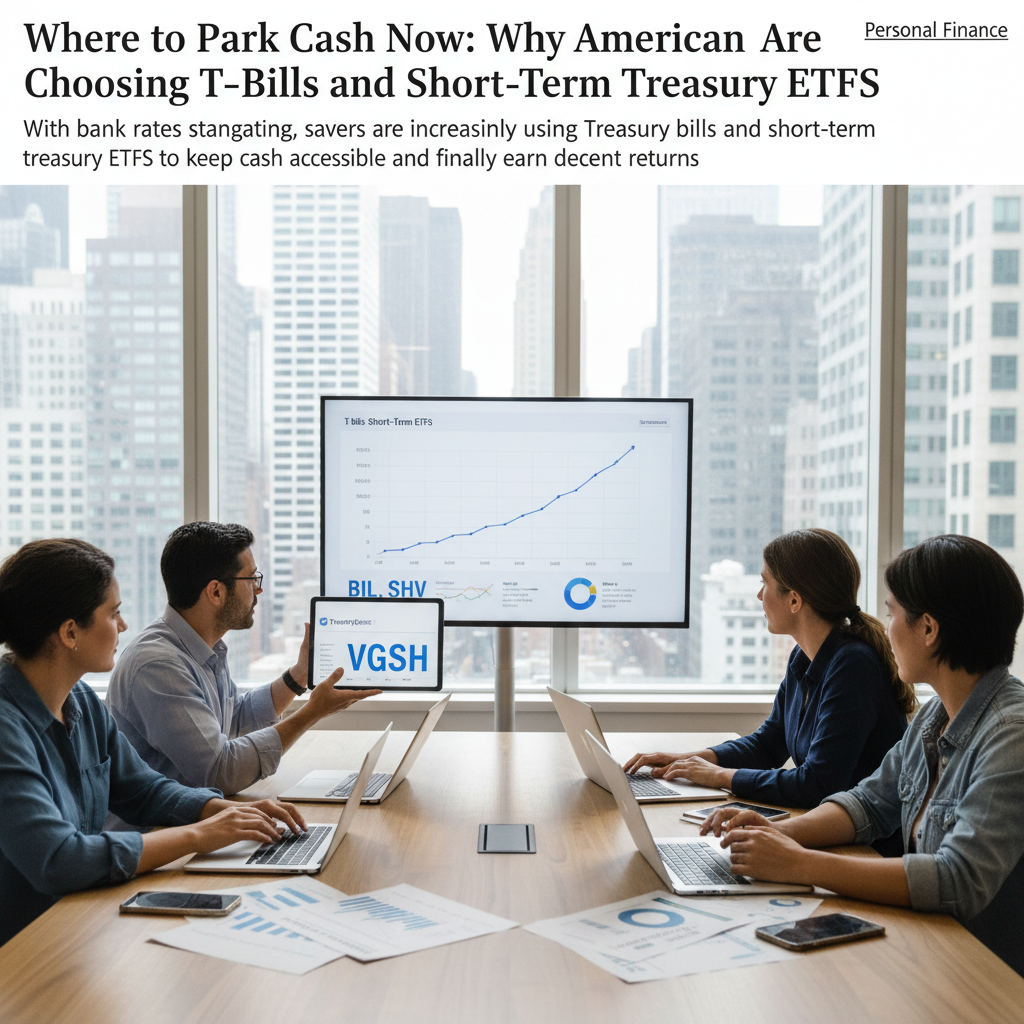
The way people hold cash is different than it was five years ago. Banks no longer have a monopoly on cash yields, and a growing number of Americans are finding that short-term U.S. Treasuries and Treasury ETFs can out-earn traditional savings accounts while keeping money liquid and safe.
Short version
If you want safety, liquidity, and a yield that actually beats many online savings accounts, short-dated Treasuries and their ETF wrappers deserve a look. They are not flawless, but they are underused tools for managing cash.
What people are doing — and why
- Parking emergency funds and large cash buckets in Treasury bills (T-bills) via TreasuryDirect or through brokers.
- Buying short-term Treasury ETFs to keep cash accessible at market prices and avoid manual rollovers.
- Sweeping idle balances into ultra-short bond funds instead of leaving them in low-rate checking.
This is not a bet on corporate credit. T-bills are short-term government IOUs with very low credit risk and limited price volatility. For many households, that combination makes them a smarter place to keep cash than low-yield deposit accounts.
How this stacks up against alternatives
- Online savings and high-yield checking: Comfortable and FDIC-insured, but their yields can trail T-bill-driven rates.
- Money market funds: Comparable in function, though some funds hold private paper and do not get the state tax break Treasuries do.
- Short-term bond ETFs: May offer slightly higher returns, but they have more price sensitivity than a T-bill held to maturity.
A simple example
Say you have a $50,000 emergency fund. If short-term T-bills yield 4% and your online savings earns 1.5%, the gap is about $1,250 a year before taxes. Not life-changing, but meaningful for conservative savers — and without locking up cash for long.
How to access them (practical steps)
- Buy direct at TreasuryDirect.gov to avoid middleman fees; you hold the actual T-bills to maturity.
- Use a broker for convenience and sweep features; ETFs give intraday liquidity and automatic trading.
- If you prefer the stock-like route, buy short-term Treasury ETFs; they trade like any other ticker.
Tax and risk notes
- Interest from Treasuries is exempt from state and local income taxes, which matters in high-tax states.
- Reinvestment risk: short maturities mean you’ll be making rollover decisions frequently as yields change.
- Inflation risk: short-term cash yields can lag inflation over time, so for long-term goals you’ll want a broader plan.
When this is not the right primary strategy
- If your objective is long-term growth, equities remain the better way to seek higher returns.
- If you need a single-bank, FDIC-backed guarantee for convenience, remember brokered Treasury holdings don’t come with the same deposit protections.
A human wrinkle
What’s interesting is how this feels: a quiet migration. Households are acting more like institutional cash managers — sensible, a little dull. Moving money from a branded checking app into a short Treasury ETF rarely feels like investing, yet it can add a few hundred or a few thousand dollars a year to household income without taking market bets.
Practical takeaway
If your priority is preserving capital and keeping cash available while squeezing out better returns than typical bank rates, short-term Treasuries and Treasury ETFs are worth considering. Start small, learn the mechanics, and treat this as a core cash-management option, not a growth strategy.
Next steps
- Check current short-term T-bill rates or ETF yields at your broker.
- Pilot with a portion of emergency cash — many people start with 10–30%.
- Keep records and note state tax treatment when you file returns.