The short story
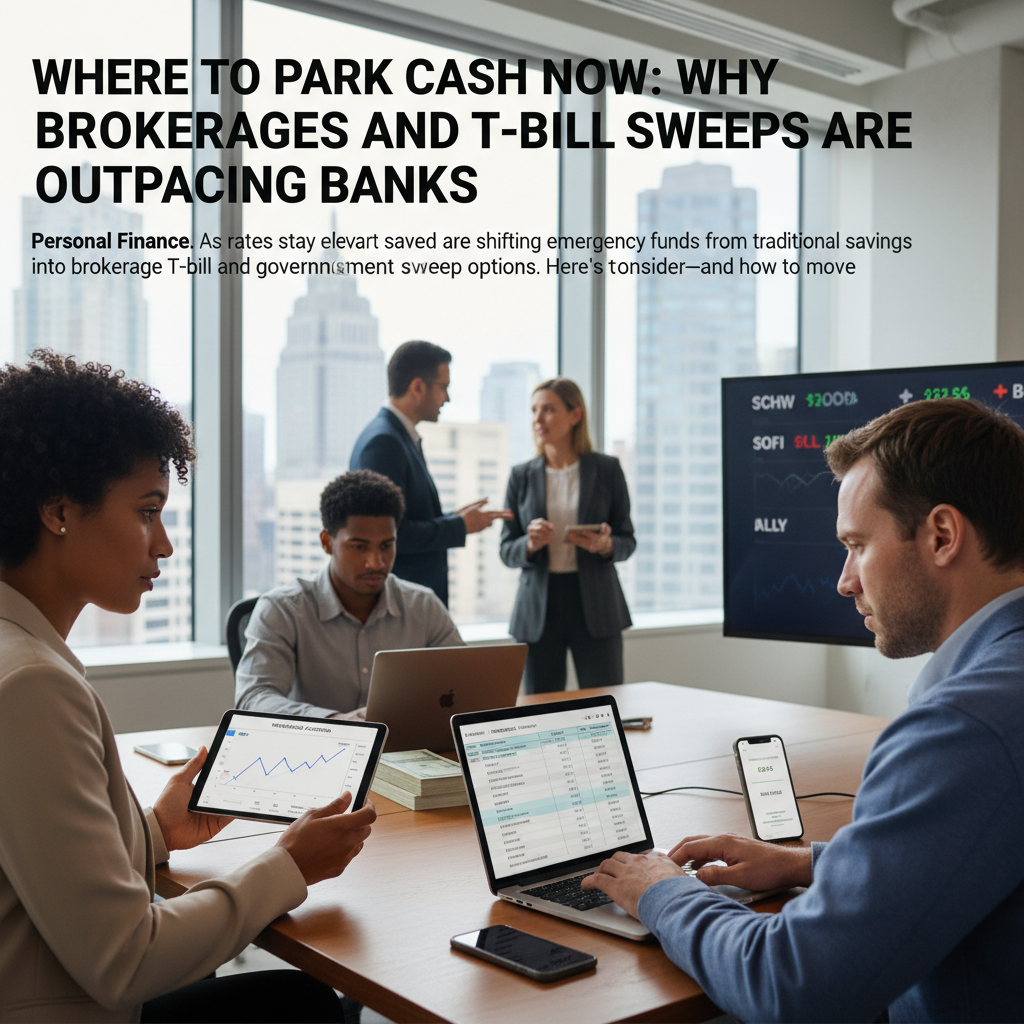
The era of trivial interest rates is over, and where you park cash matters again. Banks still advertise tidy APYs, but more brokerages and fintechs now sweep idle cash into short Treasury bills or government money‑market vehicles that often pay as much or more, with comparable safety.
Why this matters now
- The Fed left short‑term yields higher for a long stretch. That makes ultra‑short Treasuries genuinely appealing for emergency reserves.
- Brokerages can execute near‑instantly, automate ladders and let yields move with the market. Banks are still bound by their deposit‑pricing playbook, which moves slower.
- Protection is different depending on the vehicle. FDIC covers bank deposits; SIPC protects brokerage assets — but not every cash sweep is identical. Read the fine print.
How it works in practice
- Liquidity: High‑yield savings wins for truly instant, no‑questions withdrawals. Treasury sweep accounts and government money‑market funds are very liquid too, but expect settlement windows or minimums sometimes.
- Safety: Short T‑bills are about as close to risk‑free as you can get. FDIC insurance is invaluable for smaller balances and for people who like the mental simplicity of guaranteed coverage.
- Yield: Brokerage sweeps into government funds or a direct T‑bill ladder will often outpace advertised savings rates, especially over 1–12 month horizons.
What's interesting here is the behavioral side: people pay for simplicity. Some accept slightly lower return for the peace of mind that comes with one‑click withdrawals and a familiar bank brand.
A quick decision map
- 0–3 months (true emergency fund): keep it in a high‑yield savings account or an FDIC sweep for immediate access. No fiddling.
- 3–12 months: a T‑bill ladder inside a brokerage or an automated government sweep often gives better yield with modest duration risk.
- 12+ months: short‑duration bond funds or a blended approach can squeeze more return but you should be ready for some modest volatility.
Real tradeoffs people actually mention
- Complexity versus return: The extra yield from a T‑bill ladder can be meaningful, but it requires a few more operational steps. Many retirees prefer the psychological simplicity of FDIC coverage — and that matters.
- Taxes and reporting: Interest from Treasury bills is exempt from state income tax; money‑market distributions may not be. For larger balances, this changes the math.
- Platform risk: Small fintechs offer attractive products, but sweep arrangements and counterparty setups vary. Always check disclosures.
Concrete steps to act
- Inventory where your cash sits and confirm the insurance type: FDIC, SIPC, or government‑backed instruments.
- Choose by timeframe using the decision map above.
- If you plan to use a brokerage, test the settlement and withdrawal process with a small transfer before moving your whole emergency fund. You want to know how fast money actually moves.
- Consider a short ladder of T‑bills (30–90–180 days) or an automated sweep that rebalances frequently.
The point
This isn’t about chasing every basis point. It’s about matching the right vehicle to your timeframe and how much operational juggling you want to tolerate. For many people, a hybrid approach — FDIC for the core emergency pot and a brokerage T‑bill sweep for the remainder — hits the best balance of liquidity, safety and yield. It’s pragmatic, not exotic.
Pedro Marini