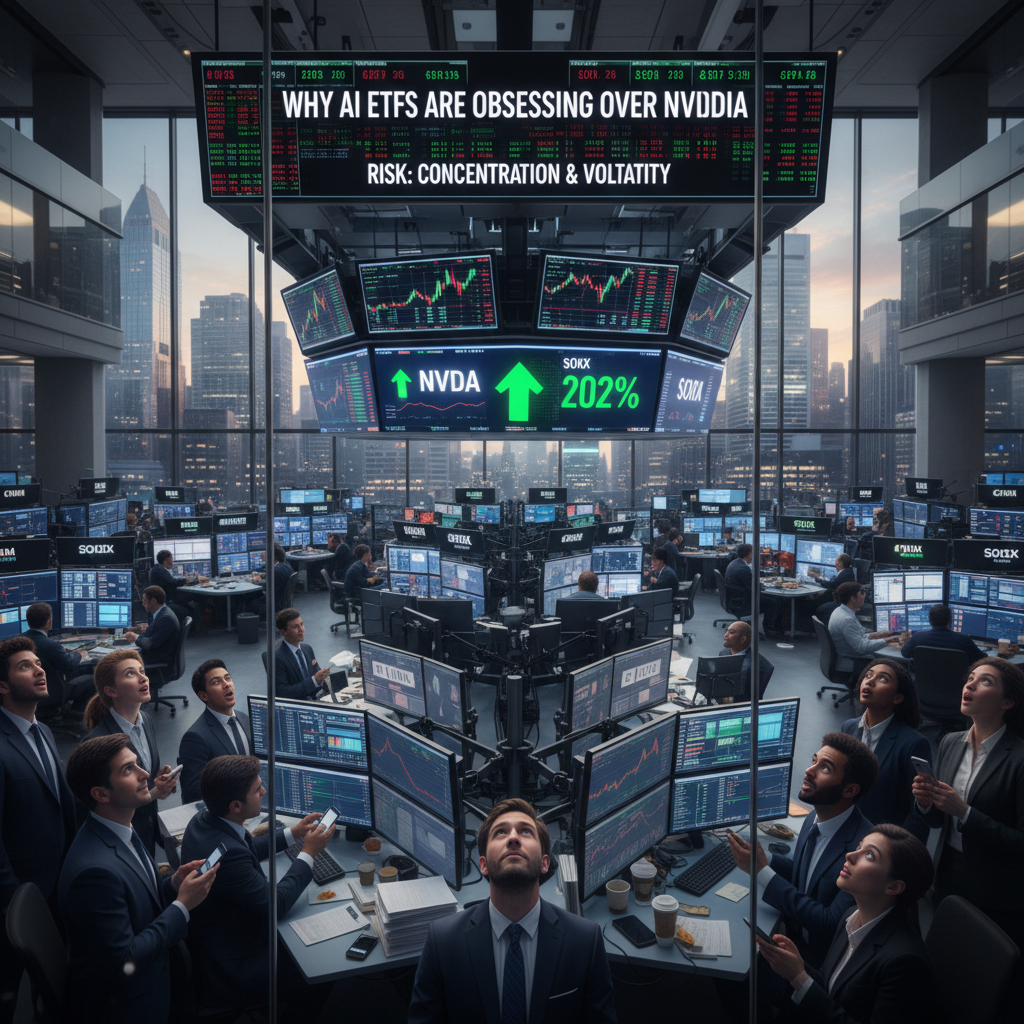
The story people tell is simple: buy the leader. After Nvidia became the face of generative AI, a flood of AI- and semiconductor-branded ETFs pushed the chipmaker into the largest weights. That concentration has the feel of momentum on steroids — thrilling on the way up, brutal if sentiment shifts.
What’s actually happening
- Many AI-themed ETFs now count Nvidia among their biggest holdings. In some funds a single-name stake tops 10% of the portfolio, which turns Nvidia from an idea into a position that can move markets.
- Retail attention and social media chatter speed flows. ETFs must buy what investors want; that amplifies winners and can paper over fragile internals until they crack.
- What’s interesting is how mechanical this becomes: creation/redemption flows force purchases, and purchases push prices, which then attract more flows. It’s self-reinforcing until it isn’t.
Why this matters beyond headline returns
Concentration risk is not just a textbook label. When a few mega-caps dominate a theme you get real, tangible problems:
- Idiosyncratic shock: a missed guide, a supply hiccup, or a regulatory surprise can shave double-digit points off an ETF that looked diversified on paper.
- Liquidity and slippage: big, rapid inflows force managers to buy shares quickly, sometimes at incrementally higher prices.
- Crowded exits: on the downside, passive flows can become a feedback loop — selling begets more selling.
Think back to late-1990s tech mania or the FAANG dominance of the 2010s. Different plumbing, same trade-off: spectacular gains with hidden fragility.
Counterpoints and nuance
- Not all AI ETFs are clones. Some use wider baskets, some tilt to semiconductors, others favor software and cloud providers. Look at the top 10 holdings and overlap before deciding.
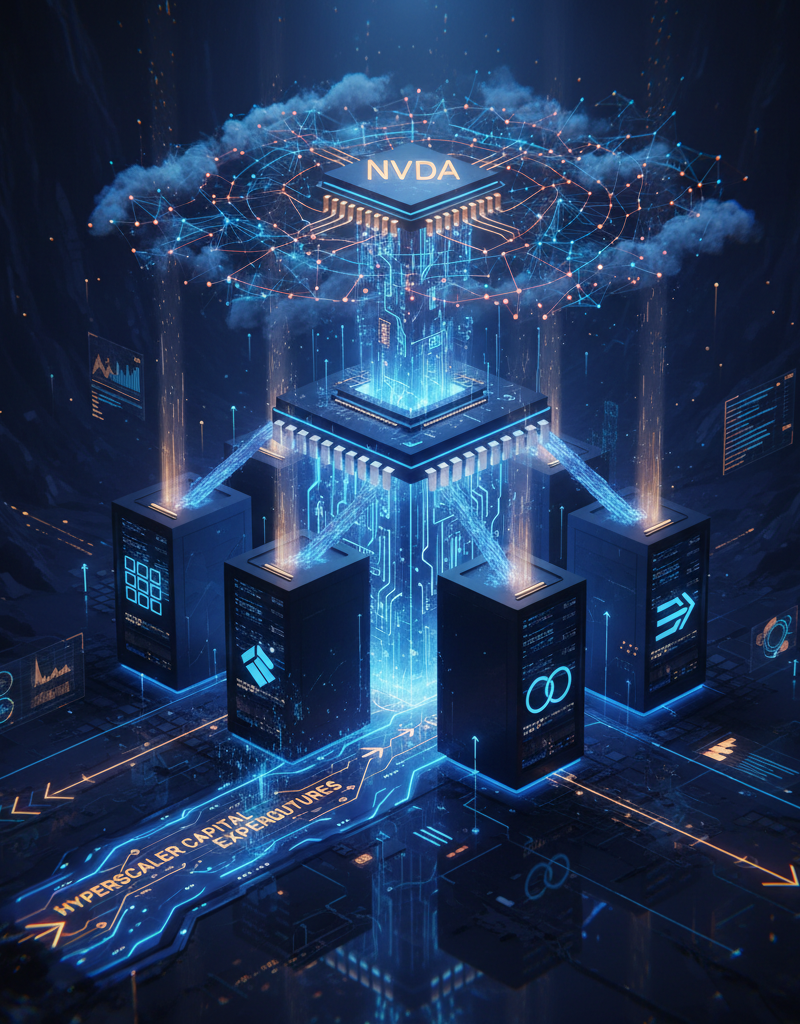
- Nvidia’s grip on GPUs and data-center AI is a substantive, structural story — not only hype. For long-term believers in the AI thesis, some concentration can be rational.
- Smart active managers and index approaches that cap single-name weights can preserve exposure while reducing stock-specific risk.
Practical moves for retail investors
- Audit the holdings: check top-10 weights, expense ratios, and rebalancing rules. If one name is 10% or more, ask why it has to be that big.
- Trim or ladder exposure: stagger buys instead of dropping a lump sum into the highest-momentum vehicle.
- Mix your vehicles: pair thematic AI ETFs with broad tech or semiconductor funds (or select individual stocks) to avoid accidental duplication.
- Consider alternatives: active funds, factor-tilted ETFs, or ownership of key suppliers rather than the poster child.
A short, candid view
This is not a recommendation to abandon the AI story. Nvidia and a few peers have structural advantages that justify higher valuations for some investors. But piling the entire theme into one name turns a thematic bet into a concentrated equity wager.
If you own AI ETFs, do the homework most buyers skip: read the holdings, understand creation mechanics, and remember the same crowd that fuels a rally can accelerate a fall. A little skepticism now can save you from a lot of volatility later.