The new industrial lease
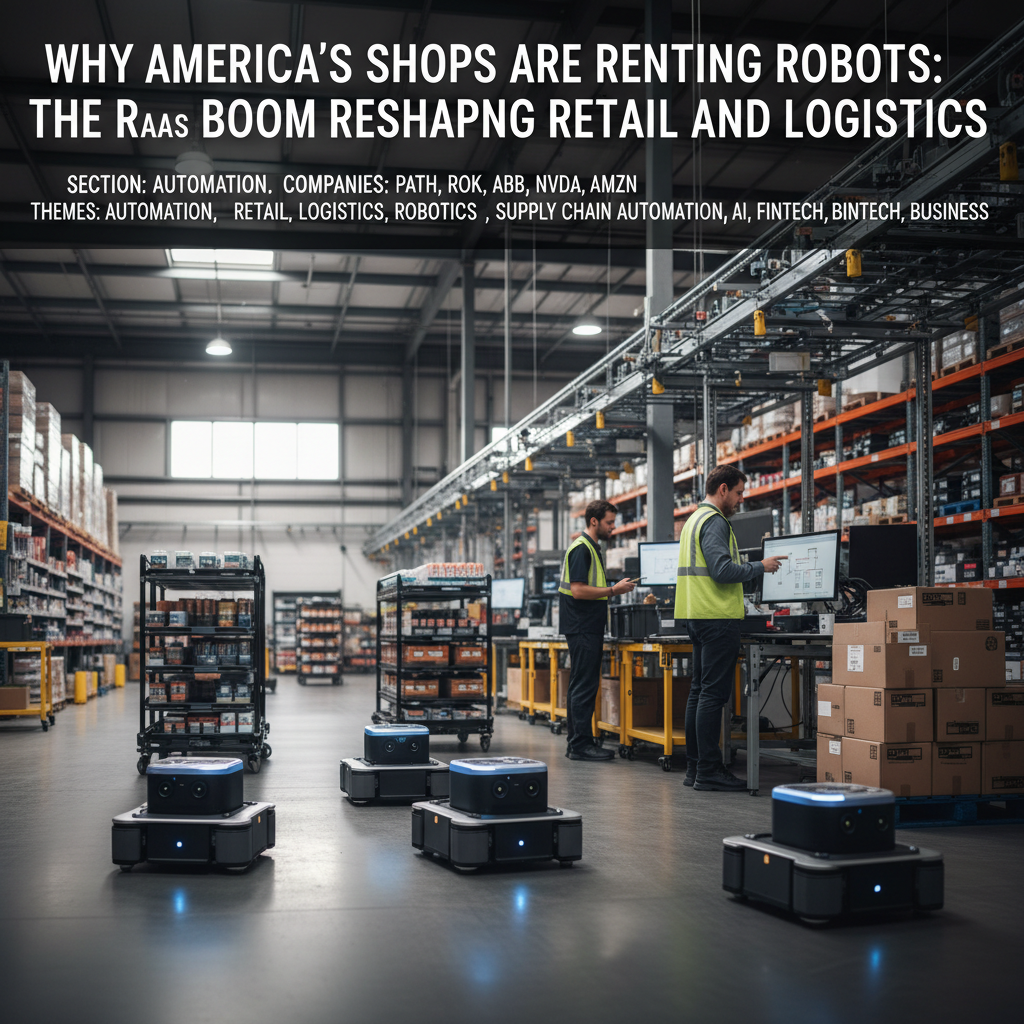
Small retailers used to think automation meant a forklift, a conveyor belt and a seven-figure bill. That image is fraying. A wave of robotics-as-a-service — robots you subscribe to, not buy — has quietly lowered the entry cost for automation. Suddenly a regional grocer, a third-party logistics provider or a neighborhood pharmacy can pilot warehouse robots without blowing up the balance sheet.
Why this moment matters
- Cheaper sensors, better orchestration in the cloud, and a post-pandemic squeeze on last-mile costs finally make rented robotics practical.
- Moving from capex to opex calms many CFOs: robotics become a predictable monthly line item rather than a risky capital project.
- Vendors now bundle software updates, maintenance and integration so an automation rollout looks less like a bespoke engineering program and more like a service you plug in and tweak.
What's interesting here is the combination of financial and technical changes. Alone, neither would have flipped the market. Together, they do.
Real deployments, not vaporware
- Amazon absorbed Kiva years ago and set an expectation: automation should evolve incrementally, not arrive as a single monumental build.
- Kroger and others are partnering with micro-fulfillment providers to compress store-to-door time and shave per-order labor.
- 3PLs are offering plug-and-play systems to e-commerce brands that can’t justify a custom fulfillment center.
These are practical experiments—some succeed spectacularly, some fizzle—but they’re tangible.
Business implications — winners and warning signs
- For small and midsize retailers: faster pilots, faster learning. You can stand up a robotic picking cell in a suburban warehouse for a few months and walk away if it doesn’t pay.
- For automation vendors: recurring revenue and stickier customers, yes. Also higher service costs and constant pressure to demonstrate uptime and quarterly ROI.
- For workers and communities: change accelerates. Routine pick-and-pack roles shrink; maintenance, monitoring and data ops grow. The catch is those new roles don’t always appear in the same towns where jobs were lost.
The social and geographic friction here tends to be under-discussed.
A skeptical counterpoint
RaaS promises flexibility but introduces vendor lock-in and operational complexity. Rent a fleet and the supplier hikes prices or retires a platform, and migration is painful. Integration with legacy warehouse management systems, telemetry bandwidth, and SLA exposure during peak season all produce real, often-hidden costs. In practice the choice isn’t only financial; it’s about dependence and migration risk.
What investors should watch
- Margin trends at public automation names: recurring revenue smooths predictability, but service and maintenance can compress gross margins.
- Retail chain partnerships with specialist providers—these pilots often foreshadow broader rollouts.
- Edge compute and GPU suppliers: as vision and AI-driven picking become standard, chip makers quietly matter more than the robot bodybuilders.
Expect noisy signals. A single pilot can look great or terrible depending on site selection, integration effort and peak demand timing.
A brief historical comparison
This feels like the SaaS moment from a decade ago. Licensing and heavy upfront projects gave way to monthly contracts. The logic is similar, but the physical world adds frictions software never faced: wear and tear, spare parts, factory floors and labor relations. Those factors make the transition messier than the software analogy implies.
The upshot
RaaS is not a cure-all. It is an accelerant. For retailers and logistics providers that need agility, renting robots makes automation reversible, affordable and iterative. For investors, recurring revenue deserves attention—just read the fine print on service economics. The next earnings season should make it clearer whether RaaS actually improves margins or merely shifts costs from capital to operations.
Quick takeaways
- RaaS lowers the barrier to automation and speeds pilots.
- It creates recurring revenue but raises service and integration costs.
- Labor disruption is real; reskilling and geographic shifts will follow.
If you run a regional chain or cover retail logistics, start asking whether your next automation wave will be bought, built or rented. Renting looks safer at first glance, but the long game is still about integration and people, not just the machines.