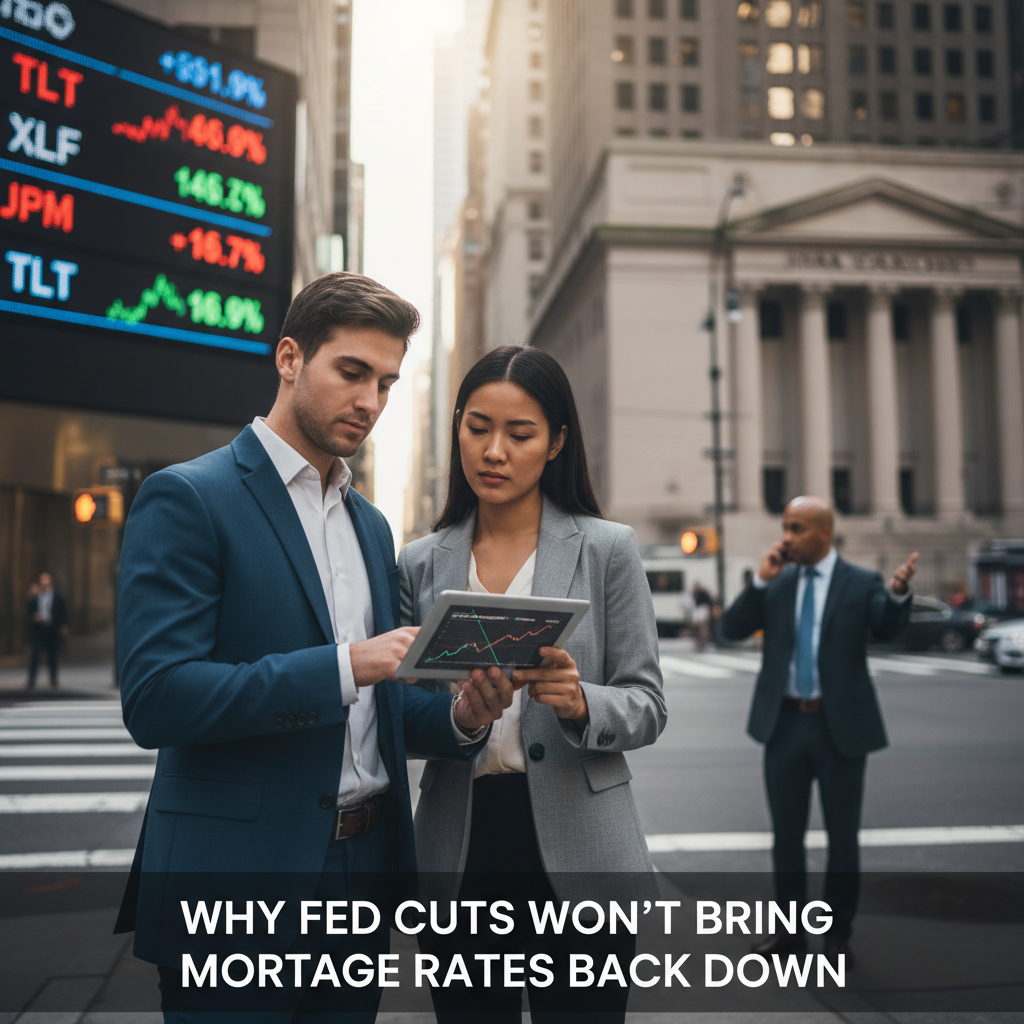
The disconnect is real. Even when the Federal Reserve telegraphs rate cuts, long-term borrowing costs — especially 30-year mortgage rates — often refuse to follow in lockstep. For consumers expecting instant relief, it can feel like being promised a refund and handed store credit instead.
Short rates versus long yields
The Fed directly controls the overnight policy rate. That’s the traffic light for short-term rates. Long-term yields, which anchor mortgage pricing, move more slowly — think freight trains, not stoplights. They respond to a different mix of forces: how investors see future inflation, the extra return demanded for holding long bonds (the term premium), how many Treasuries are being issued, and how hungry global investors are for duration.
- Inflation expectations: If markets believe inflation will stay high, long yields rise even if the Fed says cuts are coming.
- Term premium: Investors want compensation for uncertainty and potential volatility. That premium widens when markets feel crowded, illiquid, or jittery.
- Treasury issuance: Bigger deficits mean more bonds. If buyers aren’t there, yields drift up.
- Mortgage-backed securities mechanics: MBS investors face prepayment and credit risk. If they demand a higher margin, mortgage rates climb irrespective of Fed guidance.
What’s interesting here is that these forces don’t respond on a calendar. They behave like opinions — slow to change and easily nudged by new information.
Why a Fed cut may not lower your mortgage
There are practical choke points between a Fed pivot and the rate you sign on for:
- Consumer rates reflect wholesale funding costs, capital rules and lenders’ balance-sheet needs, not only the Fed funds rate.
- Long yields price in growth and inflation years out, not next month’s committee statement.
- If MBS liquidity dries up or the term premium widens, mortgage rates can stay stubbornly high even as short rates fall.
Imagine the Fed is forecasting a cool front tomorrow. If global weather systems are still warm, your neighborhood might never actually see the chill.
When easing helps — and when it won’t
Easing still matters. Cuts lower short-term borrowing costs, which eases pressure on credit cards, small-business lines and adjustable-rate loans. If markets calm and liquidity improves, banks may feel safer to lend.
But the size and timing of relief for homeowners depend on markets and fiscal realities as much as Fed talk. A cut can be necessary to loosen conditions, but it isn’t always sufficient.
A bit of history
After the Great Financial Crisis, quantitative easing kept long rates low for years despite policy rates near zero. More recently, higher policy rates combined with the Fed shrinking its balance sheet have made long yields far more sensitive to supply and sentiment. Monetary tools behaved differently in that low-rate era than they do now — lessons to remember rather than assumptions to repeat.
Practical steps for borrowers and homeowners
- Lock a rate when the offer suits you. Don’t bet the house on headline Fed talk.
- If you expect to move or refinance within a few years, shorter fixes or ARMs can make sense.
- Improve credit and lower your loan-to-value to get better pricing.
- Watch MBS spreads and Treasury yields, not just Fed funds futures.
A closing thought
Fed moves are an important link in the chain, but they don’t write the whole story. Markets, issuance and investor psychology often decide how much of a cut actually trickles down. I tend to think of monetary policy as a set of levers with lag times; expecting immediate pass-through from one lever to every corner of the market underestimates how interconnected — and stubborn — finance can be.