Short answer
The Fed is unlikely to start cutting on the timetable markets have priced in. Investors have been betting on several cuts; the data and the mechanics of policy suggest a slower, more cautious approach — services inflation, a still-tight labor market, and elevated mortgage costs are all conspiring to keep rates higher for longer.
What changed
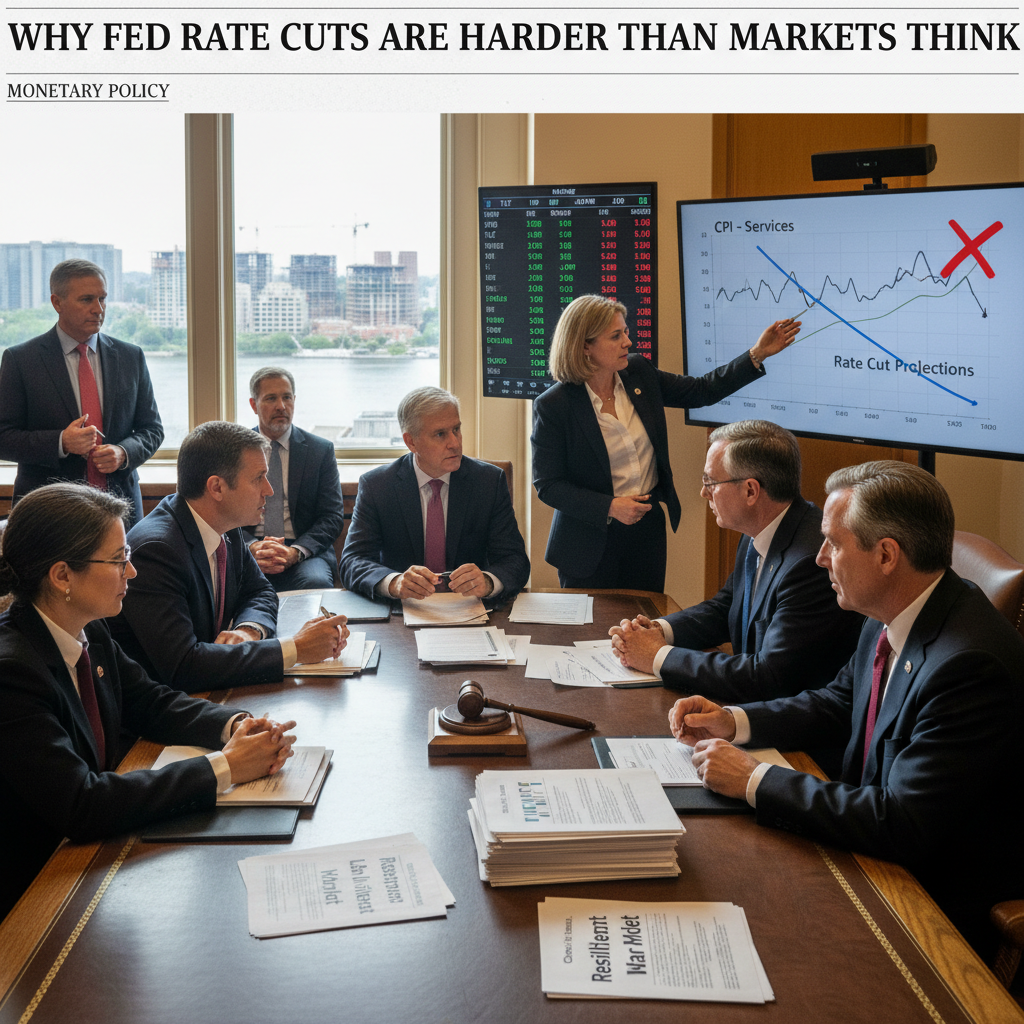
- Services inflation is stickier than the headline numbers suggest. Goods prices have eased, but services — many of which are labor- or housing-intensive — keep showing persistence. That makes it harder for the Fed to justify easing.
- Employment is tight. Wage growth has cooled from its pandemic-era highs, yes, but not enough to remove upside inflation risk in core areas.
- Housing and mortgage rates amplify policy effects. High mortgage costs keep shelter inflation elevated and make consumers more rate-sensitive.
Why markets keep getting this wrong
Market models are excellent at extending recent trends, and that leads investors to price cuts after a single soft CPI print. But the Fed is threading a needle between growth and inflation. History teaches caution: rate cycles cut too soon have often been followed by reaccelerating prices, forcing central banks back into hikes. Think early 1990s and the mid-2000s. Not saying the Fed will necessarily misstep, just that they are behaving as if avoiding that mistake matters.
Practical implications for markets and households
- Fixed income: Long-duration bonds rerate fast when cuts are assumed. If cuts are delayed, long Treasuries and long-duration ETFs look vulnerable. Short-duration bills provide better protection.
- Banks and financials: A flatter curve squeezes net interest margins for some institutions, but higher-for-longer rates can actually help banks that locked in cheap deposits. Expect divergence across business models.
- Mortgages and housing: Higher monthly payments for longer time horizons mean shelter CPI stays elevated, which in turn supports the Fed’s patient stance.
What could force cuts sooner
A few clear scenarios would change the calculus quickly:
- A marked slowdown in hiring with wages rolling over.
- A sharp drop in consumer demand as credit tightens.
- An external shock that dents growth expectations.
Any of those would push markets to price cuts rapidly, and the asset classes punished by a delayed pivot would likely rebound.
What to watch next week
- Core services inflation excluding housing — look for clues on underlying price pressure.
- Labor-market signals beyond the unemployment rate: job openings, wage trends.
- Fed communications for any tilt away from strict data dependence toward more dovish guidance.
Where this leaves you
Stop treating Fed cuts as a given and stop positioning like they’re guaranteed. The central bank seems more willing to accept slower growth than to risk a replay of past inflation mistakes. That argues for positioning around rate stability: tactical exposure to short-duration bonds, select financials that can benefit from higher rates, and caution on long-duration growth names.
This is not a call to panic. It is a call to recalibrate. Monetary cycles reward patience; markets have a way of forgetting that — until they don’t.