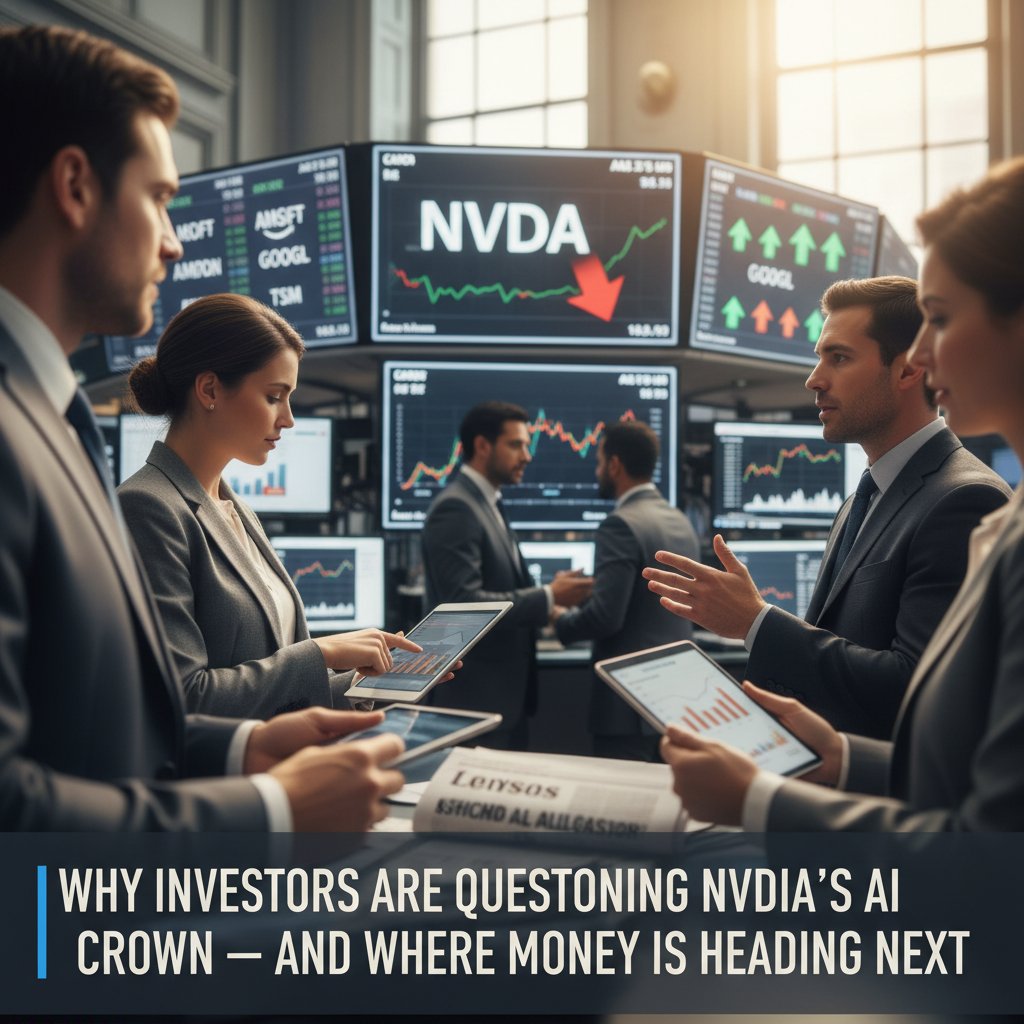
Nvidia’s surge is half market story, half technical inflection. Its GPUs sit at the center of a feeding frenzy: they train and run generative models, hyperscalers are placing huge orders, and a handful of AI-focused ETFs have become almost single-stock plays. That concentration is a neat narrative. It’s less comfortable for long-term portfolio construction.
A few scenes I’m watching closely
- Hardware first, software later — for now. The rally started with raw compute demand; training and inference eat GPUs. But commercial value is gradually moving up the stack into software, tooling, and cloud services — the places where margins and recurring revenue actually compound.
- ETF concentration is bending flows. Several passive products have outsized weightings in Nvidia. That channel funnels both retail and institutional capital into one name and tends to amplify moves, up and down.
- Supply-chain and geopolitical chokepoints remain. Advanced nodes, advanced packaging, and TSMC capacity are real constraints. The best design still depends on fabs, EUV lithography and trade policy — any hiccup there propagates quickly.
Why this matters beyond headline multiples
When one stock becomes the stand-in for an entire theme, investment choices get compressed. Buy or don’t buy Nvidia — and you feel like you own AI. That makes winners narrower and correlations higher, even among companies that otherwise operate differently. For portfolio builders, that’s more than a valuation quibble; it changes how risk shows up.
Who stands to gain as the pieces shift
- Microsoft (MSFT) — integrates cloud and model work into enterprise software. Recurring software economics let it monetize models without matching every dollar of GPU spend.
- Amazon (AMZN) — AWS is the infrastructure engine. Its differentiated pricing and moves into custom inference silicon make it an underrated revenue story.
- Alphabet (GOOGL) — owning search and ad flows gives unique monetization levers as generative interfaces change user intent.
- AMD (AMD) — a competitive GPU/accelerator alternative; typically lower margin but higher volume, which matters at scale.
- TSMC (TSM) — the backbone of chip production. If chips are important, fabs matter more; node leadership is a strategic advantage that’s hard to substitute.
Common blind spots investors miss
- Hardware traps versus software traps. A hardware leader can be leapfrogged by a new architecture; a software leader can be undone by shifting business models. Betting only on one side is a fairly binary bet on both technical progress and commercial continuity.
- The calendar effect. Earnings beats or flashy chip demos make headlines. Durable returns tend to come from contracts, steady software adoption and service margins that compound quietly — not from single-event hype.
A practical way to think about exposure
- Divide exposure into two buckets: compute producers (chips, fabs, component suppliers) and value captors (cloud platforms, AI software, enterprise services).
- ETFs are fine for theme exposure, but check how concentrated they are — look at the top five holdings yourself.
- For stock selection, prefer companies with revenue visibility beyond the next cycle: long-term contracts, recurring software revenue, proprietary data advantages.
A slightly contrarian closing thought
Nvidia may keep setting the market’s tempo for a long time. Still, markets rarely reward narratives that funnel every path to victory through one ticker. A smarter tack is to acknowledge Nvidia’s central role while also allocating to the quieter nodes that actually capture and compound AI-driven value.
This is analysis, not investment advice. Balance ambition with a margin of safety.