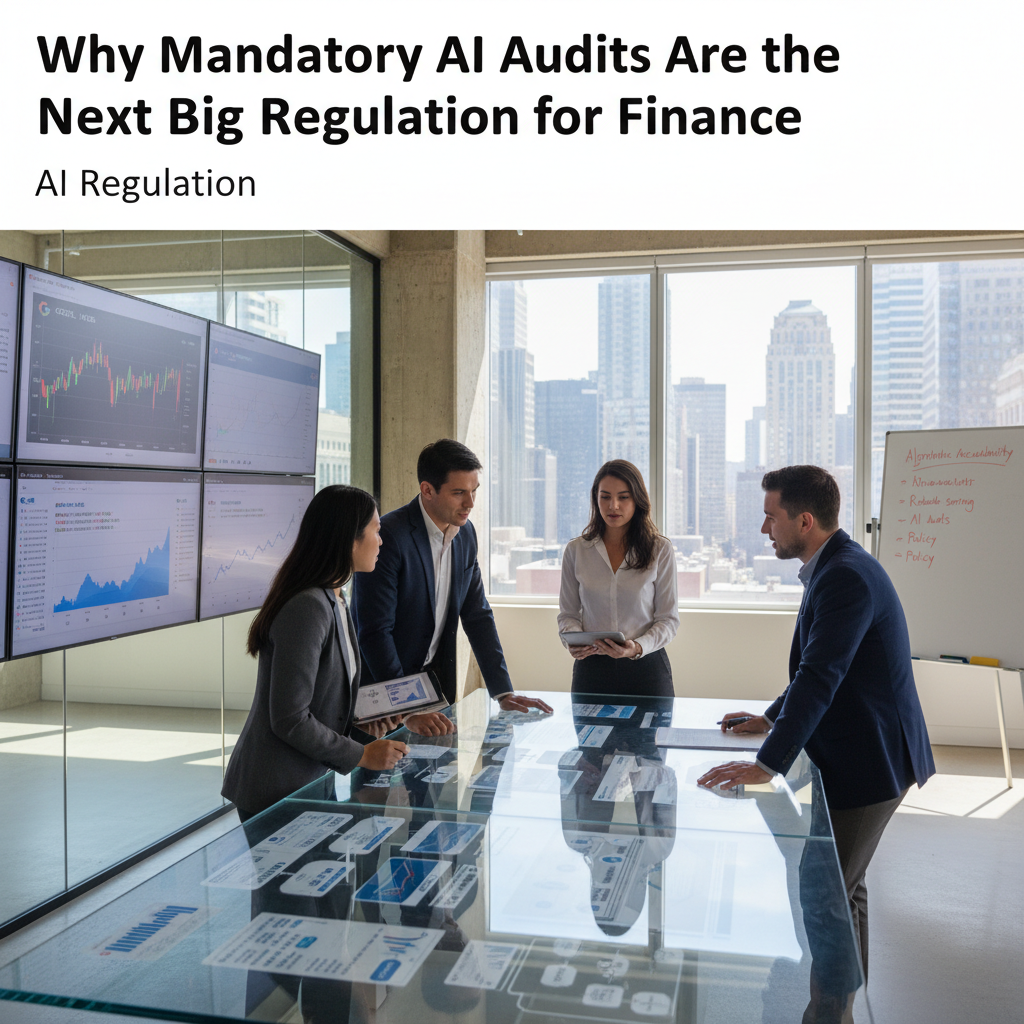
The argument is no longer theoretical. After years of voluntary frameworks and a patchwork of state laws, Washington is coalescing around mandatory third-party audits for high-risk AI — especially systems that affect lending, benefits, hiring and market regulation.
This is not about punishing innovation. It’s about accountability where money and lives are at stake. Remember the 2010 Flash Crash as a warning about fragile algorithmic markets; now imagine that fragility spread across credit decisions, insurance pricing and robo-advice. That raises the stakes.
Why this matters now
- Federal momentum. NIST’s Risk Management Framework gave a technical baseline, and the White House plus several agencies have signaled they want binding rules for high-stakes systems.
- Bipartisan pressure. Lawmakers on both sides are reacting to voter outrage over opaque systems that deny loans, jobs or benefits. Several algorithmic accountability bills have been reintroduced and are getting attention.
- Real enforcement. Agencies like the CFPB and FTC are already using existing powers to go after biased or deceptive automated decisions. If new standards land, enforcement is likely to follow.
What mandatory audits would look like
- Pre-deployment risk assessments for models with significant consumer impact.
- Independent, third-party audits that probe bias, robustness and data provenance.
- Continuous monitoring plus public summaries or consumer-facing AI nutrition labels for systems that touch people.
Each of those sounds sensible until you do the math. Third-party testing costs money. It concentrates vendor power. It can cement incumbents who can absorb compliance bills. Think of it as raising the regulatory minimum capital: safer, yes — but with distributional effects.
Sector consequences — finance first
- Retail banking and lending: Expect tighter scrutiny on credit models, especially those using alternative data or machine-learned underwriting. Fair-lending exposure could mean large remediation bills and consumer redress.
- Fintech and startups: Compliance favors deep pockets. Small firms will either build audit-ready MLOps or rely on certified vendors, which nudges roadmaps from features toward documentation and process.
- Markets and trading: Exchanges and broker-dealers may have to certify algorithmic traders and their risk controls. That will reduce flash-crash risk but raise barriers for nimble proprietary traders.
A few counterpoints
- Overbroad rules risk stifling niche models that serve underserved customers.
- Audits are only as good as the standards behind them; weak frameworks create a comforting illusion of safety.
- An audit-industrial complex could emerge: auditors as paid gatekeepers, which reintroduces conflicts of interest.
What leaders should do tomorrow
- Map where automated decisions touch customer outcomes and rank systems by potential harm.
- Build reproducible pipelines and comprehensive logging so models can be audited without being torn apart.
- Engage standards bodies and push for proportionate thresholds that let small innovators survive.
Where this is heading
Policy is finally catching up with practice. Mandatory audits are not a foregone conclusion, but the trend is clear: when an algorithm decides who gets a loan, a job or a benefit, the public will demand independent proof that the decision was fair and resilient. Regulators are eyeing regimes that resemble financial compliance because the stakes look a lot like finance. Firms that treat audits as an afterthought will pay more than compliance costs — they will lose trust and market access.
This is a turning point for finance. The industry can still shape the rules, but only if it acts now.