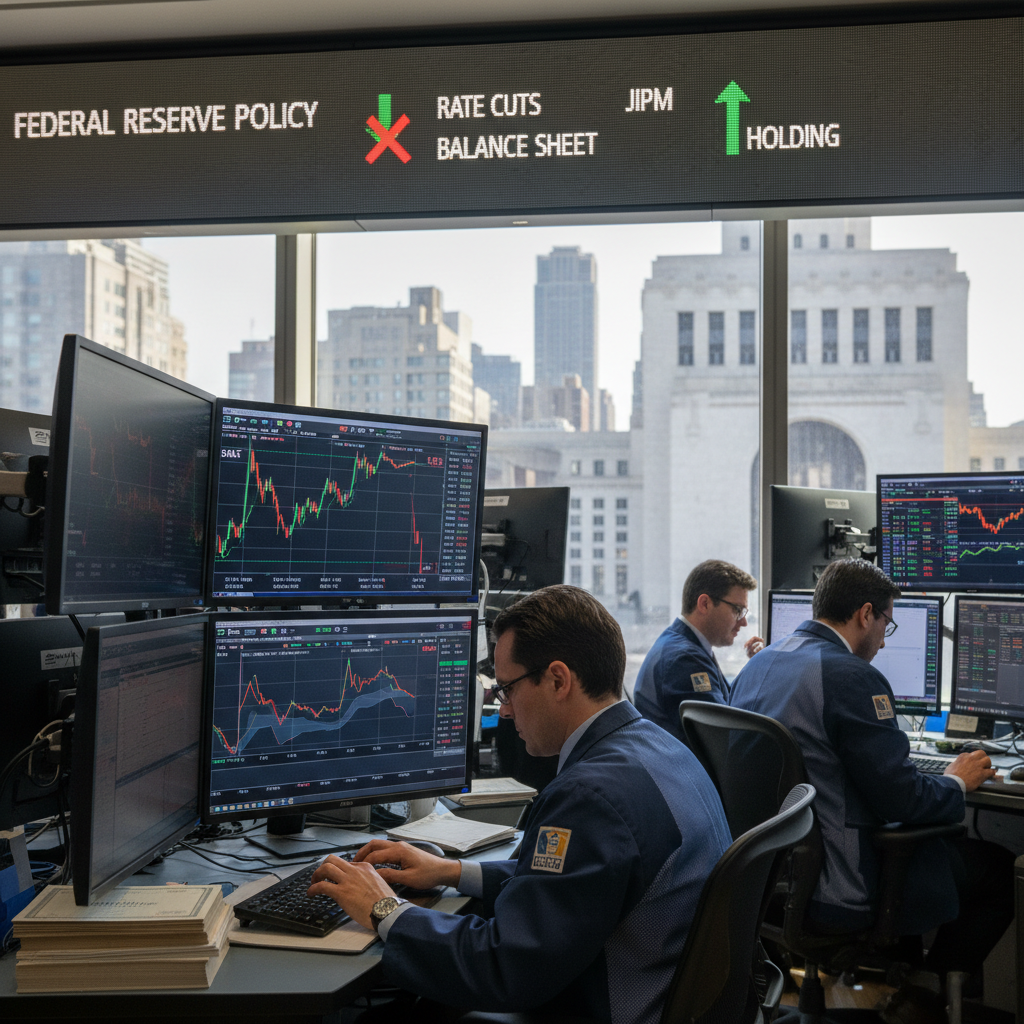
The headline everyone wants: when will the Fed cut rates?
Investors have been pricing in lower short-term rates for months. Policymakers, meanwhile, have kept reminding markets that the Fed’s toolkit is not just one lever. Rate moves and balance-sheet operations sit together; they interact. Expecting an early, clean cut may be wishful.
What’s changing — in plain terms
Since the financial crisis the Fed relied heavily on large-scale asset purchases, then ran a long experiment in quantitative tightening to shrink the balance sheet. That history matters because the central bank can now change reserves and term premia without immediately touching the policy rate. Sometimes that path is politically and economically easier than a straightforward rate reduction. What’s interesting is the Fed now has more subtle ways to affect borrowing costs than it did a decade ago.
Why the balance sheet matters to real people and portfolios
- It pushes long-term yields. When the Fed buys or sells securities it moves term premia, which shows up in mortgage rates, corporate borrowing costs and the valuations of long-duration assets.
- Bank funding depends on reserve levels. A steadier rate path combined with a larger balance sheet can calm deposit flows and repo strains — that can matter a lot for regional banks.
- For fixed-income investors, a balance-sheet pivot is not the same as a policy-rate cut. Duration and the curve’s shape can react in ways that simple rate forecasting won’t capture.
A few quick examples to keep the nuance real
- After 2008, QE compressed long yields even with the fed funds rate near zero. Mortgage costs fell without the Fed changing its target rate in the early recovery.
- In the early stages of QT, market volatility popped up not because of a surprise rate move but because reserves were drying up and dealer balance-sheet capacity was uncertain.
Risks and counterpoints
- Using the balance sheet first can muddle communication. Markets like a clear script; signalling easing through asset holdings risks confusion about timing and strength.
- Political optics matter. If the Fed expands into mortgage or credit markets it invites accusations that monetary policy is taking on fiscal roles.
- If inflation reaccelerates, manipulating the balance sheet only buys so much time. The blunt instrument remains the policy rate.
What investors should actually do
- Be tactical on duration. A balance-sheet shift can steepen some parts of the curve and flatten others; broad duration bets carry risk.
- Watch reserve aggregates, primary dealer positions and Treasury bill issuance. Those are the clues markets will read before any official rate move.
- For bank and mortgage plays, focus on deposit sensitivity and net interest margin exposure instead of assuming a cut fixes everything.
Editorial take
Assuming a Fed cut is the next big inflection risks missing most of the story. The Fed has learned balance-sheet engineering can move markets without much headline drama. That subtlety isn’t necessarily kinder to risk assets — it just makes the game quieter and, in practice, messier. Investors who treat the balance sheet as a footnote will probably be surprised.
Pedro Marini