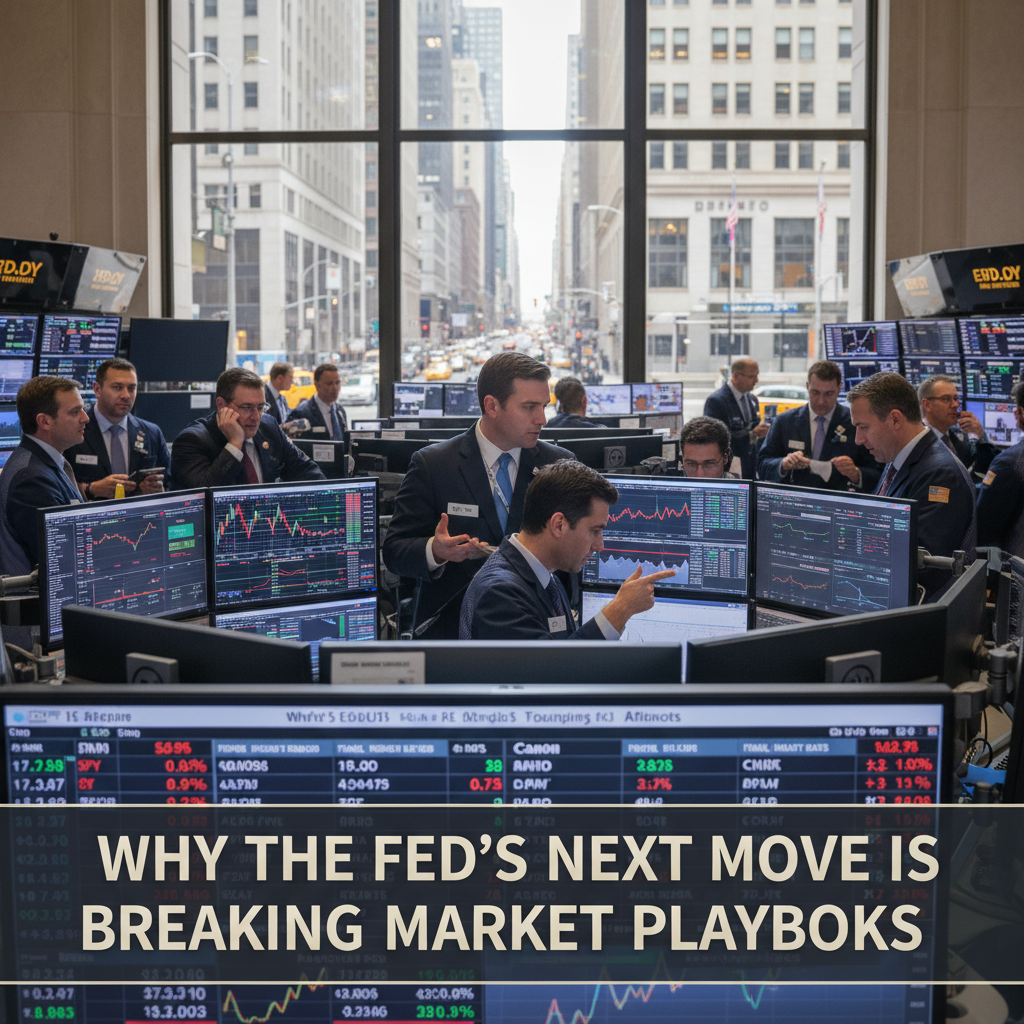
The headline is simple but messy: the Fed has stepped off the script markets expected. After a stretch of straightforward QE and then blunt tightening, the central bank is now occupying an awkward middle: inflation is cooling but not collapsing, growth is wobbling without a plunge, and financial conditions are reacting to guidance in ways that are hard to predict.
I’ve watched traders, economists, and CFOs hunt for clarity. The market has priced a hybrid: partial rate cuts, a slower pace of balance-sheet runoff, and tactical backstops to keep short-term funding calm. It feels like policy by improvisation — and improvisation makes portfolios nervous.
Why this matters
- For fixed-income investors the core dilemma is simple in theory and messy in practice: will long-term yields fall because cuts are coming, or stay stubborn because QT keeps running? That uncertainty keeps Treasury volatility elevated and makes bond funds hyper‑sensitive to headlines.
- For banks the immediate story is net interest margins. A sooner pivot trims margins; a prolonged high‑rate regime inflates them and intensifies deposit competition. Both outcomes matter for capital planning.
- For homeowners and buyers mortgage pricing follows the same mixed signals. Hints of slower QT can nudge longer-term yields down, but mixed messaging keeps mortgage rates higher than past cycles would suggest.
A few differentiated takes
- Think of the Fed less as a single-minded inflation fighter and more like a traffic controller managing multiple jams: inflation, labor markets, and financial stability. Different tools — policy rate, balance-sheet size, standing facilities — relieve different bottlenecks.
- Slowing balance-sheet runoff is not the same as easing. Reinvesting part of maturing Treasuries injects liquidity without an explicit rate cut. That nuance matters for risk assets; it changes incentives without announcing a change in stance.
- Markets love historical analogies, but they can mislead. Volcker’s episode matters, yes, but the economic structure then was very different. High public debt, globalized trade and capital flows mean the old playbook doesn’t map cleanly to today.
Who wins and who loses if the Fed keeps juggling
- Winners: financials if high rates persist; Treasury-focused funds if liquidity backstops become credible; cash savers briefly while short-term rates stay rich.
- Losers: rate-sensitive growth stocks if long-term yields remain stubborn; new homebuyers if mortgage spreads don’t compress; emerging markets if the dollar strengthens on fears of further hikes.
Practical moves for investors
- Trim blanket duration exposure in bond portfolios, but keep a flexible core you can tilt as policy becomes clearer.
- Favor banks with diversified fee income and insurers that benefit from higher yields, while monitoring credit cycles closely.
- Homebuyers should lock when their personal math makes sense — trying to time the market while the Fed’s message oscillates is a risky game.
What’s really happening is uncertainty itself. Central banks used to behave more predictably; today they’re juggling more pieces on the board. That calls for different instincts: nimbleness, a wider set of scenarios, and the patience to accept that clear signals will arrive slowly. Investors who prepare for several plausible outcomes rather than one tidy pivot will be better positioned when the Fed finally settles on a path.