Why now?
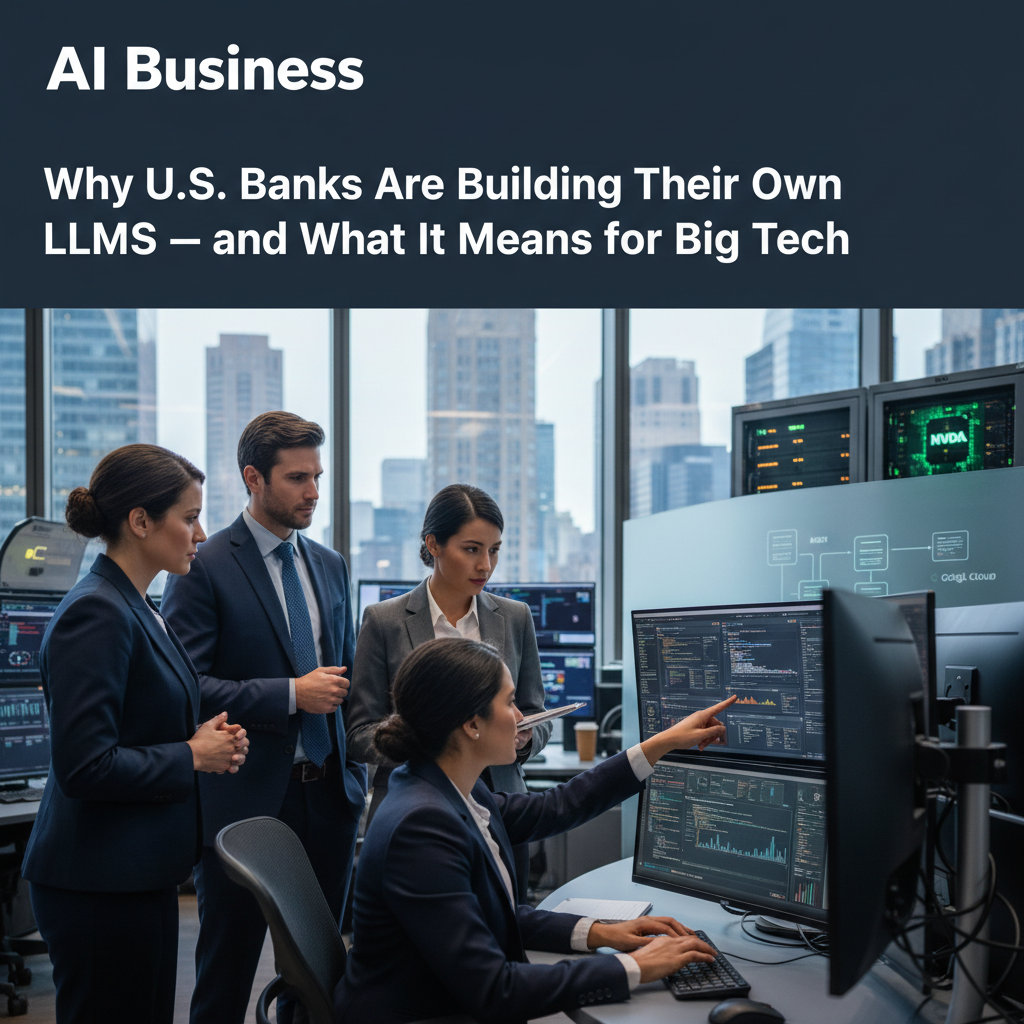
Banks haven't been slow to understand AI; they've been cautious. They sit on the most sensitive customer data on the planet, and a single generative slip can cost millions — in fines and in trust. The recent push by U.S. banks to build private large language models and on-prem/edge LLM stacks is less about hype and more about three blunt pressures: cost, control, and compliance.
For decades institutions migrated off mainframes to public clouds to escape huge CapEx bills. That pendulum is swinging back. For predictable, high-volume inference, a private LLM can be cheaper at scale. It cuts egress and per-call fees and keeps the riskiest inference and training work inside networks the bank already trusts.
What banks are actually using them for
- Fraud and transaction anomaly detection, often paired with real-time RAG-style access to internal ledgers. Faster signal, less noise.
- Quicker, auditable compliance reviews for credit files, suspicious activity reports, and contract language. Traceability matters here.
- Client-facing assistants that won’t leak data to third-party APIs and that can be tuned to product quirks and regional rules.
Some banks are trying full-stack mixes: tiny local models for sub-100ms latency tasks, mid-sized models for internal knowledge retrieval, and heavyweight models in the cloud for sanitized, auditable workflows. It’s a pragmatic blend, not an all-or-nothing bet.
Why this crimps Big Tech — and why it doesn’t kill the cloud story
On paper it’s simple: less inference traffic to Microsoft or Google squeezes API revenue. In practice the picture is messier. Banks still need GPUs, orchestration, logging, MLOps — and they often buy those from hyperscalers or specialized infra vendors. Expect a shift in what customers buy: more hardware, more enterprise services and consulting, less steady-state API calls. That hurts some revenue lines but doesn’t implode the entire cloud business.
Counterpoints and risks
- Running LLMs is ongoing work, not a one-off project. Expect sustained engineering, security, and governance costs.
- Smaller banks risk being left behind unless they cluster together or buy managed private-LLM services. Watch white-label vendors and consortium plays aimed at regional banks.
- Regulators will demand audit trails. Private models are not automatically compliant — documentation, reproducibility, and third-party validation will be required.
Wider implications
- Investors should watch chipmakers and AI-infra vendors that service private deployments as closely as cloud revenue figures.
- Customers will see smarter, faster banking features — and, importantly, clearer promises about keeping data in-house. That will resonate after years of breach fatigue.
- Startups get an opening: pre-audited, finance-specific LLMs, synthetic-data pipelines, and compliance-by-design tooling are all going to be in demand.
A short read of where this is headed
This is less a revolt against AWS, Azure, or Google and more a sign of maturity. Large banks treating AI like core infrastructure is similar to how they treated payment rails: foundational, not optional. Expect a hybrid future where public clouds, private LLMs, and specialist vendors coexist, each capturing different slices of the stack and value chain.
If you are an investor: look past headline API volumes. Track GPU orders, enterprise AI service contracts, and the smaller companies enabling secure model ops. If you are a customer: expect smarter banking tools that try harder to keep your data in-house. And if you are a regulator: start preparing for auditable models and continuous oversight — that’s where this is heading.