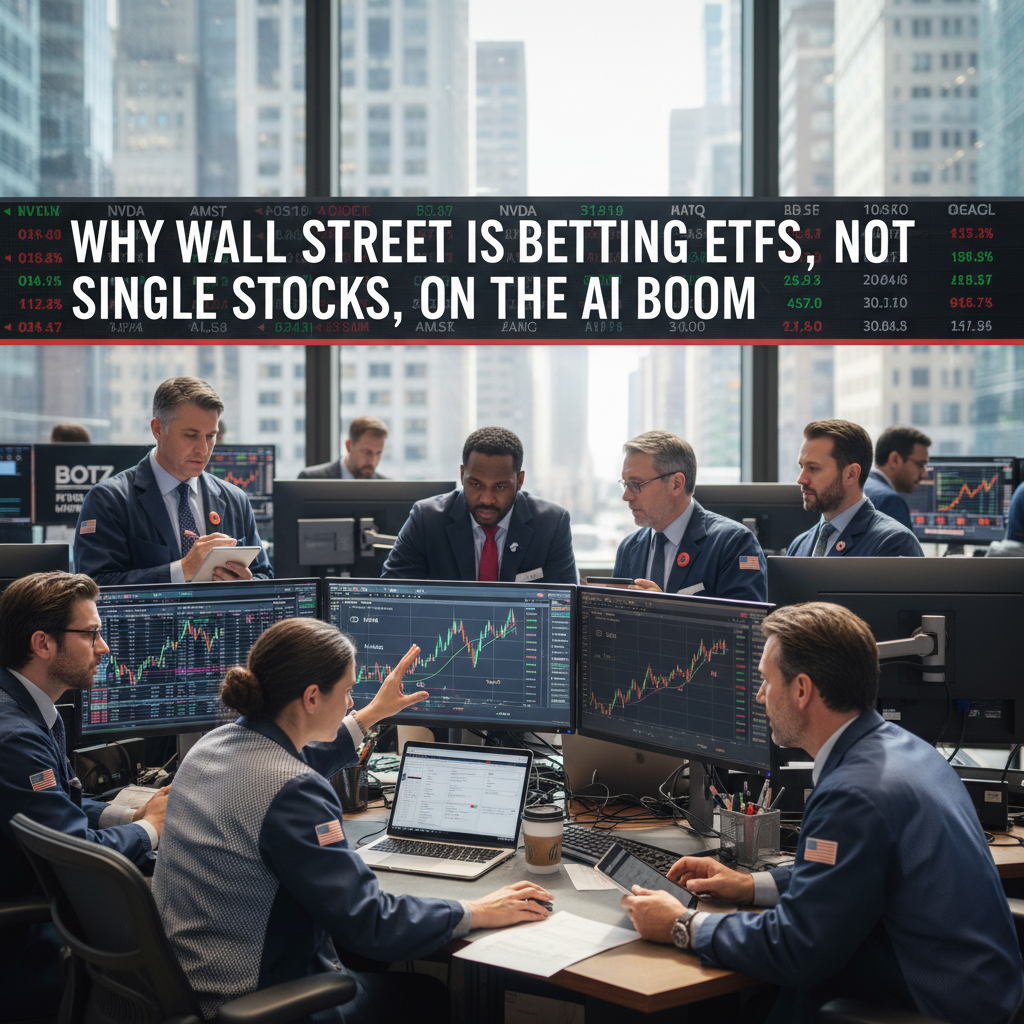
Nvidia gets the headlines; the reality is muddier.
Nvidia may power many of the models, but investors are increasingly taking the ETF route to get AI upside without parking all their bets in one stock. Over the past 18 months flows into AI- and robotics-themed ETFs have outpaced those into individual big-cap AI names, nudging how capital meets computing horsepower.
Why this is happening now
- Concentration risk matters. A large slice of the AI rally sits in a few chip and cloud leaders. ETFs spread that exposure across semiconductors, cloud providers, middleware and industrial adopters — in short, they dilute the single-stock bet.
- Simpler and often cheaper. Buying a thematic ETF packages complex exposure into one ticker with automatic rebalancing. Easier to own than assembling and monitoring a bespoke basket.
- It sends a market signal. Inflows don’t just reward the largest names; they push capital to mid-cap AI enablers that might otherwise be overlooked. That can accelerate product rollouts and M&A.
A bit of history, because it matters
The dot-com episode showed how thematic manias can crown a few winners while most companies fall away. But today’s AI rests on monetizable infrastructure — GPUs, cloud APIs, data services — and ETFs can be mapped across those layers. Imagine a rail network funding multiple towns rather than betting everything on one boomtown.
How ETFs actually differ (and why that changes outcomes)
- Construction rules vary. Some ETFs are pure market-cap mirrors: if Nvidia doubles, the fund’s exposure mostly follows. Others tilt toward mid-cap innovators or apply factor screens, which makes a big difference in results.
- Rebalancing cadence isn’t trivial. Frequent rebalances can ride momentum, but they bring turnover and potential tax friction.
- Methodology matters. The labels on fund pages are tidy; the underlying rules are where the real differences show. Don’t assume all AI ETFs are the same.
Concrete shifts you can already see
- ETFs have opened access to cloud-native AI plays, not just chip makers — software firms that tune models, data marketplaces that monetize training sets, and the like.
- Active managers are trying to bridge the gap. Boutique funds mix quant signals with thematic screens to chase outperformance, but fees and short track records keep many investors leaning passive.
Risks worth keeping in mind
- ETFs can concentrate exposure across many names at once, amplifying momentum into frothy valuations. If GPU margins or cloud economics compress, a lot of holdings can hurt together.
- Geopolitics and regulation are supply-chain stories more than single-stock stories. ETFs cut idiosyncratic risk but not systemic shocks.
- For hands-on investors, single-stock bets still offer the chance of outsized returns. That’s the trade-off: less headline risk, but also less potential home-run gain.
Signals to watch next
- Changes to index rules that broaden or narrow what counts as AI.
- Fee compression: cheaper funds will likely win retail flows.
- Product innovation: expect smart-beta and active AI ETFs trying to combine passive scale with selective picks.
Recommendation
For most investors, a low-cost, diversified core makes sense — an AI ETF for broad exposure plus a small sleeve of well-researched, high-conviction single-stock ideas for upside. Not glamorous, but practical. Editorially: favor diversified, low-fee exposure for the bulk of a portfolio, and keep a tactical allocation for concentrated bets you actually understand.