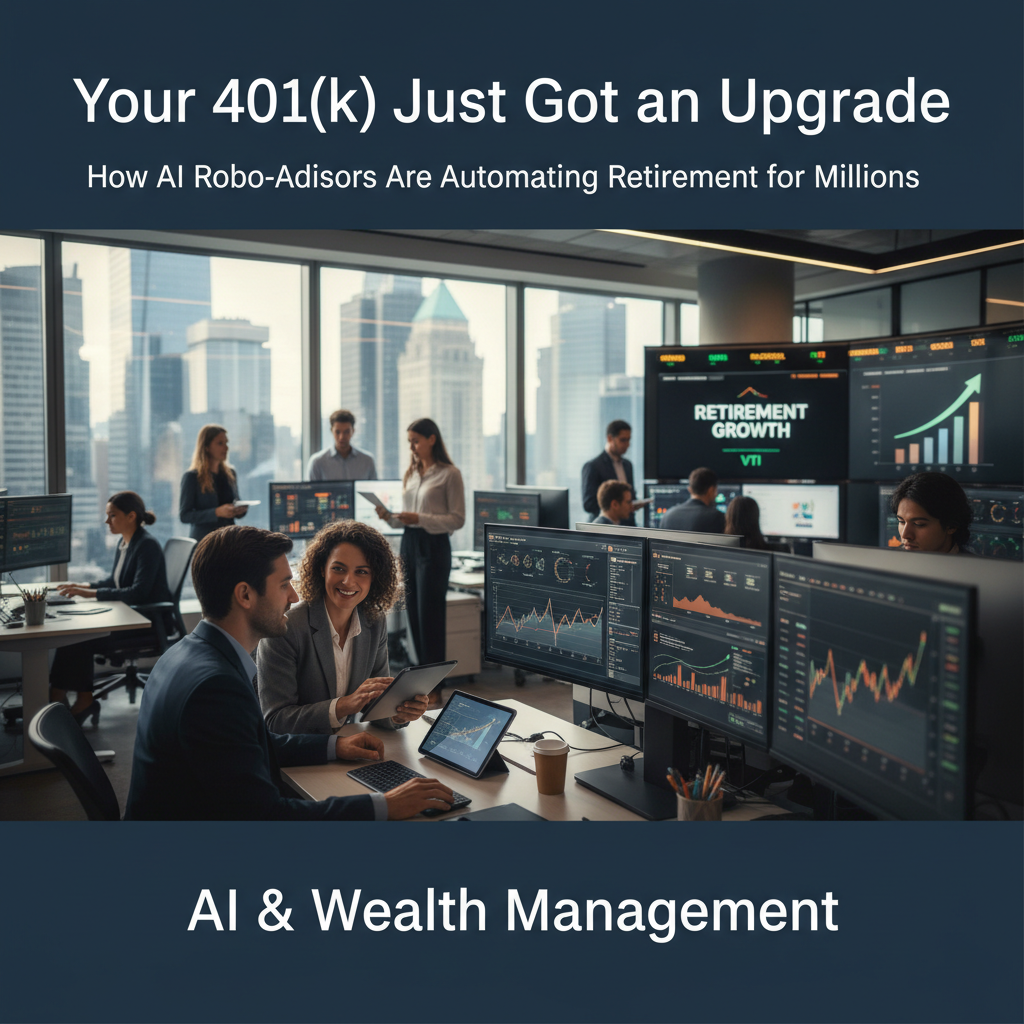
Retirement planning is changing — quietly, and not in the headline-grabbing way you might expect. Over the last year brokerages and fintech firms have been folding AI-powered portfolio services into employer 401(k) platforms. For most savers this isn’t a flashy chatbot; it’s automated rebalancing, tax-aware moves, and personalized glidepaths running behind the same plan interface you already use.
Why this matters now
- Fewer hurdles. Many employees avoid 401(k) choices because the menus are confusing and the default feels safer. These tools can pick and rebalance for you, often at a fraction of traditional advisor fees — though caveats apply.
- Cross-account thinking. New overlays can see your IRA, taxable accounts, and workplace plan together, and suggest Roth conversions or tax-loss harvesting that a plain-vanilla 401(k) won’t.
- Scale and cost. Firms can serve millions at near-zero marginal cost. That’s why large custodians and tech partners are racing to embed these features.
A quick history detour: robo-advisors did the first pass
Robo-advisors started as set-and-forget rule engines — fixed glidepaths, periodic rebalances. The newer wave adds personalization: short-term cash-flow modeling, probabilistic retirement scenarios, and internal tax trades. That matters because retirement is long and messy: job changes, home purchases, medical bills — life gets in the way of neat projections.
What it means for your money
- Potential upside: Lower effective fees, timelier rebalancing, and tax-aware moves can add percentage points to net returns over decades. Small differences compound.
- Practical downside: Employer plans still often limit fund choices. AI won’t create good ETFs where the menu is poor, and outsourcing advice raises fiduciary and liability questions for plan sponsors.
- Privacy and model risk: These systems need payroll, income, and savings data to be useful. That brings data-security and algorithmic-fairness issues that aren’t solved by a glossy UI.
A simple example
Imagine a mid-career engineer who switches jobs three times in a decade and ends up with scattered IRAs and 401(k)s. An AI overlay from some custodians can propose consolidations, model whether a Roth conversion makes sense given projected tax rates, and harvest losses across taxable accounts — without hiring a six-figure planner.
Why some planners stay cautious
Seasoned advisors point out that pattern recognition is different from judgment under stress. Models trained on past markets can misprice genuinely new policy shocks. And there’s a real risk of over-optimization: chasing tiny tax gains now that reduce flexibility later.
Practical next steps
- Ask HR whether your 401(k) includes AI-managed options or advisor overlays, and get the full fee schedule.
- Compare costs. A 0.25% automated service can beat a 1% advisor — but only if the plan’s fund menu and execution are solid.
- Try it on a small scale. Test an IRA or a slice of savings first to see how the service performs.
- Inspect data terms. Require clear privacy, portability, and deletion policies before linking payroll or bank feeds.
A closing thought
These tools are turning static plan menus into more proactive helpers. For many savers that means better day-to-day management at lower cost. But it also raises real questions: who controls your data, who is liable when models fail, and whether automation is truly improving outcomes or just smoothing existing limits. Be curious, test cautiously, and read the fine print.
Pedro Marini