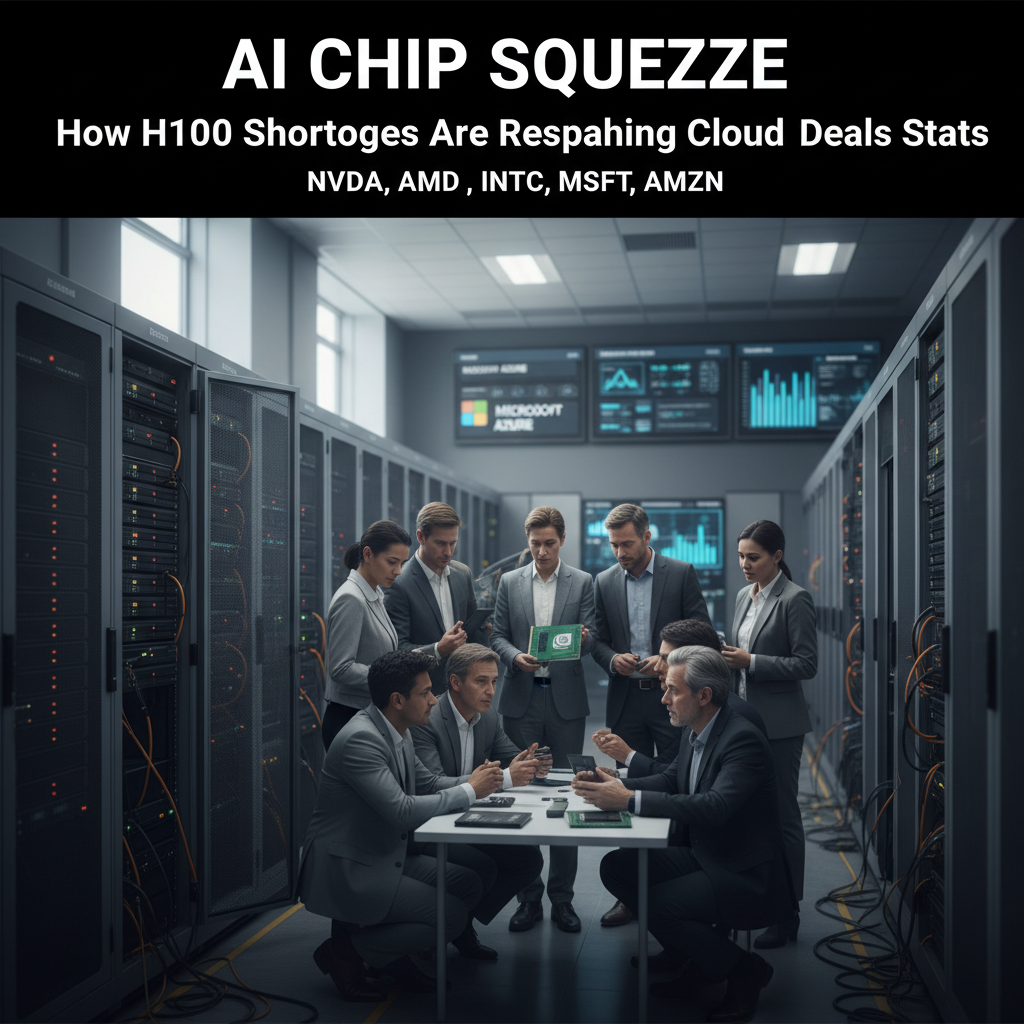
The headline is simple: a tight supply of Nvidia H100 accelerators is bleeding into contract negotiations, product road maps, and funding conversations for AI startups.
This is not just a component shortage. Think of it as a stress test for the modern AI stack.
Why this matters now
- Cloud vendors are increasingly selling guaranteed capacity and longer commitments to lock in enterprise customers. Those promises shift cost and inventory risk off buyers and onto providers — and they also force both sides to make specific hardware bets.
- Startups without deep pockets end up with a few unappealing options: wait in a queue for premium GPUs, port models to other accelerators, or redesign models so they run on cheaper, smaller kit. None of those moves are frictionless; each carries engineering cost and time.
A short history reminder
Remember the 2017 GPU rush around crypto mining? The market flipped from surplus to scarcity in weeks. Miners, gamers, researchers and cloud operators all started competing for the same silicon. The parallel is clear — but now the stakes are higher because AI workloads are running business-critical systems, not just experiments.
What’s shifting in practice
- Vendor diversification is picking up pace. AMD Instinct, Google TPUs, and bespoke silicon from hyperscalers are getting renewed attention. If you can stomach the porting work, it reduces lock-in — but it increases engineering complexity.
- Software optimization is becoming a battlefield. Quantization, pruning and distillation are no longer academic curiosities; they are practical ways to cut GPU-hours and get off the procurement treadmill.
- Longer contracts and escrow-like protections are showing up in enterprise deals. Some firms sign multi-year cloud commitments to secure capacity; others demand flexible exit clauses to avoid being stuck with obsolete hardware.
What’s interesting here is how these shifts compound. A little scarcity nudges companies to optimize software, which then makes alternate silicon more viable. In practice, though, the story is messier — migration costs, toolchain gaps, and performance quirks slow the transition.
Counterpoints and knock-on effects
- Scarcity strengthens Nvidia’s bargaining position and pads short-term margins. But persistent shortages also open the door for competitors. Capital flows toward alternative fabs and architectures when there’s money to be made; suppliers tend to respond, just not overnight.
- Higher hardware costs squeeze startup margins, yet they also raise the bar for surviving in the market. Firms that can pay to secure capacity now may entrench advantages, accelerating consolidation even as new entrants innovate.
What this means for investors and tech leaders
- Investors: watch Nvidia for pricing power, but keep an eye on AMD and Intel for share gains as enterprises diversify hardware. Cloud providers that lock in capacity might show steadier enterprise revenues over several quarters.
- CTOs and founders: prioritize portability and cost per inference over headline benchmark numbers. Invest in tooling that simplifies moves between GPUs, TPUs and other accelerators. Push for cloud contracts with explicit capacity terms and sunset protections so you’re not trapped by aging silicon.
The upshot
The H100 shortage is more than a temporary bottleneck — it’s accelerating structural change across the AI supply chain. Expect smarter software, a wider mix of silicon, and tougher negotiations. Flexibility will be the currency that matters most for companies and investors alike.
I’m watching how short-term scarcity reshapes long-term strategy. This squeeze looks like a catalyst for both consolidation and innovation — and, as with most things, those outcomes can arrive at the same time.