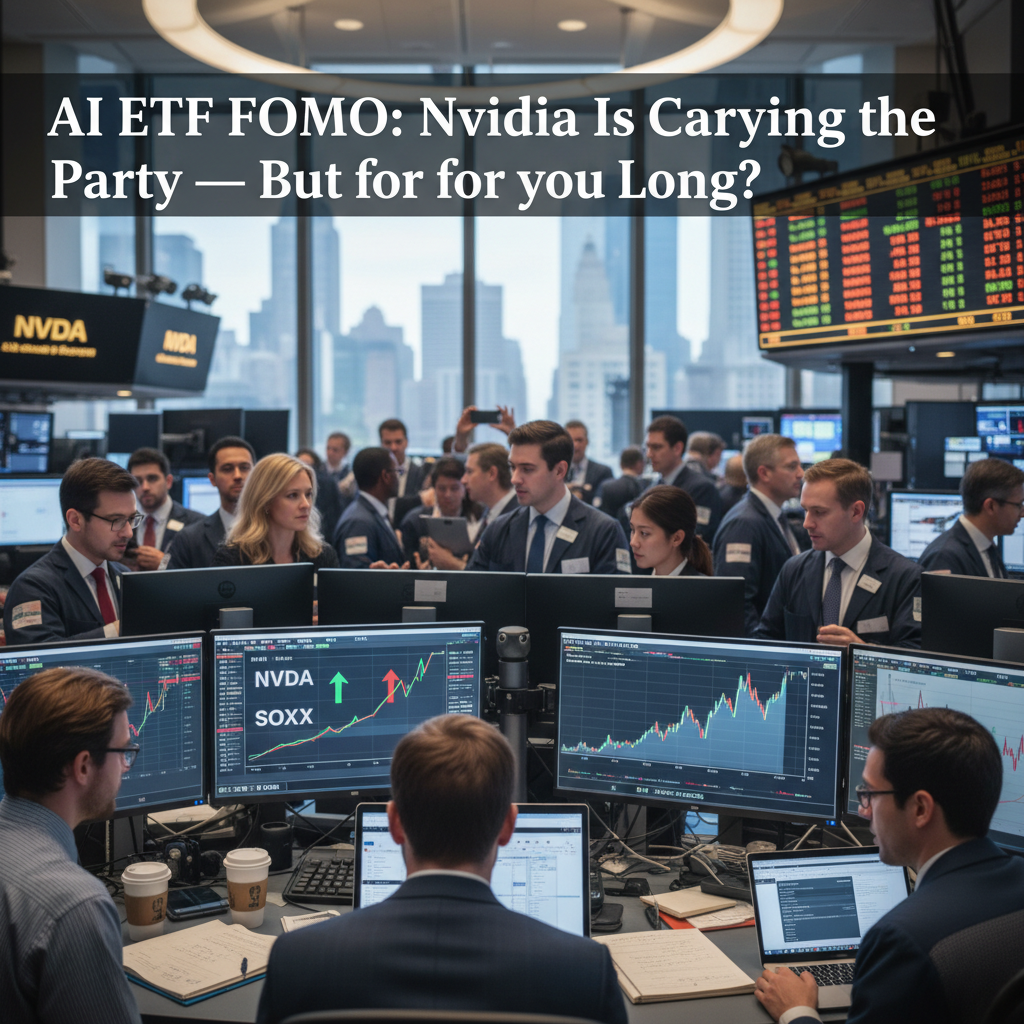
The pitch is intoxicating: buy an AI-focused ETF and capture the sector that will define the next decade. It sounds easy — efficient, low-effort, modern — the kind of product that slides into brokerage apps and social timelines with almost no friction.
But there’s a familiar fault line under the gloss. Many ETFs marketed as AI, robotics, or innovation funds behave less like diversified baskets and more like concentrated bets on a handful of mega-cap names — most notably Nvidia. That observation isn’t a criticism of the company; it’s an observation about how thematic indexing and market-cap weighting interact.
What’s pushing this rush
- Performance herding. Nvidia’s gains lifted its index weightings, and passive flows followed the weight. Simple math, big consequences.
- Retail FOMO plus easy access. Fractional shares, zero-commission trading and a steady stream of upbeat headlines make ETFs the easiest path to play a story.
- Narrative-driven marketing. Fund firms package AI as the generational theme and sell one-click exposure. That sells.
Put those together and you get a brittle structure: a few winners dominate returns. When the leader slips, supposedly diversified ETFs can unwind far faster than their marketing materials imply.
A historical echo — not a prophecy
Remember 1999 and the early 2000s. The dot-com boom put money into thematic baskets that looked diversified until the top names collapsed. This cycle is different — many AI-related businesses already earn cash — but concentration risk doesn’t care whether revenues are real. It behaves the same.
Reading fund labels without getting hoodwinked
Don’t trust the name on the tin. Funds labeled AI or innovation often end up concentrated in semiconductors, cloud infrastructure and software, with one dominant position. Look at the top 10 holdings, sector breakouts and turnover. Fees matter, yes, but when one company is the return engine, overlap and position size matter more.
A quick checklist before you buy
- Inspect the top 10 and note the weight of the top 1–3 names.
- Check index construction: market-cap weighted, equal-weight, or some fundamental weighting.
- See how much overlap there is with your core holdings (S&P 500, broad tech ETFs).
- Compare expense ratio and realized turnover — tax drag matters.
- Run a simple scenario: what if Nvidia drops 30%? How would the ETF behave?
Active managers still have a role
Cheap, passive exposure is appealing, but active managers can add value in concentrated themes by trimming runaway winners, avoiding overextended entries and rotating into smaller-cap innovators. That’s only helpful if the manager’s fees buy a repeatable process and real downside protection, not just slick marketing.
Practical alternatives and trades
- If you want pure compute exposure: buy Nvidia directly, but accept single-stock risk.
- If you want broader coverage: consider semiconductor ETFs that spread exposure across manufacturers, or cloud infrastructure funds that capture demand across chips, software and services.
- For risk control: use smaller position sizes, set rebalancing rules, or pair exposure with hedges.
A candid verdict
AI is a legitimate structural growth theme and belongs in many portfolios. Still, inexpensive access and tidy narratives tend to smooth out the uncomfortable parts of risk. Treating an AI ETF as a do-it-and-forget-it allocation misunderstands what you’re buying. Think of these funds as tactical allocations that require the same scrutiny you would give any concentrated holding.
There’s plenty to be optimistic about — meaningful productivity gains look likely — but prudent sizing, clarity on actual holdings and a plan for volatility will separate investors who do well from those who ride headlines.
Before you click buy
Open the ETF factsheet. If the top holding is a quarter or more of the fund, ask whether you’re buying a diversified basket or essentially a call on one company. That frame changes how you size the position, how closely you monitor it, and how the investment fits into the rest of your portfolio.