The gist
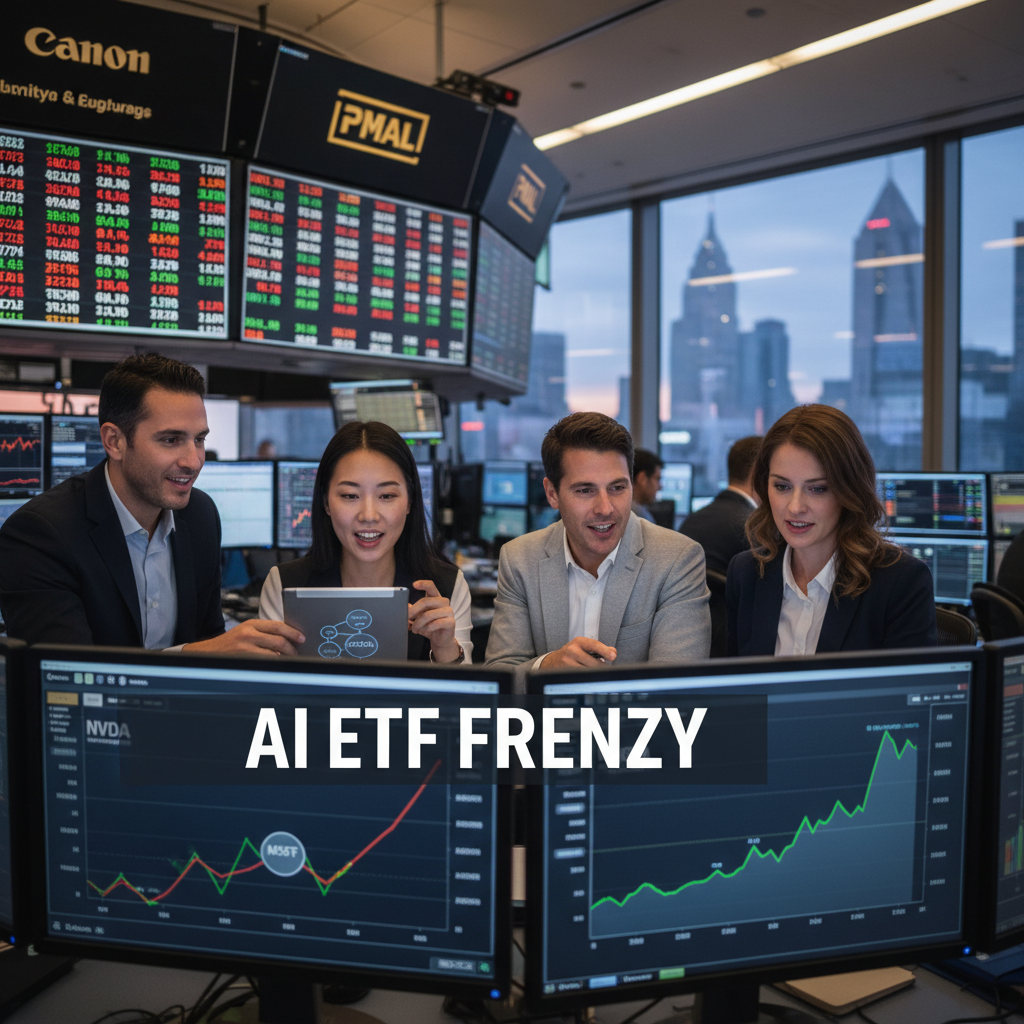
AI exchange-traded funds are no longer just convenient wrappers. They are big enough to move markets. Yet beneath the straightforward story of relentless demand there are structural risks many investors—retail and institutional alike—are treating as afterthoughts.
Where the money is flowing
- Index-driven ETFs shove cash into a narrow group: chip designers, AI accelerators, and hyperscale cloud providers. One heavyweight name can tilt an entire fund.
- It’s not a broad tech sleeve so much as a small ecosystem: the firms that sell compute, models, or the data plumbing. That concentration changes the math.
Why concentration matters now
Short-memory bias is powerful. The past decade rewarded platform winners, so investors repeat that pattern. But this AI cycle layers on new sources of correlated risk:
- Hardware scarcity. High-margin AI chips come from a handful of fabs. Supply shocks can produce near-binary earnings outcomes — think manufacturing bottlenecks, not just software hiccups.
- Cloud lock-in. A few providers host the biggest models. If pricing shifts or services are throttled, margins across many portfolio companies can wobble together.
- Model governance and regulation. Limits on certain generative models or data rules could force sudden repricing across whole ETF segments.
Valuation and the momentum trap
Many AI funds trade at multiples that assume fast, uninterrupted adoption. That works if revenue keeps accelerating. It falls apart if adoption is bumpy or if inference gets commoditized. History shows that when concentration meets lofty multiples, recoveries can be long and painful.
A quick historical peg
This pattern echoes late-90s internet concentration and the FAANG era of the 2010s. Winners kept winning in both cases — but timing mattered as much as selection. What’s different now are hardware supply chains and geopolitics tied to chip manufacturing and talent flows. Those make the cycle less predictable.
Practical investor moves
- Rebalance exposure. If an AI ETF is more than a small slice of your equity allocation, consider trimming into strength and diversifying into other sectors.
- Prefer funds with clear indexing discipline or active managers willing to rotate away from overheating names.
- Watch supply-chain signals: fab utilization, lead times for accelerators, and shifts in cloud pricing are early red flags.
- Look at alternatives: enterprise AI software, security tools, and vertical-focused data providers often carry lower multiples and more idiosyncratic risk.
A modest counterpoint
AI adoption is real and will generate durable cash flows for competent operators in healthcare, logistics, software and elsewhere. For long-term investors who dollar-cost average and can handle volatility, this rally could be an attractive entry. That said, durable does not mean uniform — some winners will face sharper obstacles than others.
Where this leaves you
This is not an argument to avoid AI exposure altogether. Think of headline ETFs as thematic bets: fine for conviction pockets, risky as the bedrock of a portfolio. Look under the hood, mind the concentration, and factor in operational and regulatory risks that earlier tech booms did not confront so directly.
Quick checklist
- Check top-10 holdings concentration and how much of each company’s revenue actually comes from AI.
- Compare expense ratios and indexing rules across funds.
- Monitor fab capacity, chip lead times, and cloud gross-margin trends.
- Set rebalancing or stop-loss rules that reflect the ETF’s concentration profile.
The rush into AI ETFs feels inevitable — until it isn’t. The success stories are persuasive, but markets are driven as much by hardware constraints as by human optimism. Be analytical, not euphoric.