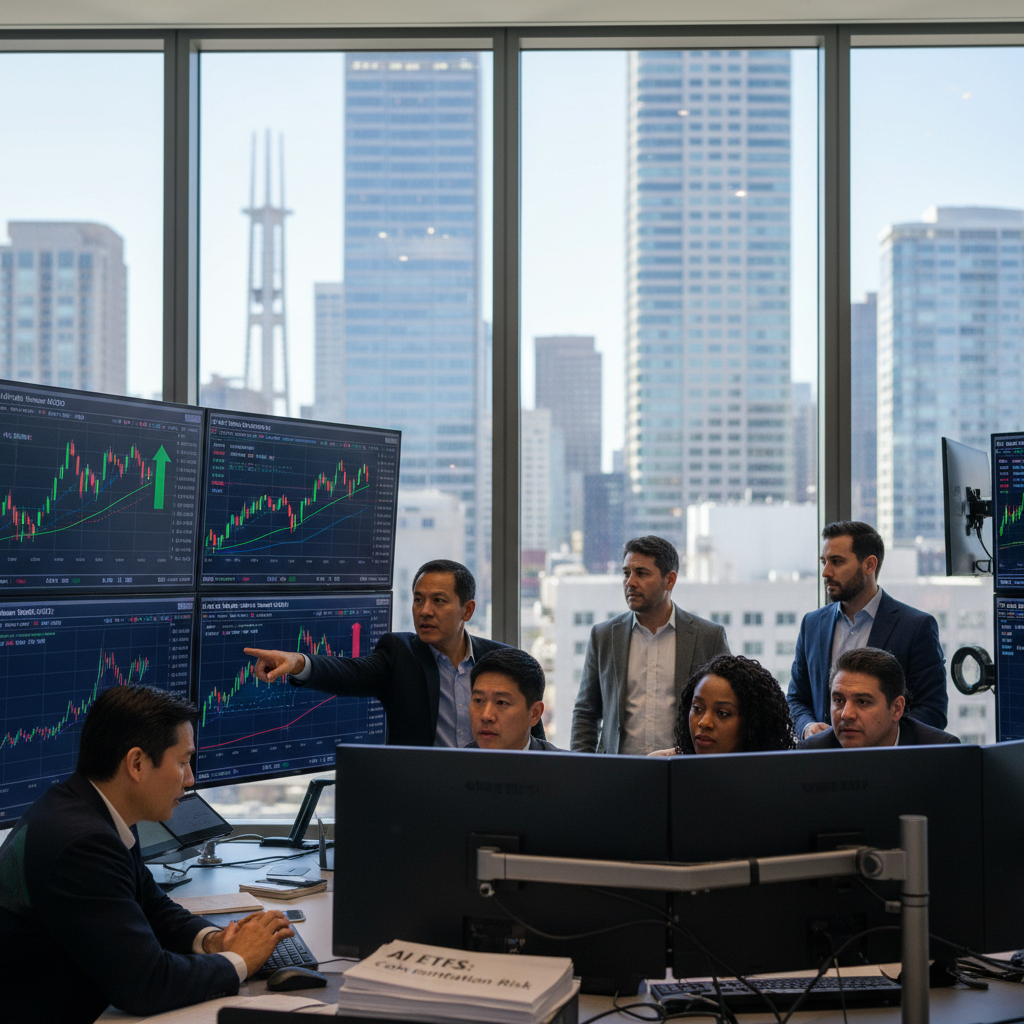
The headline is familiar — AI ETFs are surging. The fine print is uglier.
Retail money chasing AI exposure has poured into themed ETFs and index funds. But what many investors call diversification often isn’t. Instead of a broad bet on widely distributed machine learning, several products look more like single-stock punts with a few supporting actors.
What’s happening under the hood
- A lot of AI-focused ETFs are heavily weighted toward Nvidia, Microsoft and Alphabet. In some funds the top three holdings can make up roughly half the portfolio.
- That concentration comes from market-cap weighting and the simple fact that a handful of firms control much of the hard infrastructure for generative AI — GPUs, cloud stacks and large models.
- For most investors, the result is a portfolio that behaves more like a few megacaps than a diversified tech basket.
Why this matters in the near to medium term
- Amplified volatility. A big Nvidia beat or miss, a sudden chip shortage, or a regulatory surprise can swing these ETFs by double digits.
- Illusion of diversification. Two differently named funds can move in lockstep because they own the same handful of stocks.
- Concentration risk at scale. If billions pile into the same names, liquidity can evaporate at turning points and drawdowns can be sharp and fast.
A historical lens
This pattern isn’t new. In the late 1990s, dot-com funds often concentrated into the same mega-cap internet names. When sentiment flipped, those concentrated funds got hit harder. Narrative-driven flows tend to crowd trades that unwind brutally when the story stalls.
Counterarguments and industry responses
ETF issuers and quantitative shops argue that concentration simply reflects where economic value is being created. If Nvidia holds the GPU moat and Microsoft and Amazon dominate cloud infrastructure, overweighting them makes a form of sense. Active managers add that thematic ETFs are a convenient access point and that active strategies can manage risk better.
Those points are valid. Convenience and a compelling story, though, don’t erase portfolio-construction problems.
What smart investors should check now
- Look at the top 10 holdings and their combined weight. If a handful of names exceed 40–50 percent, ask whether you’re buying the fund for its diversification or just to own those stocks.
- Check turnover and index rules. Are weights market-cap, equal-weighted, or subject to issuer discretion?
- Think about alternatives: equal-weight AI funds, AI-focused active managers, or a DIY basket with caps on single-stock exposure.
Concrete scenarios to watch
- Nvidia guidance that underwhelms despite strong demand could trigger a sharp ETF drop.
- Regulatory pressure on large language model safety or export controls on high-end chips would hit the concentrated names harder than others.
- A rotation into smaller AI infrastructure players is possible — but it will take time and significant capital flows to meaningfully rebalance the market.
Wrap-up
Theme-based investing sells a tidy narrative. Trouble is, narratives are not portfolios. If your AI exposure comes mainly through a few megacaps, you own a concentrated tech bet dressed up as diversification. That can be fine if you size positions deliberately, hedge where appropriate and accept the higher tail risk. It becomes a problem when convenience, FOMO and marketing do the position sizing for you.
Stay skeptical about labels. Read the holdings. Size your conviction.