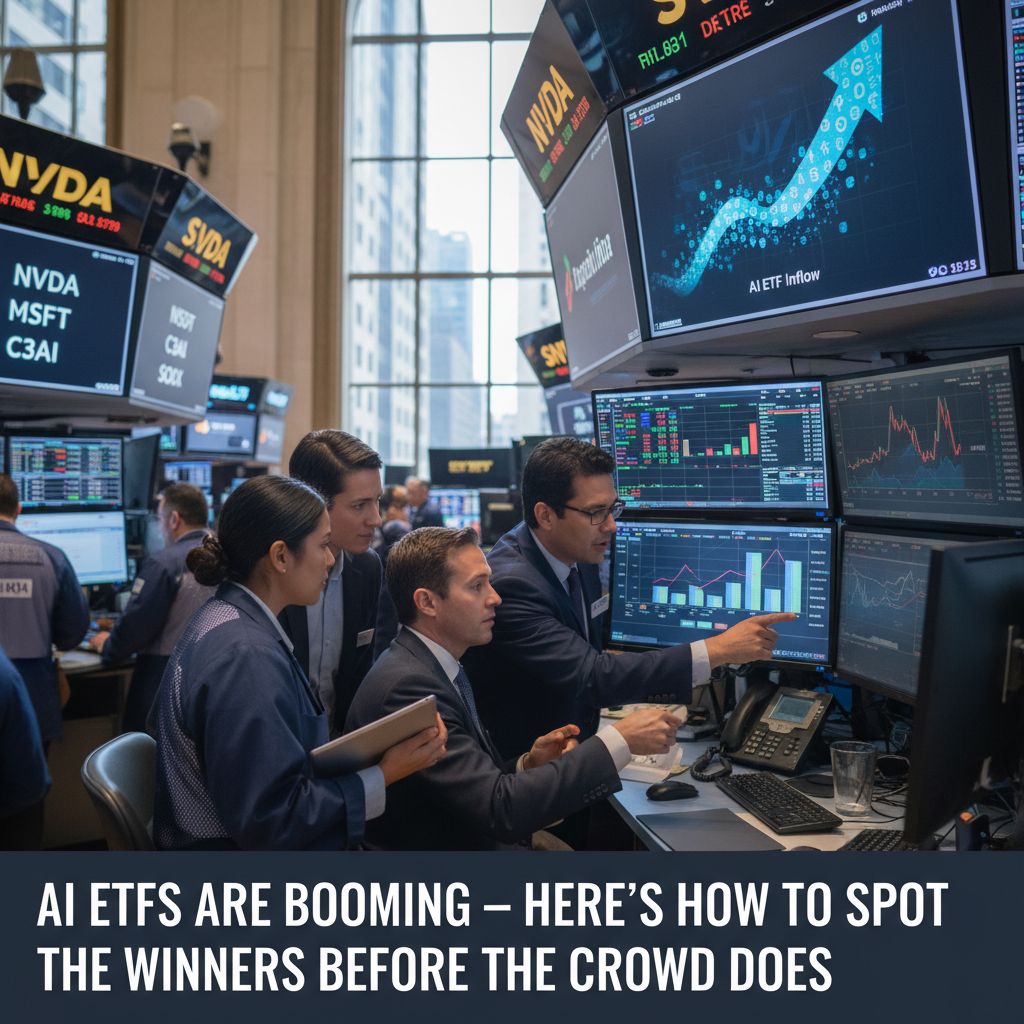
The snapshot
AI-themed exchange traded funds have become the obvious storefront for riding generative models and associated infrastructure. Money has poured in. A few headline names dominate holdings. Retail interest is hot. It feels like a new paradigm — and, if you squint, faintly like late-1990s exuberance: heavy concentration, rich multiples, and a lot of hope that the next quarterly report will justify today’s prices.
Why this matters now
Capital allocates opinions. Over the past year that allocation has heavily favored AI-themed products. Flows into ETFs and funds carrying the AI label have lifted chip suppliers, cloud providers, and a handful of software companies into market leadership. That concentration magnifies outcomes: good news pushes a fund much higher; bad news can take it down fast.
A few realities that cut against the headlines
- Concentration risk is real. A tiny group of stocks often drives most of an ETF’s returns. When one of those names re-rates, the whole fund feels it.
- Labeling is loose. Issuers sometimes put AI on the tin for marketing. Actual revenue tied to AI can be small or indirect.
- Valuations already expect the future. Prices today often reflect profits that may take years to materialize — if they materialize at all.
Historical context — not a perfect mirror, but useful
There are echoes of the dot-com era: a shiny new technology, speculative capital, and a tidy narrative that explains persistent outperformance. But it’s not a replica. AI has clearer near-term revenue paths in semiconductors and cloud services. It also requires real capital spending — data centers, specialized chips — not only eyeballs and ad impressions. That means winners are more likely to be separated by execution and product-market fit than by hype alone.
How to pick through the noise — practical signals
- Look at actual revenue exposure, not marketing copy. Prefer companies selling hardware or services directly used in AI deployments: data-center GPUs, cloud AI offerings, enterprise model licensing and related enterprise services.
- Check ETF concentration. If one or two names account for north of 30–40% of the fund, you’re effectively taking a single-stock bet.
- Examine profitability and cash flow. Loss-making firms without a credible path to cash deserve more skepticism.
- Favor transparency over branding. Funds with clear, rules-based holdings and predictable rebalance schedules are easier to judge than those defined by marketing.
- Consider active managers selectively. Some active funds find smaller, execution-focused companies that passive ETFs miss — but manager skill matters, and fees can erode returns.
What’s interesting here is how small shifts in execution can change fortunes quickly. In practice, though, the story is messier than a simple winners-and-losers narrative.
Concrete examples
- Chip suppliers for datacenter GPUs see tangible revenue growth tied to infrastructure buildouts.
- Cloud giants provide the compute backbone and monetize AI through higher-margin services; they’re structural beneficiaries.
- Pure-play AI software companies can be volatile — a single contract win or model pivot can reshape revenue trajectories almost overnight.
Counterpoints and risks
Some argue AI adoption will be so broad that nearly every company benefits indirectly, making theme-based bets redundant. That might be true over decades, but markets reward nearer-term cash generation. And timing risk is real: being early can feel wrong for a long time, even if you’re ultimately proven right.
A simple playbook for the next 6–18 months
- Trim position sizes in crowded ETFs; avoid going all in.
- Shift some capital toward firms with visible AI revenues and solid balance sheets.
- Use options or hedges if you have concentrated single-name exposure.
- Reassess each quarter: earnings and adoption metrics will separate credible winners from hype.
Final take
AI is not a fad. It will reshape industries and create lasting winners. Still, the current market packaging — crowded ETFs and headline-chasing flows — complicates selection. Discipline, attention to cash flows, and a demand for transparency will matter far more than buying the label.