AI Startups Disrupting Traditional Banking with Instant Credit Scoring in 2026
How cutting-edge AI models are reshaping credit evaluation and threatening legacy banking's control over consumer loans
P
Pedro Marini.
May 22, 2026 · 4 min read
Illustration by IMF Alpha editorial · Reviewed by Pedro Marini.
Listen to this article
AI narration · ~4 min
Powered by ElevenLabs
Tickers mentioned
CRED+5.20%FNLU+3.60%
AI startups are running the credit desk now — and banks are late to the sprintThe headline is simple: a new cohort of AI-first lenders is not politely knocking on banks’ doors. They're rewriting underwriting in code, approving customers in seconds, and — by their own accounts — cutting defaults. For big banks, this is no incremental threat. It's a direct hit to the most profitable, least-automatable part of consumer finance: credit.Why this matters. Traditional credit scoring is fossil fuel: built for a slower, paper-heavy world. It accepts a limited set of signals — FICO, tax records, bank statements — and denies people who live outside that wiring: freelancers, gig workers, recent immigrants, young adults building credit from scratch. AI lenders are using a far wider lens: payment flows from digital wallets, e‑commerce receipts, app usage patterns, even device-level telemetry. The result is underwriting that claims to be faster, cheaper, and — crucially — more inclusive.That’s not marketing fluff. Startups such as CredAI, FinLumina and NextScore are publicly touting approval times as much as 60% quicker than legacy processes, and investor decks point to “materially lower” default cohorts on loans underwritten with alternative data. Those numbers are the reason venture money and hedge funds are suddenly paying close attention. What's actually new This wave combines three things that were missing in past fintech experiments: - Real-time telemetry. No more waiting for paperwork or bank statements. Models ingest streaming transaction data and update risk scores on the fly.- Alternative signals. Behavior on marketplaces, subscription services, and even the way people navigate an app can be predictive — for better or worse. - Productized APIs. Lenders can white‑label underwriting engines, so retailers and neo-banks can offer credit at checkout without building internal credit shops. Put them together and you don’t just get faster approvals. You get underwriting that can target customer segments banks underweight: gig drivers, micro-merchants, or younger consumers with thin files. The incumbent playbook — and its limits. Banks aren’t standing still. A few have bought stakes in fintechs. Others are spinning up internal ML squads and signing white-label deals. But a bank's balance sheet and regulatory posture are strengths and burdens at once. Deposits give scale and cheap capital. Regulation, legacy ops, and risk committees slow moves that startups can execute overnight. That gap matters. Startups can iterate on models and pricing, quickly dumping poorly performing loans or re-training on new cohorts. Banks must run thorough fair-lending analyses, stress tests, and explainability frameworks — all valid constraints that reduce speed. The political and legal stakes are not hypothetical: mistakes in credit algorithms can mean systemic discrimination, and regulators are paying attention. Where the rhetoric runs ahead of reality. Startups talk like they’ve fixed underwriting. Don’t buy it wholesale. First, selection bias is sticky. If models are trained on customers who opt into new fintech products, they may not generalize to broader populations. Second, alternative data can be proxies for protected characteristics. A model that uses neighborhood-level e-commerce habits or device types may appear predictive but mask redlining. Third, model drift is real. Consumer behavior can shift quickly — a gig economy shock, a platform policy change, a sudden macro downturn — and opaque models can fail badly when the data-generating process changes. Then there’s gaming. Once an underwriting signal is known, users and middlemen will optimize around it. Expect rent-seeking: brokers rehab profiles to pass ML filters, or platforms tweak UX to nudge favorable signals. That’s good for conversion, bad for long-term loss curves. Privacy and consent are the other wildcards. The firms that stitch together behavioral and transactional data are sitting on an intimate map of people’s lives. Consumers rarely read terms. Regulators are likely to tighten rules around data provenance and permitted use. And some privacy-minded jurisdictions may ban certain signal classes outright. What the market is already pricing. Credit markets respond fast. Where startups have demonstrable performance, partners and capital follow — card issuers, BNPL platforms, and marketplace lenders have inked deals to bolt AI underwriting onto existing flows. Hedge funds have started buying into pools of AI-originated loans where spreads look attractive compared with similarly rated bank-originated debt. But price alone won't solve credibility. Institutional investors want audit trails, reproducible backtests, and governance. This is where startups must move from boasting to proving. Version control for models. Rigorous model validation. Independent audits. Those are table stakes if you want bank-sized capital. Regulators will set the borderlines. Expect three hot-button questions from regulators and courts: - Explainability: Can you show why a loan was declined? - Fairness: Do outcomes disproportionately harm protected groups, even if the inputs are neutral in intent? - Data rights: Did the consumer consent? Who owns the behavioral signals? If startups can’t answer these, they will face enforcement, litigation, and reputational damage. If they can, they will force incumbents to either adapt or cede share. Where this goes next — three scenarios. 1) Integration: Incumbents partner with or buy AI-underwriting firms, adopting models but enforcing their own compliance. The banks survive but at the cost of outsourcing innovation. 2) Segmentation: Startups dominate thin-file, alternative-credit niches while banks keep traditional prime and near-prime customers. Two ecosystems coexist — more efficient allocation for some, persistent exclusion for others. 3) Overreach and backlash: A headline-making failure or discriminatory pattern triggers a regulatory clampdown, constraining certain data uses and forcing a slower, more explainable reset. My bet: a messy hybrid. Markets love efficiency, but regulators love predictability. The winning models will be those that balance nuanced performance gains with defensible governance. Quick practical takeaways. - For investors: track unit economics and auditability, not just growth. Firms that can show reproducible model performance and clean governance will command premium valuations. - For lenders: speed is necessary but not sufficient. You need a governance engine that scales as quickly as your models do. - For consumers: wider access to credit is real — but so are new risks. Faster approvals don’t equal better outcomes if pricing, transparency, and remediation are weak. Bottom line. AI underwriting is rewriting the plumbing of consumer credit. It’s not just a tech upgrade. It reallocates who gets credit, on what terms, and how quickly. That’s powerful. That’s profitable. And it will attract capital, scrutiny, and politics in equal measure.The upside is greater access and efficiency. The downside is opaque decisions baked into the financial lifelines many people rely on. The fight over who controls the algorithms — and the guardrails around them — will define consumer finance for the next decade.
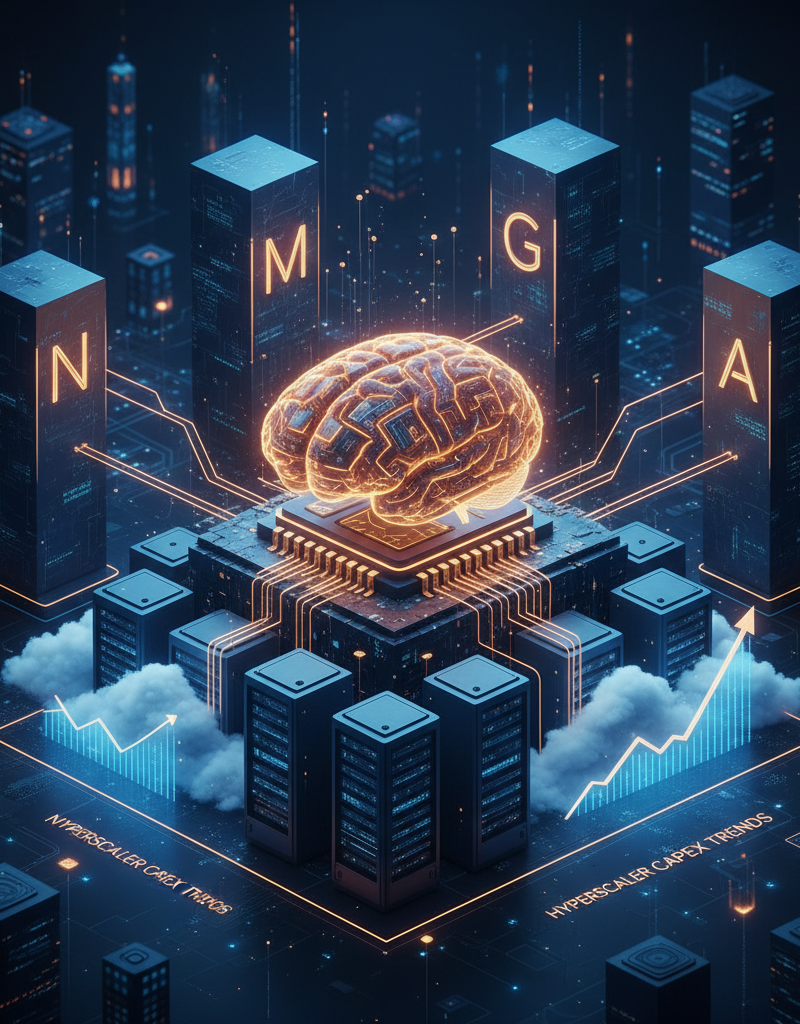
Nvidia's dominant position in AI chip supply continues to drive hyperscaler capital expenditure, with major cloud providers signaling sustained investment.
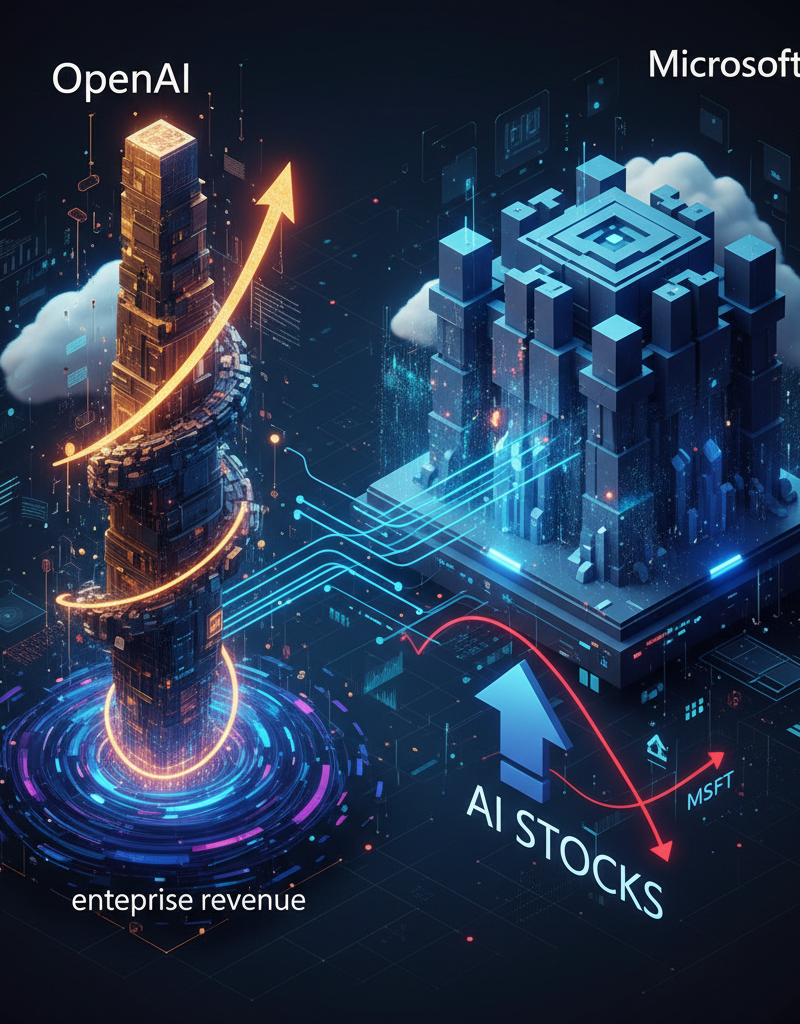
OpenAI's enterprise revenue is experiencing substantial growth in 2024, raising questions about the financial implications for its primary investor, Microsoft.
Companies are trading raw user logs for engineered data and locked-down pipelines. That shift reshapes winners, risks, and regulation in the U.S. AI market.
By Pedro Marini
The IMF Brief · Daily Newsletter
The AI economy, decoded before the open.
Five minutes. One email. The signal cutting through the noise at the intersection of artificial intelligence and Wall Street. Free, forever.