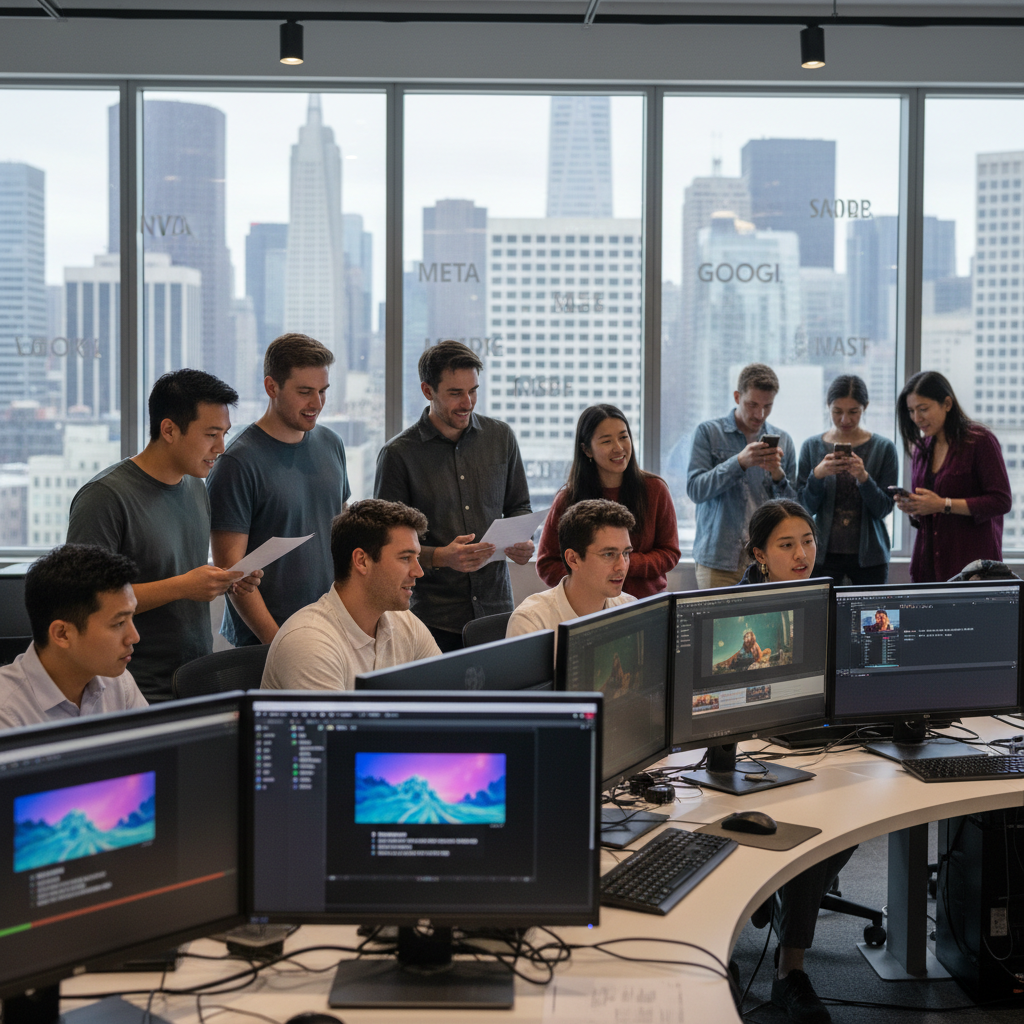
The moment many of us feared — and for some, quietly hoped for — has arrived: AI that turns prompts into short, usable video. What began last year as fuzzy, experimental clips now feels like a practical tool for marketers, indie filmmakers, and meme-makers alike.
The technical gap between text-to-image and convincing motion used to be wide. Compute costs and temporal coherence were real limits. You needed racks of GPUs and nights of engineering to make something watchable. That moat is shrinking. Runway, Meta, Google and several startups are rolling out features that let you generate b-roll, animated product mockups, or short social clips in minutes, not weeks.
This is more than convenience. It shifts production economics and creates immediate winners and losers.
What it looks like day-to-day
- Faster content cycles. Small studios and social teams can iterate dozens of cuts without booking a shoot.
- New creative skills. Prompt craft and model conditioning are becoming production line tasks.
- Copyright friction. The provenance of training data is still murky; rights holders will push back.
- Deepfake exposure. Easy face-swaps and hyperreal reenactments mean regulation and platform policy changes are inevitable.
A few concrete touchpoints make the stakes clearer. Runway is trying to be the accessible studio — editor-first tools that let creators replace skies, extend scenes or generate clips from a script. Meta and Google bring distribution and ad-stack reach; their tech could show up inside massive marketing systems very quickly. Adobe is quietly embedding generative frames into Premiere and After Effects so editors who just want results won’t have to think about models.
Hardware is the quiet coauthor here. NVIDIA-style GPUs turn prototypes into usable tools. Costs track compute: small agencies will lean on cloud credits or SaaS plans, while larger outfits will either train bespoke models or buy premium seats.
Why businesses should pay attention — and act
- Marketing teams: this is about speed and scale. You can test five ad cuts for the effort and cost of one traditional edit.
- Publishers: expect a glut of short-form video; the real bottleneck will be monetization and attention quality.
- Studios and unions: renegotiations are coming over AI usage, credits and compensation when performances are reused.
- Regulators and platforms: provenance, watermarking and takedown workflows will become front-page policy fights.
That said, some caveats matter. Not every clip will pass muster. AI still struggles with long-form continuity, intricate choreography and subtle cinematography. Human editors keep the edge on story, pacing and taste. Brand safety remains unresolved — models can hallucinate logos, products or risky contexts, and that requires human oversight.
Longer term, expect a split. One path swamped with AI-churned content aimed at speed and scale. Another that doubles down on human craft, scarcity and premium production values. They can coexist, but business models will change: subscription and usage pricing for tools, more reliance on creative consultancies, and potentially clearer markets for licensed training assets.
So what now?
Text-to-video AI has graduated from novelty to a real production tool. It will lower costs, increase output and force legal and ethical reckonings. If you work in marketing, media or production, start experimenting now. Set review policies. Budget for both new capabilities and new compliance headaches.
Quick checklist for teams ready to experiment
- Run small pilots with clear KPIs: time saved, views, conversion.
- Ask providers about data provenance and watermarking options.
- Review existing licensing agreements for AI-related clauses.
- Teach editors prompt design and simple guardrails.
This feels like an inflection point, not an endpoint. Expect messy, creative, occasionally alarming outputs in the short term — and a noticeably faster creative process over time.