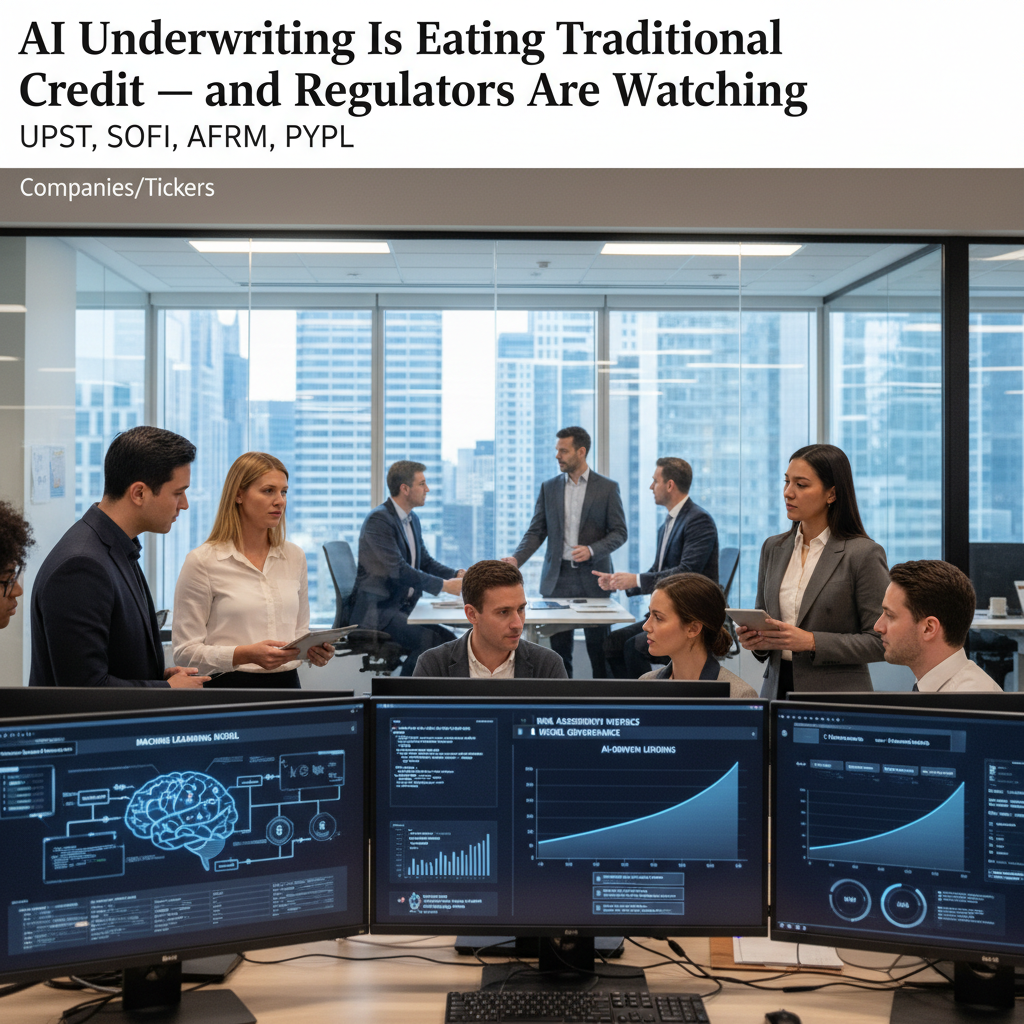
AI models are quietly deciding credit outcomes. In just six years, a thin-file borrower can get an offer in minutes from a fintech algorithm — something that once took weeks of human review. That speed is intoxicating; venture money followed fast. But the plumbing behind this change is messy, and the consequences are only starting to show.
What’s happening right now
- Fintech lenders and challenger banks are running machine‑learning models that mix traditional credit data with “alternative” signals — utility payment records, cash‑flow patterns, even app behavior. Firms like Upstart and SoFi get the most attention, and payments platforms that pair with lenders are making distribution frictionless.
- The benefits are real: higher conversion, cheaper customer acquisition, and credit for people who used to be invisible to the bureau system. For a bank, cutting days from underwriting is an obvious profit lever.
Why this matters
- Consumer effects: Faster decisions and, in some cases, better pricing. But when someone is denied, they rarely get a clear explanation. These models don't hand out tidy reasons.
- Competitive effects: Companies that get the models right can expand their market and undercut legacy banks on price. That puts real pressure on regional banks and the credit bureaus.
- Regulatory risk: Laws like the Equal Credit Opportunity Act still apply. Automation doesn't change that. Expect more supervisory scrutiny and, if outcomes skew by race or neighborhood, more lawsuits.
The risks hiding under the hype
- Hidden bias: If a model learns from historical data, it can inherit past injustices. A seemingly neutral feature may act as a proxy for race or place.
- Model drift and data quality: Borrower behavior shifts with the economy. Models tuned in a low‑stress era may stumble when delinquencies rise.
- Vendor and third‑party risk: Many lenders license models or buy external data — which layers opacity onto opacity and concentrates risk in a few vendors.
Signals worth watching
- Earnings calls: Listen for talk of “model performance” (and not the glossy kind), charge‑off guidance tied to AI portfolios, and spikes in compliance or legal expense.
- Regulatory filings: Consumer complaints, consent orders, and early litigation over disparate impact are red flags — and expensive, publicly visible ones.
- Product moves: When big banks partner with or acquire niche AI lenders, they’re often buying capability, not patiently building it.
Where I’m placing my bet
Companies that marry algorithmic speed with disciplined governance will outlast pure black boxes. That means explainable models, continuous monitoring, and treating ML like credit policy — not just a growth channel. Investors should prefer lenders with diversified books and clear, visible risk controls.
The upshot: automated underwriting is real and it can broaden access to credit, but it’s not a magic wand. It raises thorny legal and operational questions. The next year will tell us who governs these models well — and who ends up holding the losses when they don’t.