Generative AI Is Already Rewriting Risk — Wall Street Just Forgot to Read the Fine Print
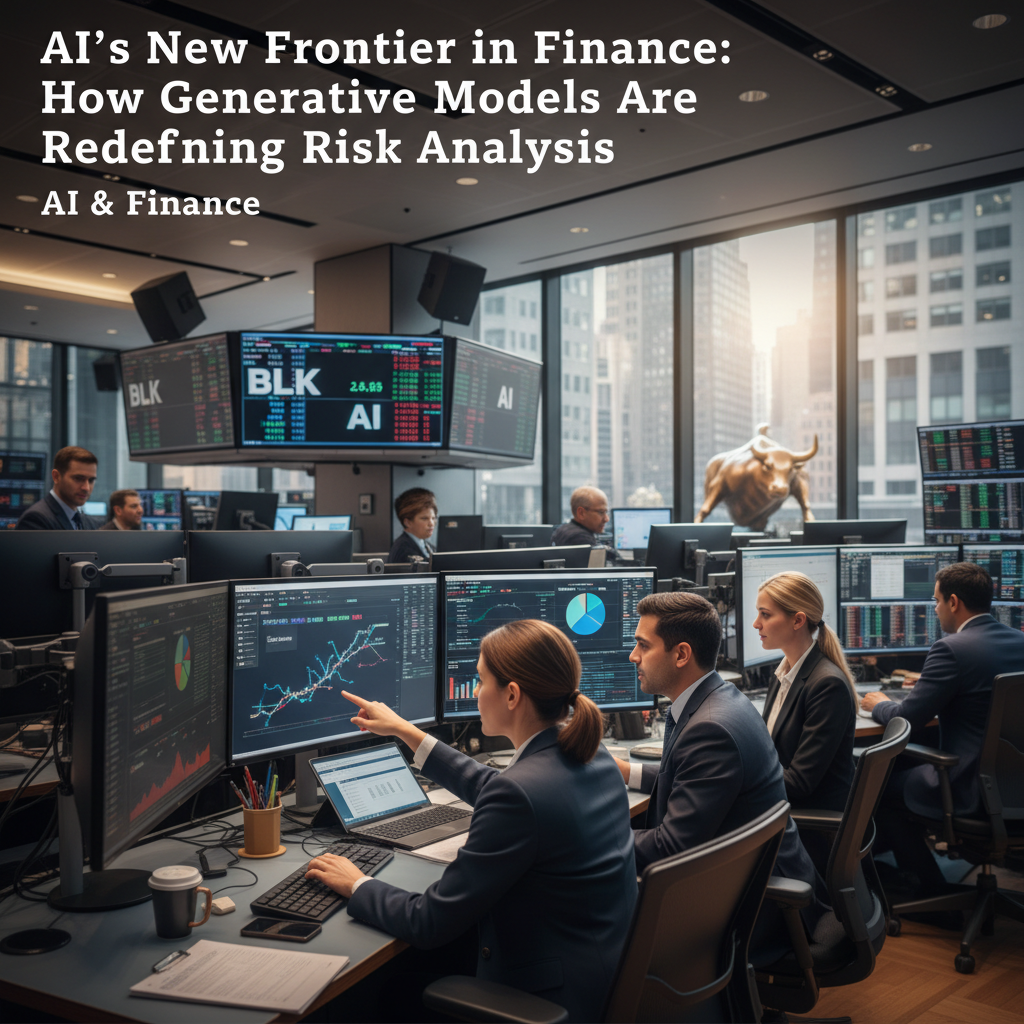
A trader in a dim-lit desk room no longer asks for more historical returns. She asks for futures nobody has ever seen. That request used to be science fiction. Now it's a routine line-item in IT budgets at hedge funds and asset managers.
Generative AI—transformers, diffusion models and their cousins—has moved from novelty art projects to the nerve center of financial decision-making. It isn’t just automating spreadsheets. It’s inventing entire scenarios, inventing synthetic counterparties, inventing client behaviors. That capability is seductive. It’s also dangerous when treated as prophecy.
The short version: generative models give firms a new way to simulate tails and unknowns. They also introduce new failure modes that standard model governance frameworks weren’t built to catch.
What these models bring to the desk
Historically, risk engines were honest and boring: regressions, factor models, log-normal assumptions, backtests tied to what actually happened. That left a blind spot for events the past never recorded. Generative AI steps into that gap by crafting plausible—but synthetic—histories and futures.
Firms are using that power in three practical ways:
- Stress-testing beyond history: Create synthetic market trajectories that stitch together vol spikes, regime shifts and correlated stress in ways that never occurred in the same calendar year—but could.
- Data augmentation: Build richer training sets for models (e.g., rare defaults, liquidity squeezes) without waiting for another 2008.
- Behavioral scenario modeling: Simulate how cohorts of clients or counterparties might react under unfamiliar incentives, revealing hidden feedback loops.
This isn’t theoretical. Hedge funds are already paying for synthetic market simulators. Asset managers — BlackRock included — have begun pilot programs to fold generative outputs into their risk tooling. Startups are selling portfolio-optimization engines that claim to adapt dynamically to simulated biases revealed through generative scenario runs.
That’s the upside. Faster, wider, more imaginative stress tests. But the technology’s weaknesses show up when imagination outruns discipline.
Why “synthetic” can look a lot like hallucination
Generative models are excellent at pattern completion: give them enough context, they invent the rest. That’s why they shine for text and images. Finance demands something different: causality, law-of-motion consistency, and provable tail behavior. Generative models were not engineered for that.
Three concrete failure modes to watch:
-
Overfitting to synthetic plausibility. A model can create scenarios that look reasonable on surface metrics—right skew, fat tails—but which violate microstructure realities. Liquidity can be “generated” where none could exist in reality. That produces false comfort.
-
Distribution drift and calibration breakdown. If market regimes change in ways the model hasn’t seen (or that no synthetic training set can anticipate), its scenario space becomes irrelevant. The model will still output confident-sounding futures.
-
Adversarial and model-interaction risk. When multiple firms rely on similar generative frameworks, their simulated responses can synchronize. That sounds theoretical until markets amplify it: similar risk limits, similar liquidity projections, same exit strategies executed simultaneously.
Regulators are noticing. They’re not yet running the show, but they’re sharpening tools.
Regulation and governance: the slow catch-up
Regulatory frameworks built for parametric models (see OCC SR 11-7 in the U.S.) emphasize validation, backtesting, and governance. Those are still necessary, but insufficient.
Generative AI introduces provenance and explainability problems that standard validation struggles with. You can validate a factor model by replicating its math. How do you validate a scenario that never existed and is produced by a billion-parameter neural net whose internal logic is fuzzy?
The response is predictable: regulators will demand traceability and human oversight. Europe’s AI Act puts algorithmic risk classification front and center, and U.S. regulators have signaled interest in model risk and systemic implications. Expect guidance that forces firms to document scenario generation pipelines, stress-test the stress-tests, and keep humans as the final arbitrators of plausibility.
What firms must actually do (not just talk about)
The firms that win this round won’t be the ones who deploy the flashiest model. They’ll be the ones who marry generative creativity with old-fashioned controls.
A practical checklist — the kind risk managers can implement this quarter:
- Version everything. Track model weights, training data provenance, prompt libraries—so you can rewind when outputs go sideways.
- Require scenario provenance. Every synthetic scenario must carry a justification: which data slices, which perturbations, and why it’s economically plausible.
- Backtest the backtests. Run generated scenarios against actual rare events to measure divergence, then penalize models that produce inconsistent microstructure.
- Human-in-the-loop gating. Don’t let an automated pipeline reprice books without a sign-off from people who understand market plumbing.
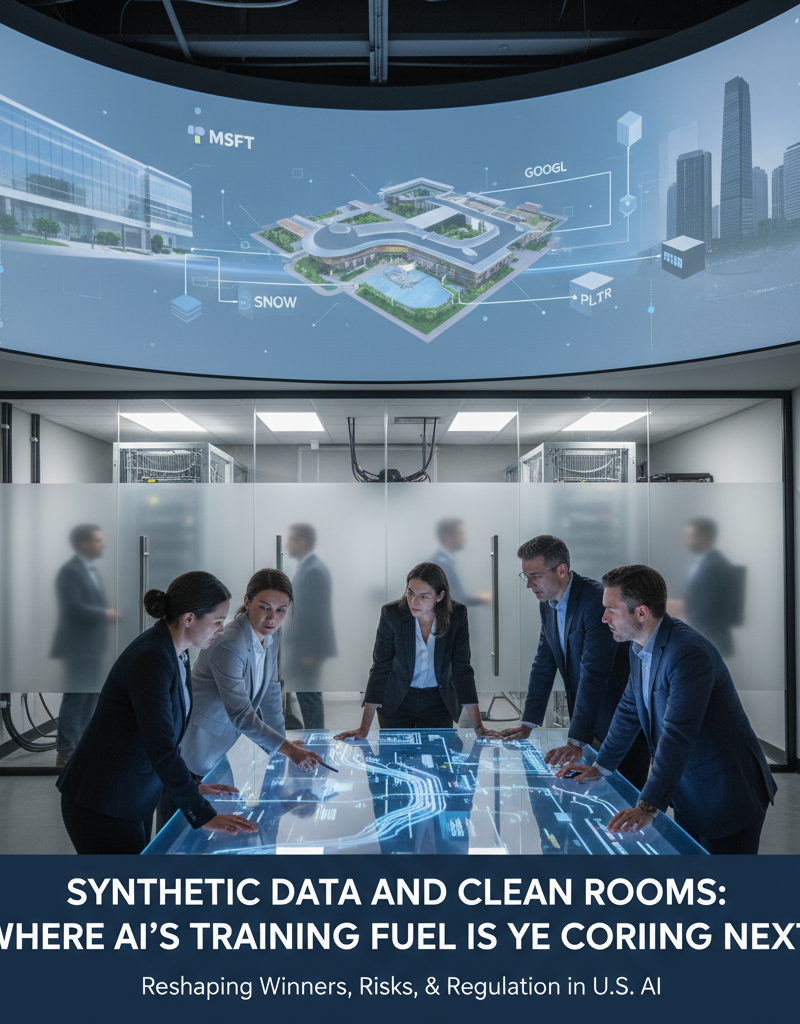
- Cross-firm adversarial testing. Coordinate black-box stress exercises across counterparties to detect synchronized vulnerabilities.
Market implications: winners, losers, and theater
Generative AI isn’t a universal accelerator. It’s amplifying existing advantages. Large players with scale in data, compute and model governance—Goldman, BlackRock, Two Sigma, the big quant shops—can absorb the experimentation cost and build robust pipelines. Small shops can buy capability from vendors, but at a price: vendor lock-in and shared failure modes.
A new niche is emerging: firms that package scenario-generation as a regulated, auditable service. Expect traditional risk vendors to pivot fast. Some startups will be acquired. Others will blow up spectacularly when their synthetic liquidity doesn’t survive a real-world run.
Predatory dynamics, too. If your competitor’s AI predicts your reaction, and you predict theirs, you get algorithmic game theory playing out in milliseconds. That’s where the line between risk management and market impact blurs.
The human angle: fear, greed, and operational hubris
Don’t underplay psychology. Traders crave edge. Portfolio managers want a narrative that justifies performance. Generative AI hands them stories—convincing, detailed, complete with graphs. That creates moral hazard. A model can generate a plausible scenario that validates a risky allocation. Humans will pick that scenario because it confirms a thesis. That’s not cynical; it’s human.
The right response is cultural: instill skepticism, force red-teaming, reward those who question the model’s confidence.
Bottom line
Generative AI will change how risk is modeled and how portfolios are run. It will find real, addressable gaps left by traditional models—especially in imagining tail events and behavioral feedback loops. But it also brings new, nontraditional risks: synthetic plausibility that masks microstructure impossibilities, synchronized model behavior, and governance gaps.
If you run risk at a bank or allocation at a fund, treat these models like nuclear material. Powerful, useful, and dangerous when mishandled. Build fences: provenance, version control, adversarial testing, and human veto. Regulators will demand more of the same.
And if you’re an investor watching this space: look for firms that can operationalize guardrails at scale. The next market winner won’t be the one with the flashiest generative pitch. It will be the one that uses generative AI to imagine crises—and then proves, with paper and process, that those imagined crises hold up under scrutiny.