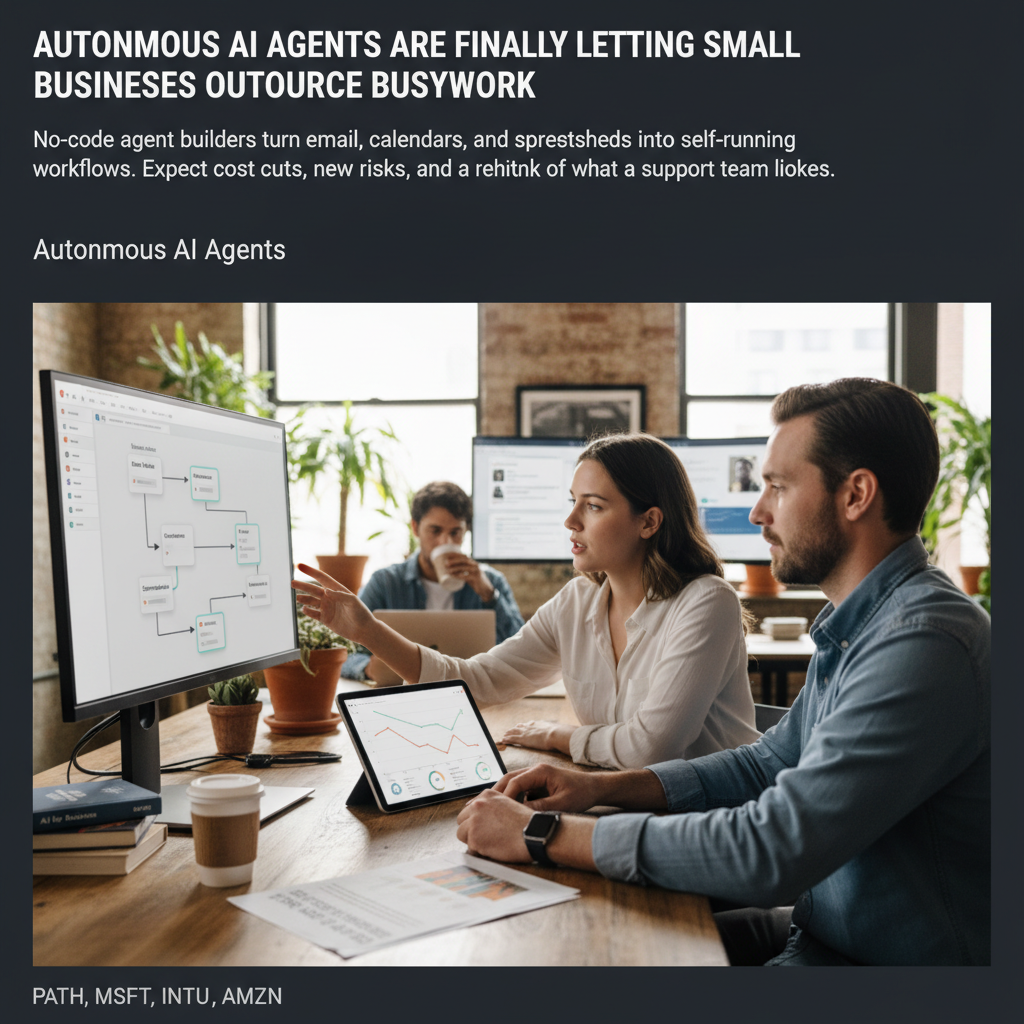
The automation story so far reads like a string of small revolutions. First came spreadsheet macros, then Robotic Process Automation that copied clicks, and integration tools — Zapier and the like — that stitched apps together. Now something different is rolling through: autonomous agents that pair large language models with cloud connectors and decision logic so a single configured agent can run end-to-end tasks that once needed several people.
Why this matters now
- Lower technical bar. No-code builders let nondevelopers chain Gmail, Slack, QuickBooks and Excel logic into an agent that runs without a human babysitter. That alone opens a lot of use cases that used to require engineering time.
- Better cost math. One agent can often replace 10–20 hours of recurring low-value work each week, which changes headcount calculations for many small and midsize firms.
- Faster cycles. Traditional RPA projects could stretch for months; many agents can be stood up and tuned in days. You iterate, spot problems, and tweak — quickly.
Concrete examples
- Accounts receivable agent. Scans incoming payments, matches invoices in QuickBooks, posts receipts and nudges overdue accounts on a schedule. In one two-week pilot at a boutique design firm that billed about $3 million a year, weekly AR follow-up dropped from 15 hours to 3.
- Customer intake assistant. Reads inbound emails, pre-fills CRM fields, schedules discovery calls and fires a Slack alert for high-priority leads. A regional HVAC installer used an agent to route overnight service requests and saw same-day responses climb by roughly 30 percent.
Where this sits in history
This is not just RPA 2.0 in name. RPA automated interfaces; these agents automate intent. Think of RPA as an assembly-line robot doing fixed motions, and of autonomous agents as a junior manager who reads a request, consults policy, and acts. That shift — from rule-only automation to intent-driven behavior — is why agents have broader utility, and why their failure modes can be more subtle and costly.
Risks and tradeoffs
- Data leakage. Agents need access to emails, documents and financial systems. Misconfigured connectors can leak sensitive records.
- Accountability. Who signs off when an agent changes billing or executes a contract? Audit trails matter, and builders haven’t standardized them yet.
- Overautomation. Automating fragile, exception-heavy processes often creates more work than it saves. Human oversight is still necessary, especially early on.
Market implications
Public and private workflows are starting to blur. Expect legacy RPA vendors and cloud providers to bolt agent builders into their stacks, which will drive faster feature rollouts and put pressure on pricing — good for SMBs, but also increasing vendor lock-in risks. Acquisitions and consolidation seem likely as incumbents scramble to add agent capabilities.
How to pilot one without burning down the house
- Start read-only or with notification agents that surface work instead of taking irreversible actions.
- Pick processes that repeat a lot and have few exceptions: routine invoicing, meeting scheduling, status reporting.
- Require logs, role-based access and a kill switch that can freeze an agent instantly.
A short prognosis
These agents will not replace professionals overnight. But they will restructure workflows the way spreadsheets did decades ago: humans handling edge cases and strategy, agents managing the plumbing. The practical question for leaders is less about whether agents matter and more about how to capture their productivity without adding systemic risk.
Pedro Marini