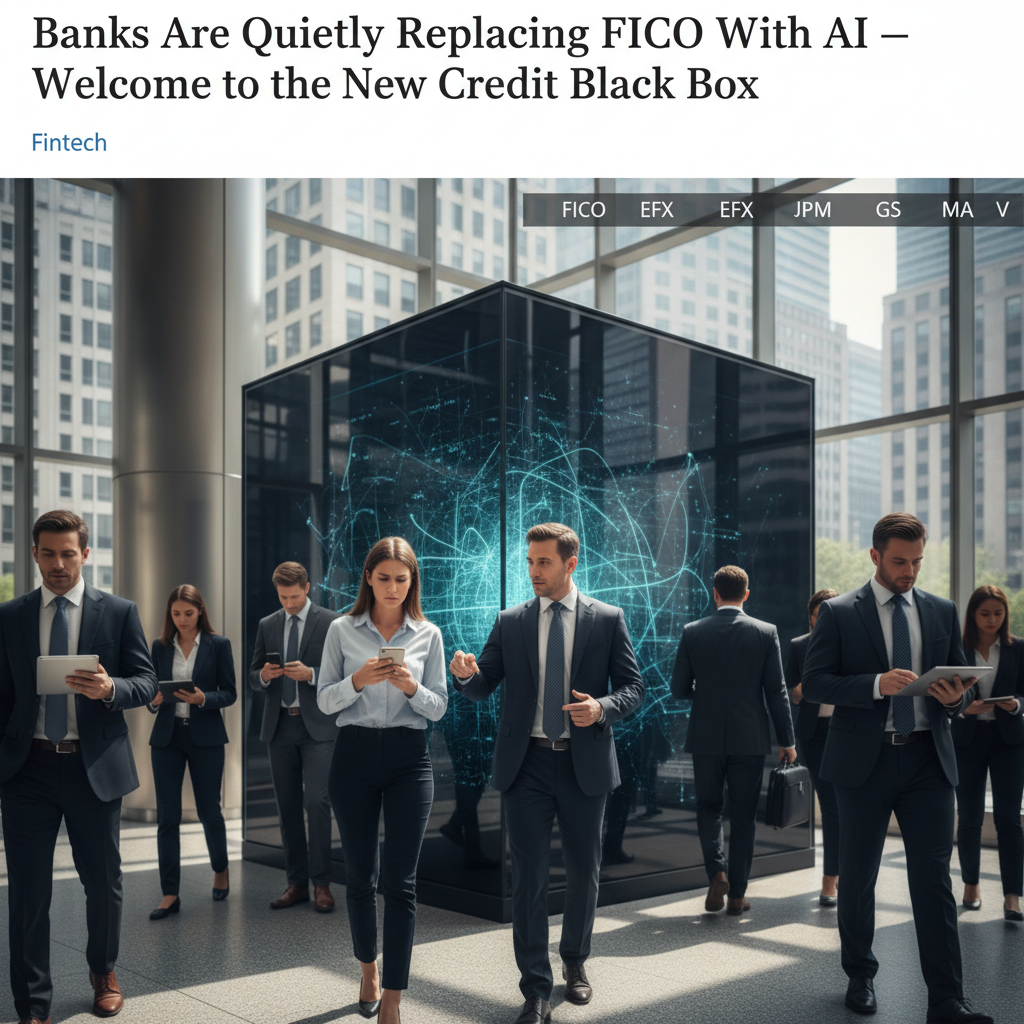
Banks are quietly scaling machine‑learning underwriting. What began as pilots has already moved into live use at mid‑tier banks and fintechs. For borrowers that often means faster decisions — and, frustratingly, no clear reason when an application is rejected.
This is more than a tech patch. Lenders are shifting away from simple score cutoffs toward models trained on vast, unconventional inputs: transaction rhythms, device signals, fragments of social metadata and even scraped text. The attraction is obvious: fewer missed opportunities, sharper pricing, and more credit for people who previously fell through the cracks. The risk is just as clear: denials that look arbitrary and biases baked deep into models.
A quick historical note: consumer credit scoring became mainstream in the 1950s and coalesced around FICO by the 1980s. Scores made underwriting consistent and auditable. Machine learning doesn’t overturn the economics of lending — it redraws the map of who gets labeled risky.
What’s happening now, and why it matters
- Speed and nuance. Models can ingest millions of small signals — card flows, recurring payments, micro‑behaviors — and produce a more dynamic view of repayment likelihood than a single FICO snapshot.
- Opaque outcomes. Many of these systems are effectively black boxes. That worries regulators and consumer advocates because people can’t meaningfully contest decisions.
- Uneven distributional effects. Early research and leaks suggest AI expands access for some overlooked groups while systematically disadvantaging others — largely depending on the data used and how it’s weighted.
A couple of anonymized examples
- One regional bank swapped a bureau‑score cutoff for a transaction‑based ML model. Approvals climbed about 8% overall, but approval rates in certain ZIP codes dropped noticeably.
- A point‑of‑sale lender used device‑fingerprinting to approve credit instantly; defaults fell, yet the company drew complaints after customers were blocked with no explanation.
Regulators are already leaning in
State and federal agencies are asking for model documentation, disparate‑impact testing and clearer consumer explanations. Expect more focus on:
- Adverse‑action notices — regulators will push for meaningful reasons, not boilerplate.
- Stress‑testing models across demographic slices.
- Third‑party audits when banks rely on vendor models.
Why banks are still pushing this
- Profit motive. Better risk segmentation reduces losses and lets lenders issue more loans without taking on more aggregate risk.
- Competitive pressure. Fintechs that use these models are stealing share; incumbents feel compelled to respond.
Explainability versus performance
There’s a real trade‑off. Simpler, interpretable models are easier to regulate and to defend in court, but they miss subtle signals. Complex models can perform better but resist human‑readable explanations. A pragmatic workaround some lenders use: an explainable “front door” (rules or a simple score) with a more inscrutable engine behind it — which can feel like post‑hoc justification.
Practical advice for consumers
- Ask for specifics. Under the Equal Credit Opportunity Act you can request a written explanation for adverse actions.
- Watch accounts and device access. These models often rely on transaction patterns and device fingerprints.
- Shop around. Lenders differ widely in what data they use and how they weigh it.
This transition isn’t a tidy swap of FICO for an algorithm. It’s a tense negotiation between speed, fairness and accountability. For borrowers, the benefits in access and speed can be real; for regulators and banks, the challenge is making those benefits durable and equitable.
If history is any guide, markets will reward faster, smarter underwriting — but the political and legal cost of opaque decisions will climb fast. Treat this as the next major reputational and regulatory test for banks in the AI era.