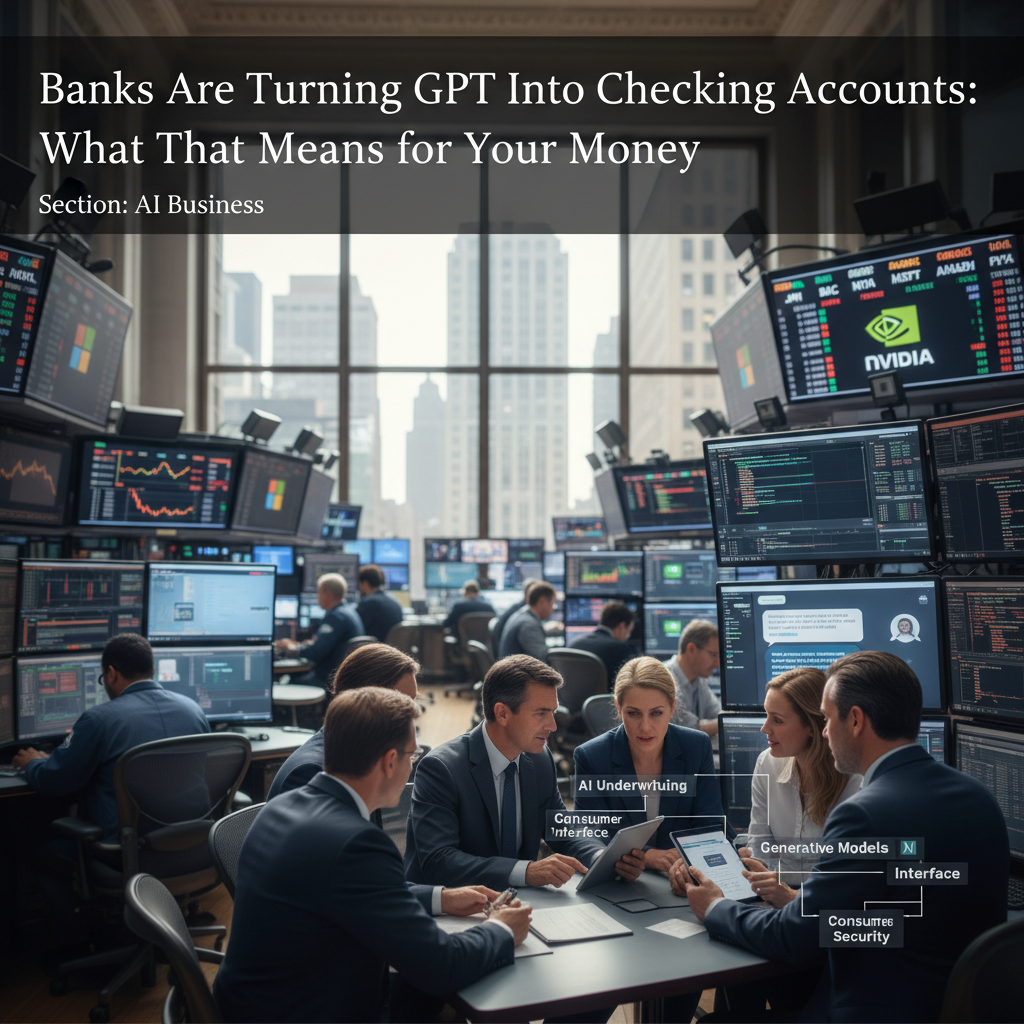
Banks slotted into the AI arms race
The little app you open to check your balance is quietly turning into an experiment in generative AI. In the past 18 months, many financial firms have moved beyond pilots and are running models in production — across lending, fraud detection, customer service and personalized offers.
This is more than incremental feature work. Swap a rule-based engine for a language model and the ties between customer data, decision-making and liability shift. Expect faster approvals, smoother chat assistants and sharper fraud alerts — and tougher questions about bias, explainability and who pays when systems err.
Why this buildout matters now
- Cloud compute costs have fallen and models have become more efficient, so pilots aren’t as expensive as they used to be.
- Regulators are watching closely but haven’t issued blanket bans, which lets big incumbents experiment while compliance teams scramble to keep up.
- Customers prefer convenience. That demand gives banks a practical advantage against smaller fintech challengers.
Think of it as online banking trading its flip phone for a smartphone. The experience improves, but the stacks underneath get more tangled.
Winners — and the subtle losers
- Infrastructure and chip vendors will benefit when banks scale AI workloads. That feeds into tech giants and chipmakers, episodically and unevenly.
- Large banks with decades of customer data can fine-tune models on proprietary behavior, widening a moat against mid-size rivals.
- Small fintechs can still carve niches or partner with incumbents, but they risk losing share if they can’t add comparable AI features fast.
A caveat: AI is not a guaranteed profit engine. Implementation costs, model risk controls and more complex support can blunt early returns. In practice, the gains can be lumpy.
Risks consumers and investors should watch
- Model bias and unfair lending. Historical discrimination can hide in proxy signals unless teams audit thoroughly.
- Data leakage and third-party models. Pushing customer data into vendor pipelines or large models raises privacy, contractual and cybersecurity issues.
- Regulatory backlash. Expect targeted enforcement and guidance about explainability and adverse action notices.
What to listen for in earnings calls and product updates
- Talk about model risk management, vendor audits, and explicit AI spend line items.
- New or deeper partnerships with cloud providers and chip suppliers — that usually signals real infrastructure bets.
- Product launches for conversational banking, instant underwriting or automated savings advice.
Consumer playbook — practical steps
- Opt into AI features deliberately and check privacy settings. If you want human oversight in lending, ask for it.
- Read credit notices closely. If a bot affected your rate or approval, request an explanation of the decision criteria.
- Don’t be dazzled by a flashy assistant. Prioritize transparent fees and solid fraud response.
A final, human-size observation
This wave feels like earlier shifts — credit scoring moved from ledgers to models long ago, and fintech upended distribution in the 2010s — but it lands differently. AI promises highly tailored advice and near-instant transactions, which is exciting. It also forces banks to reconcile product innovation with model governance, legal risk and customer trust.
Celebrate the convenience, but stay skeptical about oversight. In five years the smartest bank may well be the one that invests as much in model controls and compliance as it does in user-facing polish.