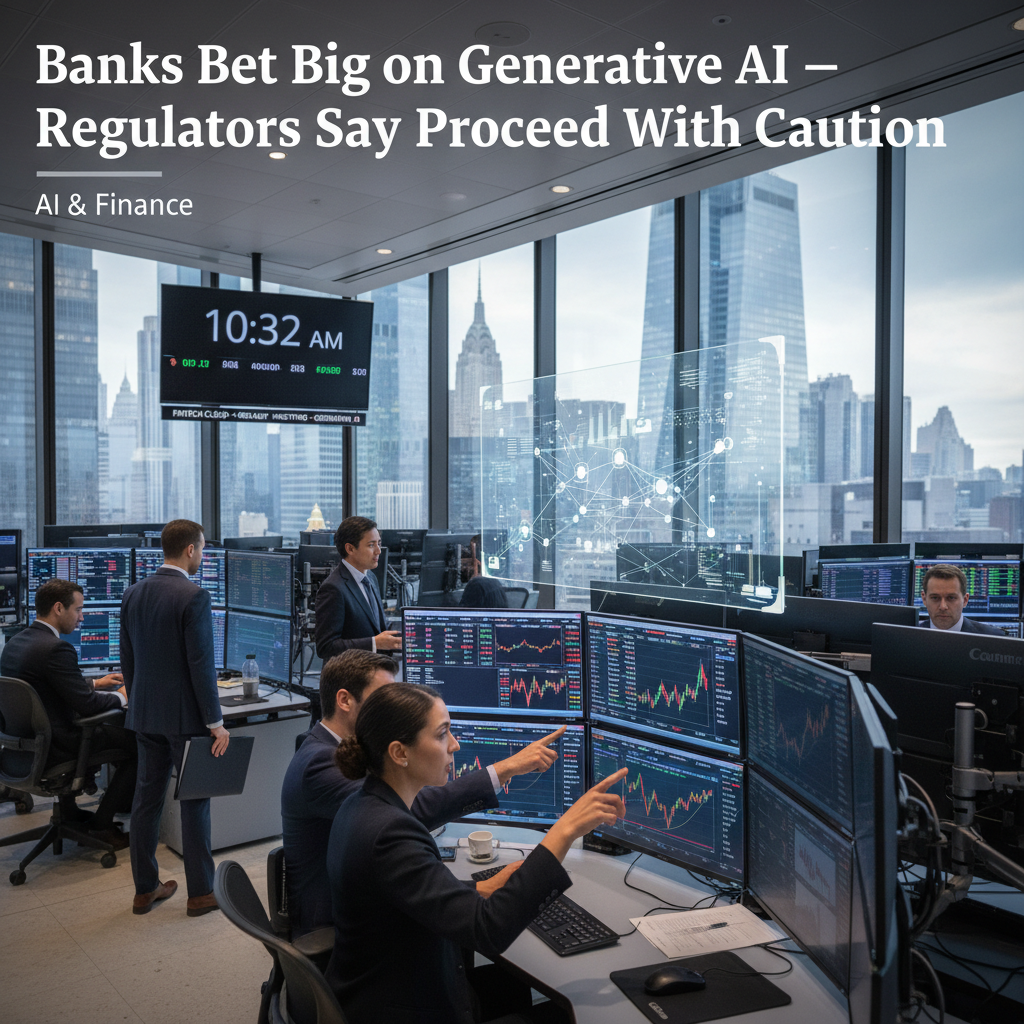
The new arms race for AI in banking
Banks are moving faster than the rule book. Over the last year big U.S. lenders have pushed pilots that put generative AI at the front lines of lending decisions, customer conversations and back‑office work. This isn’t a routine software refresh. It’s changing how credit is priced and how risk is assessed.
Why this matters now
- These models can compress loan documents into a page, propose credit outcomes and answer complicated customer questions with near‑human fluency. The result: fewer people needed for repetitive review and faster decisions.
- The math is blunt: a few hours of model training and cloud cycles can substitute for teams of analysts and lengthy manual workflows.
Still, the gains are uneven and the risks are anything but hypothetical.
Not all automation is equal
Banks have used machine learning for years — fraud detection, credit scoring, that sort of thing. What’s different now is twofold.
- Models produce language and rationales. That creates the feel of an explanation, even when the underlying decision process remains opaque.
- The whole stack — compute, chips, model services — is concentrated among a handful of providers. That amplifies vendor and systemic risk.
Think of it like this: a loan officer who learned from experience versus a black box that writes a persuasive memo about why someone is creditworthy. They often reach the same headline conclusion, but not for the same reasons.
Regulation is catching up — slowly
Regulators are asking harder questions about model controls, fair lending and third‑party risk. Past enforcement in other sectors has shown what can go wrong, and banks now face consumer protection plus financial stability scrutiny.
- Expect supervisors to press on training data provenance, backtests and bias audits.
- My bet is guidance will piggyback on existing model risk management frameworks rather than create brand‑new rulebooks at first.
What this means for consumers and markets
Faster decisions and slicker digital experiences for customers. Also more opaque denials and fewer chances to escalate to a human. For investors, the likely winners are clear: companies that sell compute and AI infrastructure. The losers? Firms that move too quickly and run into reputational or regulatory trouble.
Winners and losers — a tentative map
- Winners: cloud firms and AI infrastructure vendors that can scale and supply compliance tooling to banks.
- High risk: small fintechs reliant on third‑party models without governance, and banks that treat generative AI purely as a short‑term cost cut.
Concrete red flags for investors
- Rapid cuts to underwriting headcount without matching investment in model controls and audits.
- Heavy dependence on a single third‑party model or cloud provider across multiple products.
- Earnings narratives that trumpet AI revenue lifts but give no detail on error rates, override frequency or bias testing.
What to watch next
- Bank earnings commentary on AI adoption and vendor tie‑ups.
- Any regulatory guidance or enforcement that forces transparency around models and fair lending.
- Big partnerships between banks and dominant cloud or chip vendors.
A final thought
Generative AI won’t magically fix banking. It delivers productivity, yes, but also concentrates power and introduces new ways systems can fail. Read company disclosures closely. Regulators are likely to move from polite questions to firmer guardrails. The institutions that do best will pair ambition with meticulous governance, not those chasing headlines or one‑off cost cuts.
Quick takeaways
- Generative AI can speed decisions but can also obscure how those decisions are made.
- Vendor concentration raises systemic risk across finance.
- Governance — not hype — will decide which banks secure lasting benefit.