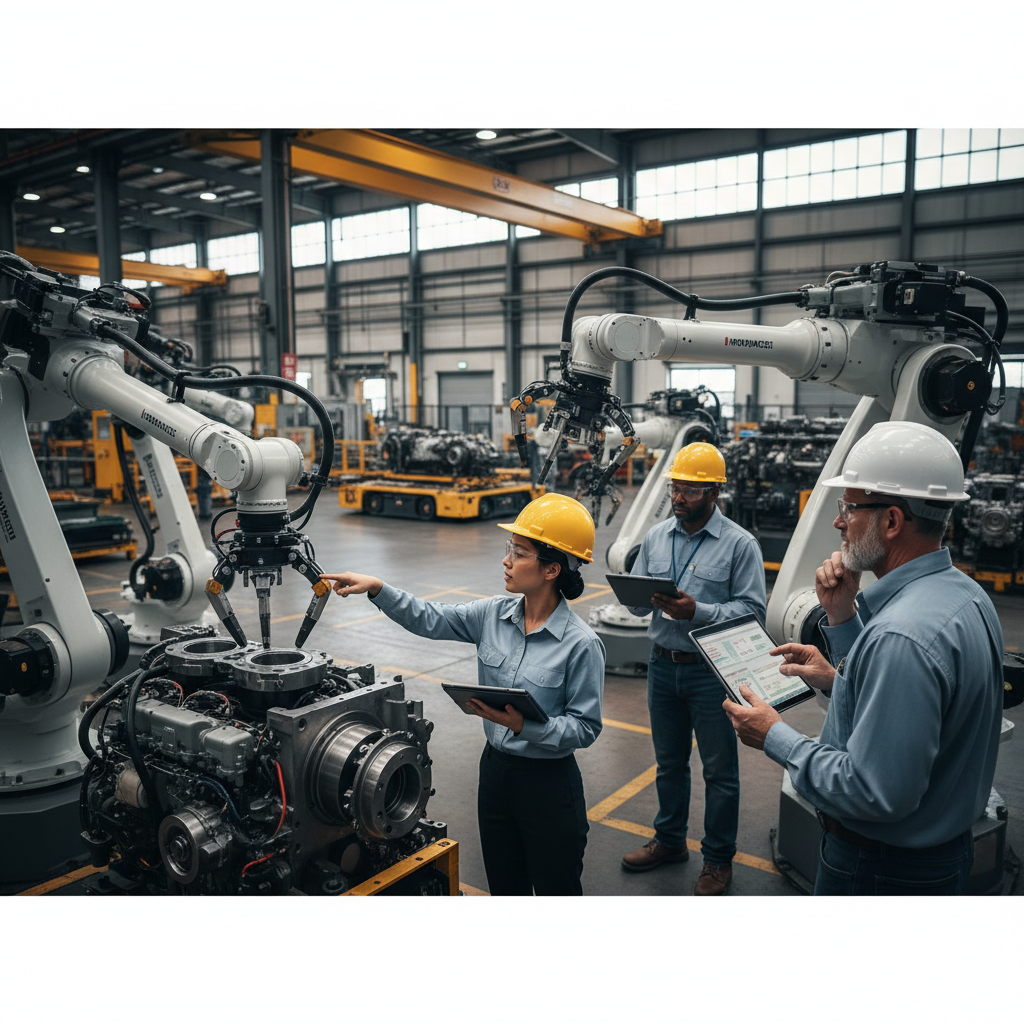
The factory floor went quiet. Then it got smarter.
Call it 2026’s quiet revolution: factories aren’t just adding robots to do the heavy lifting. They’re rewiring how work is organized — sensors, edge AI, predictive maintenance, real‑time scheduling and computer vision stitched together like software. The result: output is up fast, but the jobs that used to sit between foreman and spreadsheet are evaporating. That’s not a neutral evolution. It is a reallocation of economic power — toward whoever owns the data, the stack and the retraining pipeline.
The headline number is blunt. The US Department of Labor’s latest figures show manufacturing productivity about 15% higher than in 2024. That jump isn’t coming from marginal conveyor tweaks. It’s coming from factories that treat operations like SaaS products: instrumentation everywhere, quality assured by models, downtime anticipated days in advance. Machines still move metal. But software now dictates when, where and how.
Which means winners and losers are emerging — and fast.
Why this is not the same old automation story
A century ago, conveyor belts standardized repetitive craft. This wave is different because the marginal cost of intelligence is collapsing. You don’t just buy a robot arm. You buy:
- cameras and vibration sensors that stream to the cloud;
- models that spot a minute pattern change in a motor and schedule a repair before a production line stalls;
- orchestration layers that reroute work across shifts and vendors in real time.
That "stack" is modular, subscription-friendly and, crucially, repeatable. A mid‑sized plant in Ohio can subscribe to a predictive maintenance package, not write a seven‑figure check to a systems integrator. The capital architecture of automation is shifting from bespoke projects to productized software offers.
What the numbers hide — and what they reveal
Productivity up 15% is a tidy sound bite. But it masks two messy shifts.
First: headcount composition. Routine assembly and inspection roles are contracting. Skilled technicians who can debug models, calibrate sensors and translate line data into action are growing. That’s the “human role evolves” point you read elsewhere — true, but the transition isn’t seamless. Not every assembly line worker becomes an edge‑AI technician overnight. Training pipelines are clogged. Community colleges are scrambling to catch up. Companies are offering on‑the‑job bootcamps. Still, the winners will be those firms that combine hiring, training and a realtime feedback loop for employees.
Second: returns to scale are ambiguous. Big industrials — think Rockwell, Siemens, ABB — still have an advantage in heavy integration and legacy contracts. Yet a surprising cohort of small manufacturers are seeing margin upticks of as much as 20% after adopting cloud‑based automation tools. How? By trimming unplanned downtime, slashing quality rework and squeezing cycle times. That makes automation not just a tool for giants, but a lever for nimble operators. The caveat: high upfront costs and integration headaches will still lock out the truly marginal players, producing a Darwinian shakeout in some regions.
An example worth picturing
We visited (anonymized) a Midwest automotive parts supplier that had been bleeding overtime costs for years. They implemented a predictive maintenance system — cameras on bearings, vibration sensors on conveyors, an edge model that flagged anomalies — and saw downtime drop roughly 30%. That translated into millions saved annually and a dramatic reduction in emergency maintenance shifts. The kicker: the plant didn’t fire frontline workers en masse. It redeployed a portion of them into maintenance squads, runbooks and model‑validation roles. The gains were real. So were the new job descriptions. Those jobs paid better. They required training. That’s the market microclimate today.
Markets to watch (and why)
If you’re an investor or corporate strategist, the obvious places to look are industrial software, sensor manufacturers and cloud compute providers. But dig deeper.
- Industrial AI platforms: Companies that can own the data pipeline and deliver repeatable use cases — predictive maintenance, quality inspection, dynamic scheduling — will command outsized margins. The economics are subscriptionary; retention matters more than one‑off hardware installs.
- Edge compute and sensor makers: The value has crept left of the cloud. Low‑latency inference on the floor is nonnegotiable for mission‑critical lines.
- Systems integrators and reskilling platforms: Integration remains messy. Firms that can bundle tech with effective workforce transition programs will win business and political goodwill.
A political risk, not a technical one
This isn’t just a labor economics problem. It’s a policy headache. Regions that lose middle‑skill jobs will become political hotspots. Look for pressure on Washington and state capitals to expand retraining credits, to subsidize automation adoption for small manufacturers, and to experiment with portable benefits for displaced workers. The tax code may soon favor modular automation credits over blunt investment write‑offs.
There’s another policy angle often ignored: data governance. Factories generate sensitive process knowledge. When cloud platforms ingest that — and bundle analytics — value accrues to the platforms unless contracts are written otherwise. Expect debates over contractual standards, data portability and, where dominant suppliers emerge, antitrust scrutiny.
Three uncomfortable realities
-
Speed beats fairness. Firms that move quickly to instrument and automate will capture margin and market share. The laggards will find themselves either acquired or reduced to commodity providers. That’s brutal, but predictable.
-
Reskilling is necessary but insufficient. Bootcamps and apprenticeships are vital. But without real on‑the‑job practice and career ladders, retraining becomes a temporary bandage. Employers must architect roles that let workers grow with the technology.
-
The factory is a data network. Whoever controls the analytics controls the upgrade cycle. That’s where the outsized returns will sit — not in installing a robot, but in the recurrent software fee that squeezes inefficiencies quarter after quarter.
What managers should actually do tomorrow
Don’t treat digital transformation as a tech project. Treat it as a structural rewrite of operations, people and contracts.
- Instrument first, automate second. Start with sensors and short‑loop analytics to prove ROI.
- Buy outcomes, not hardware. Push vendors to price via performance metrics — uptime, yield, quality — not solely capex.
- Build internal career pathways. Pair veteran operators with data teams; fund apprenticeships that end in certified roles.
- Negotiate data rights. Contracts should protect your IP and ensure analytic portability if you switch vendors.
Final note — and a warning
If you want a neat moral: automation will “create new jobs” and “raise productivity.” Both are true. But the distribution is what matters. Productivity gains without deliberate policies for reskilling and data governance will concentrate profit and hollow out local labor markets. That gap will drive the next chapter: not a technology debate, but a political one.
Factories are not becoming less human. They are becoming more selective about which humans they need. Investors, managers and policymakers who accept that reality — and plan for it — will be the ones writing the rulebook for the next decade of American manufacturing.