Headline: Buy Now, Pay Later has stopped being a novelty — it isn’t a free lunch. What started as a checkout trick to lift sales has graduated into mainstream credit. That change has Washington, investors and consumer advocates rethinking the rules.
BNPL sits in a long American line of installment buying — think mail-order catalogs and furniture stores that let customers pay over time. Credit cards scaled that idea in the 20th century; BNPL dresses it up for apps and one-click checkouts. The real difference now is scale, speed and one weak link: underwriting that often barely exists.
Why this matters to household budgets
- Hidden costs and behavioral risk. Short, interest-free windows feel harmless. Miss one payment and late fees, penalty charges and collections can turn a cheap purchase expensive. BNPL favors immediacy and punishes forgetfulness.
- Credit-score ambiguity. Some providers report positive payments to credit bureaus; others do not. The result is unpredictability — a possible path to better credit in one case, a zero-sum invisible product in another.
- Rising regulatory pressure. Regulators in the U.S. are nudging toward clearer disclosures and rules about underwriting and reporting. That should protect consumers over time, but may make some plans pricier in the short term.
Who to watch
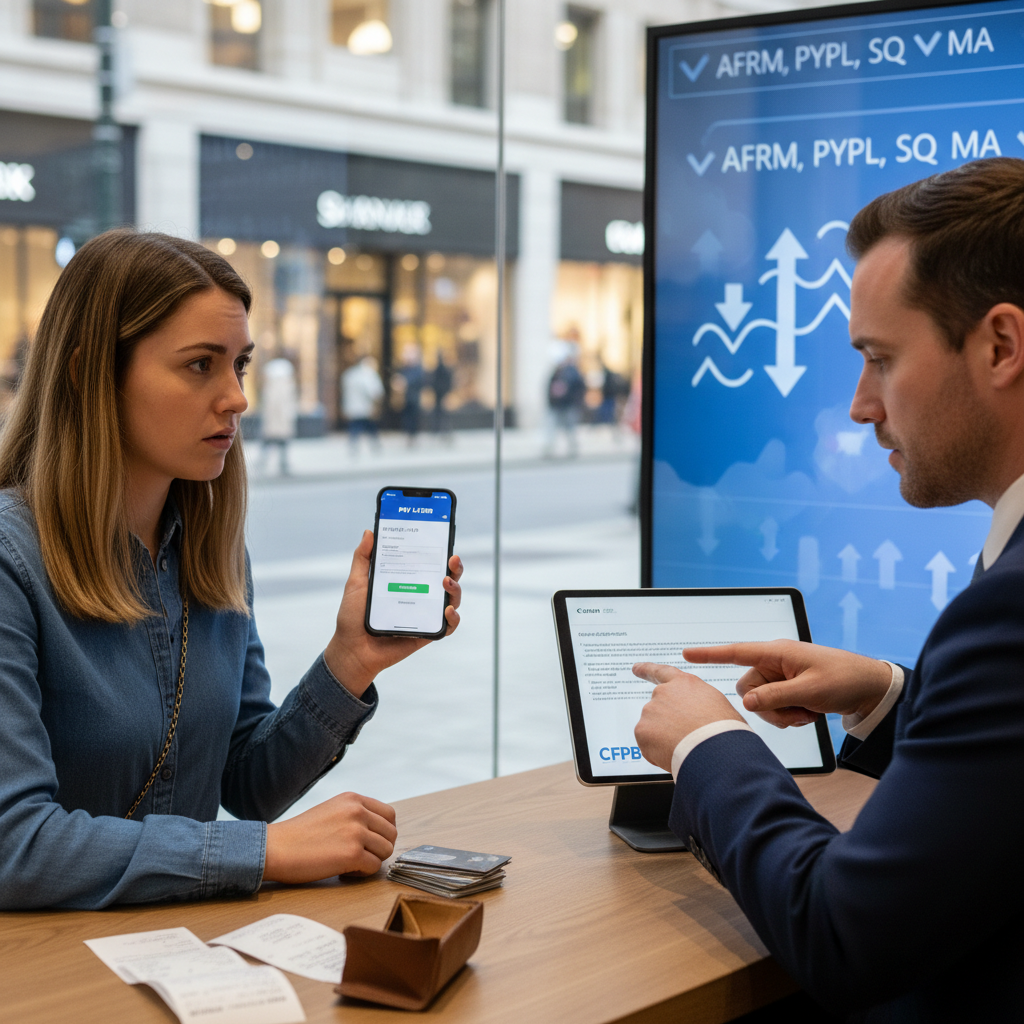
Affirm (AFRM), PayPal (PYPL) and Block (SQ) carry the most public exposure. Visa (V) and Mastercard (MA) are quietly building the rails and partnerships that keep BNPL showing up at retailers everywhere.
A more complicated truth: BNPL isn’t all bad
For small, predictable purchases you can repay on time, BNPL can be simpler and cheaper than many credit options. Retailers like it too — conversions go up, carts grow. But that neat outcome depends on perfect borrower behavior, which, let’s be honest, most household budgets rarely deliver. In practice, the story is messier.
Practical rules for consumers
- Treat BNPL like a loan, not a free trial. Read the fine print, set calendar reminders, assume missed payments will cost you.
- If you want credit-building, choose providers that report positive payments to the bureaus. If they don’t, the product may be invisible to your credit history.
- Compare against a 0% APR credit card or a planned layaway for bigger purchases. Those options often offer better dispute resolution and fraud protection.
- Keep an emergency buffer. BNPL converts a single purchase into a recurring liability; a small cash cushion prevents rollovers into more expensive debt.
Where this might head
Expect regulators to push for consistent disclosures and more standardized credit checks. Good for consumers in the long run, but that will likely reduce the number of truly interest-free deals. Providers will respond — fees, subscription models or tighter underwriting are likely pivots. In other words, BNPL will start to resemble other consumer credit products.
My view: BNPL can be a useful tool when used sparingly and with discipline. It is not a substitute for budgeting or an emergency fund. Treat it with the same skepticism you give any product that asks you to pay later, not now.
If you use BNPL, do a quick audit this week: list active plans, check due dates, turn on autopay where appropriate and decide whether any purchase should have waited. Your credit — and your peace of mind — will thank you.