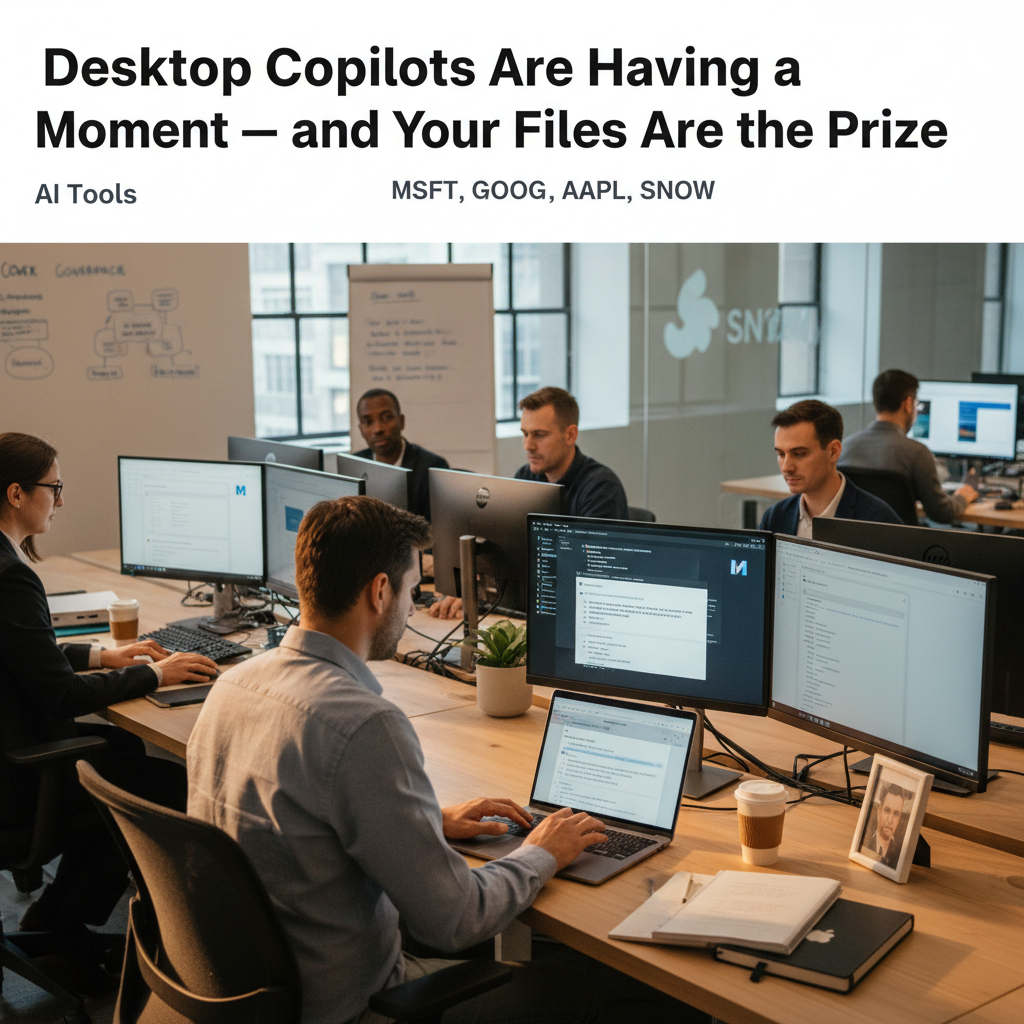
The pitch is irresistible. An assistant living on your desktop, remembering every PDF, pull request, and Slack thread — answering questions in seconds. Over the past year we've slid from cloud-only chatbots to lighter, locally aware copilots that stitch your personal data into context-aware responses. Exciting. Also worrying.
I’ve been testing a handful of these tools. Some record strictly on-device. Some upload encrypted snippets. Others run locally but call back to cloud models when they need oomph. The demos are striking: search that feels like memory, meeting notes that actually link to the right files, summaries that shave hours off research. But don’t lose sight of the core implication: these copilots are basically building a searchable copy of your life.
Why now? Two forces pushed this forward.
- Smaller, faster local models and smarter routing reduce trips to the cloud.
- People expect answers tied to their inbox, docs, and codebase — not generic web knowledge.
Put together, that created a new product category: personal/desktop copilots. You can see it in OS makers folding copilot features into system UX, and in startups focused on indexing local archives, audio, and app histories.
Still — glossy demos mask real trade-offs.
Where these tools help
- Faster search across files, messages, and meetings. Handy for freelancers, lawyers, analysts.
- Better onboarding: new hires can query a “team memory” instead of interrupting ten people.
- Creative work: prompts that reference your own drafts and assets tend to produce more relevant results.
Where they hurt
- Privacy bleed: private notes and sensitive documents enter a retrievable index.
- Compliance risk: indexing patient records, client files, or privileged communications can break laws or contracts.
- Expanded attack surface: local indexes and sync systems create new vectors for data theft.
Think of it like this: early digital assistants were librarians who pointed you to public stacks. Today's copilots build private stacks and hand you a book with your name inside.
Expect regulators and enterprises to react. Three likely responses, roughly:
- On-device processing will be marketed as the safer choice — until it isn’t (local models can still leak via prompts or telemetry).
- Zero-knowledge sync — where vendors can’t read your content — will become a must-have in many enterprise negotiations.
- Policy controls will be demanded: which folders can be indexed, query auditing, and compatibility with legal hold.
If you’re deciding whether to enable a desktop copilot, ask these first:
- Where is my data stored — strictly local, vendor cloud, or both?
- Can I truly remove an index? Is indexing reversible?
- What telemetry leaves my machine, and is it encrypted end-to-end?
- Does the vendor offer enterprise controls and compliance certifications?
Short-term winners will be the teams that marry good UX with honest privacy defaults. It’s not flashy product work — it’s engineering trade-offs and clear choices about defaults — but that’s where trust will be won or lost.
There’s a historical echo here. When phones put sensors and always-on connectivity in our pockets, apps stopped being isolated tools and became immersive services. Desktop copilots feel like that same pivot for personal computing: they make your files actionable. If companies chase retention and monetization ahead of safety, expect a backlash similar to early social-media privacy fights.
My read: this starts as a feature race and quickly becomes a trust race. The vendors who do well will be the ones that admit the trade-offs, expose controls, and make deliberate engineering choices to keep the most sensitive data offline by default.
Quick checklist (practical steps)
- Turn off automatic indexing for folders with sensitive material.
- Use enterprise/pro tiers that offer encryption and audit logs if you handle regulated data.
- Periodically review connected apps and revoke any access you don’t recognize.
There’s a lot to be excited about. Just don’t let the excitement silence a straightforward question: who owns — and who can reach — these memories?