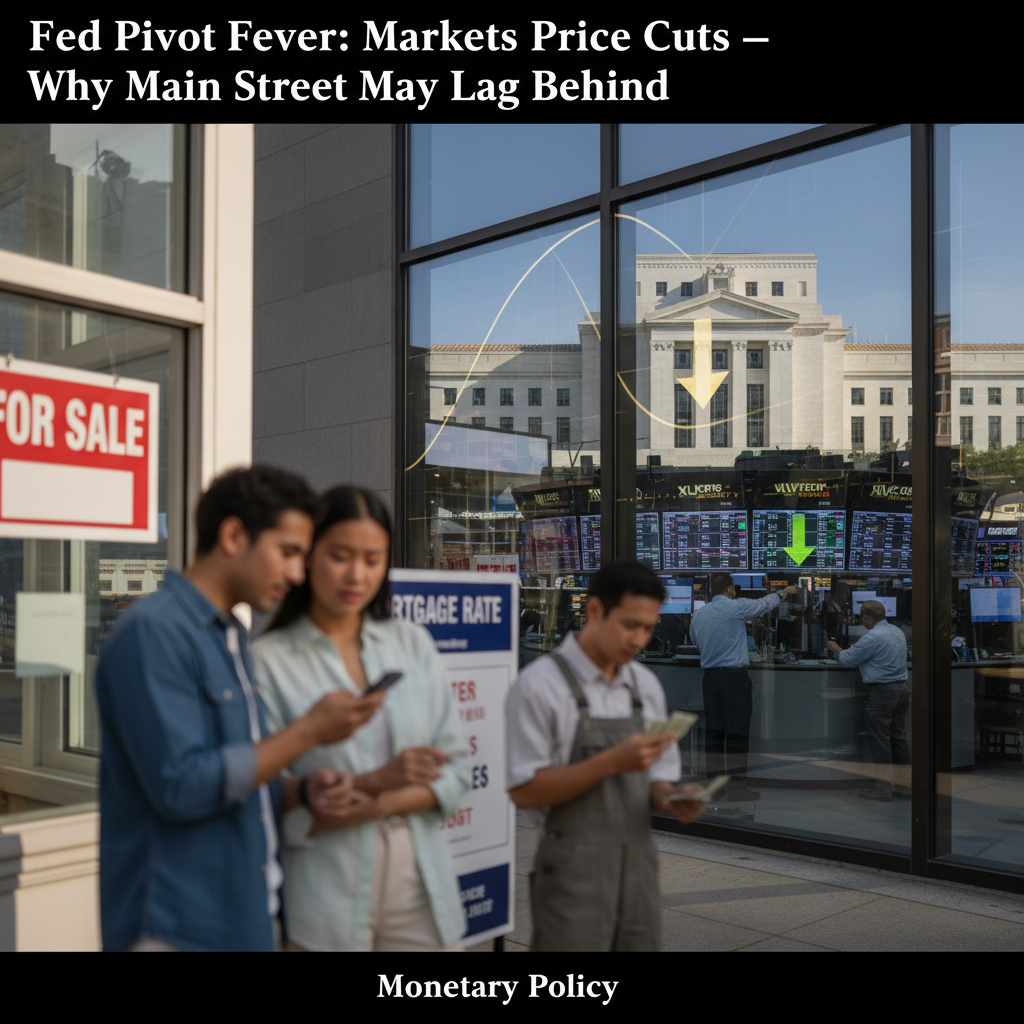
The picture is familiar, but not the same. After a year in which stubborn inflation met aggressive Fed tightening, market pricing has shifted — traders now expect cuts sooner than Powell-era guidance implied. The result: long-term yields have compressed, growth-linked equities have gotten a welcome lift, and mortgage spreads and bank margins are being jostled.
Why markets are so sure (briefly)
- Inflation has cooled in recent months; headline CPI sits noticeably closer to the Fed’s 2 percent reference than it did a year ago.
- The labor market is cooling from its blistering pace. Hiring is softer and wage gains show signs of easing.
- Markets trade on expectations. Futures currently embed multiple cuts over the next 12 months, and that outlook is already changing asset prices.
Don’t mistake this for an immediate win for households. There are frictions and lags.
Three uneven winners and losers
- Bonds and long-duration assets: tickers like TLT have rallied as rate-cut odds rise and long yields fell. Good news for retirees and long-duration holders — but it also tightens risk premia, so speculative plays lose a safety valve.
- Banks and mortgages: when short rates stay high while long yields drop, net interest margins get squeezed. For would-be homebuyers, mortgage rates often trail Treasury moves, so cheaper Treasuries don’t automatically mean cheaper loans at the point you lock.
- Tech and AI growth stocks: lower discount rates lift valuations, which helps companies with big future earnings. That explains why chip and AI names have outperformed even though the macro story isn’t uniformly strong.
A historical nudge of caution
Pivots don’t always land gently. Look at the 1990s or the late 2010s: equities could rally while housing and credit conditions lagged or re-tightened. Monetary policy works with long, variable lags — often a year or two — so headline rate shifts are only one piece of the puzzle.
Three things I’m watching now
- Services inflation, especially rents and healthcare — this has been the stickiest part of the inflation problem.
- Real wages and labor force participation — are we seeing a sustainable normalization or early signs of weakening?
- The 2s–10s yield curve; whether it re-steepens or inverts again tells very different stories about recession risk.
Policy risk and political noise
Large fiscal deficits and heavy Treasury issuance complicate the Fed’s job. Big supply can keep term premia higher even if policy rates fall. Add a geopolitical shock or a sharp commodity move and the tidy pivot narrative can unravel fast.
Practical takeaways (not investment advice)
- If you hold long-duration bonds, expect more volatility even if the trend points to lower yields.
- Homebuyers: watch mortgage spreads. Waiting for headline Treasury moves alone is a risky timing tactic.
- Investors: use the pivot to rebalance. Trim concentration in crowded growth names; consider selective cyclicals that benefit from easier credit — but be picky.
The Fed’s swing from tightening to easing is never purely mechanical. Markets price the idea quickly; the real economy and borrowing costs respond unevenly and with delay. That mismatch is exactly where the next set of risks — and opportunities — will appear.