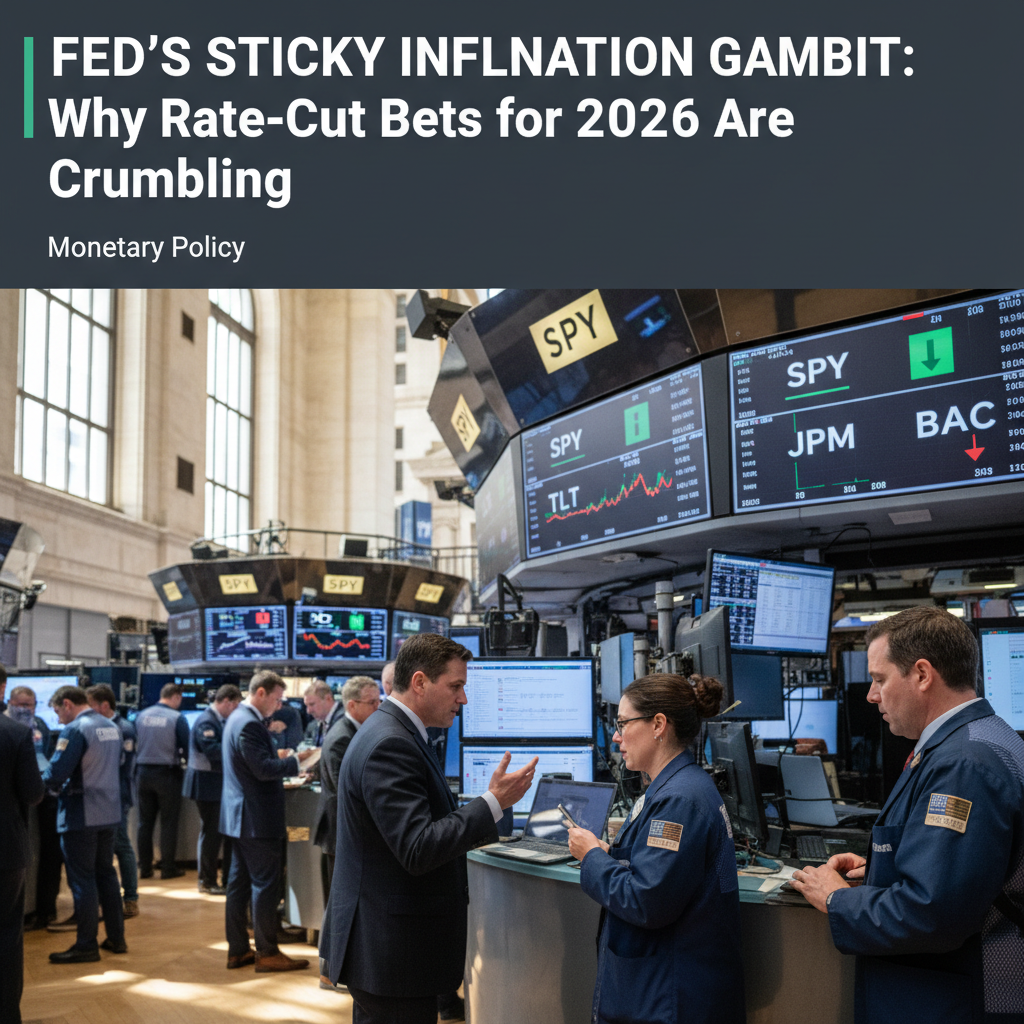
The market bet from early this year — that the Fed would ease in 2026 — is starting to fray. What looked like a tidy glide path to lower rates now feels cluttered: services inflation is sticking, shelter is reluctant to fall, and Fed language has gotten noticeably more cautious.
This isn’t a catastrophe for growth assets. It is a tempo change. Picture a long-distance runner who suddenly faces the last mile uphill: same race, different finishing plan.
Why the view is shifting
- Services inflation is proving stubborn. Goods prices calmed after pandemic disruptions; services — shelter, health care and a range of personal services — are now the main source of ongoing price pressure.
- Wage dynamics are patchy. Average hourly earnings don’t scream overheating across the whole economy, but contact-intensive sectors still show pressure, and that keeps underlying inflation expectations from collapsing.
- Data matters more than spin. The Fed has repeatedly emphasized incoming data and has flagged upside risks to inflation, implying it’s willing to keep policy tighter for longer than markets have priced.
Market implications, near and mid term
- Bonds: Long-duration Treasuries will feel this most. If markets push rate-cut expectations back, yields should drift higher and volatility in long-duration fixed income will return.
- Equities: High-valuation growth names — think long-duration tech winners — are vulnerable if rates remain elevated. Banks and other financials can gain from a higher-rate regime, but they’re not immune to credit-cycle swings.
- Real economy: Higher mortgage and corporate borrowing costs than consumers expect could cool housing activity and make some capex decisions more cautious.
A simple scenario framework (practical, not academic)
- Base case (~55%): Cuts are delayed into late 2026; yields grind higher; money rotates out of long-duration growth and into cyclicals and financials.
- Risk-off tail (~25%): Inflation stays stubborn, forcing either more hikes or an extended higher-for-longer plateau; recession risk creeps up and credit spreads widen.
- Soft-landing upside (~20%): Services inflation eases faster than expected; the Fed moves to cuts in the second half of 2026; markets get a classic risk-on bounce.
Practical moves for investors and strategists
- Trim duration exposure, tactically. Reduce allocations to long-duration bond ETFs and the highest-duration growth stocks for now.
- Favor cash-flow-rich companies and sectors less dependent on low discount rates: parts of energy, select industrials, some pockets in financials.
- Be mindful with mortgage and real-estate exposure. Floating-rate or shorter-term debt looks safer than locking into long-term mortgage duration.
- Hedge selectively. Options can protect concentrated tech positions without forcing wholesale sales.
Why this matters beyond Wall Street
Higher-for-longer rates affect ordinary borrowing: mortgages, auto loans, small-business lines. That keeps consumer bills higher and nudges spending and housing decisions. Politically, extended tightness alters narratives in midterm years — markets price things one way, but voters feel the other.
A bit of historical perspective
This is not the late 1970s. It feels closer to the early 2000s, when the Fed moved in small, deliberate steps and communication gradually reshaped expectations. Markets are swift to price a neat story; the Fed often lets data rewrite it, more slowly.
My advice
Don’t treat promised cuts as a sure thing. Rebalance for an environment where the Fed prefers patience and data-driven moves, not fixed timelines. That subtle shift favors selective defense and nimble rotation over either panic selling or complacency.