Why this matters right now
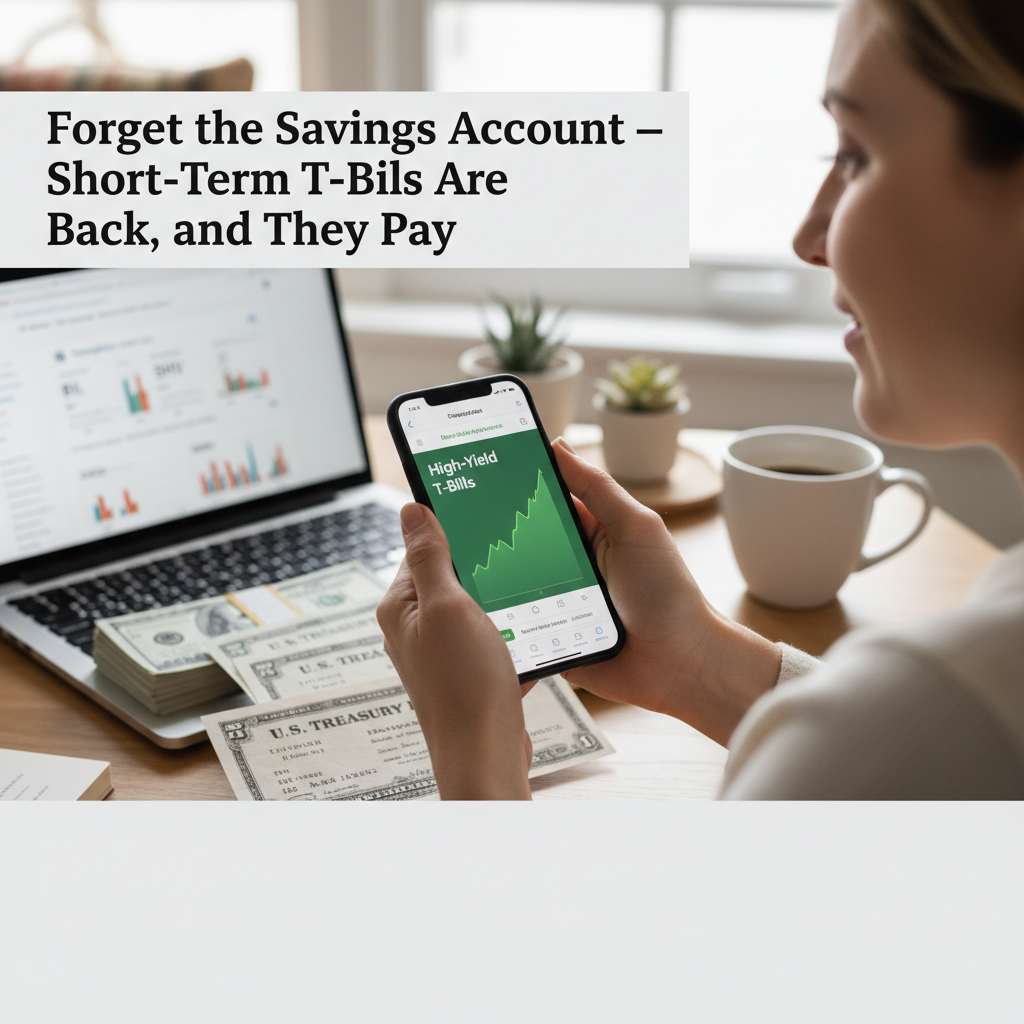
If your online savings account has been the default parking spot for emergency cash, you’re not alone — and you’re probably leaving real yield on the table. Short-term U.S. Treasury bills (T‑bills) are currently paying noticeably more than many bank products. They combine safety, wide liquidity and a small state-tax advantage. That mix is rare.
A quick, practical comparison
- Put $100,000 in a typical low-rate savings account at 0.6%: you’d earn about $600 a year.
- Put the same money in a 1‑year or a staggered 3‑ and 6‑month T‑bill ladder at an annualized 5%: you’d earn roughly $5,000 a year (before federal tax).
That gap isn’t rhetoric — it’s simple arithmetic.
Banks still win on convenience and FDIC insurance. But for many savers the yield gap on short-term Treasuries is big enough to justify rethinking where cash sits.
What changed — and why this isn’t a flash
A few things converged. The Fed pushed short-term rates up to fight inflation, and T‑bill yields follow those expectations. Brokerages and fintech apps made buying Treasuries painless; you don’t need to wrestle with TreasuryDirect’s clunky interface anymore if you don’t want to. And money‑market funds and short‑treasury ETFs (BIL, SHV) give small savers instant, cash-like access.
History matters: T‑bills used to be the go-to cash instrument until the zero-rate era made them irrelevant for retail savers. We’re back to a regime where short-term, risk-free yields matter again — and that tweaks basic cash management decisions.
How to actually do this (three practical routes)
-
Buy direct at TreasuryDirect.gov
- Pros: No middleman; you get the exact security and maturity you want.
- Cons: The website and settlement timing can feel slow and a bit fiddly.
-
Use your brokerage
- Pros: Fast trades, easy laddering, and you can sell if you need cash early.
- Cons: Secondary-market prices swing a bit; watch for commissions or markups.
-
Short‑Treasury ETFs (BIL, SHV)
- Pros: Real-time liquidity, fractional shares at many brokers, instant settlement.
- Cons: ETF fees exist (small, but real); price can drift a little from the bill’s accrued value.
Pick the route that fits how hands-on you want to be.
Tax and risk nuances — don’t skip these
- T‑bill interest is taxable federally but is exempt from state and local income tax — a useful perk if you live in a high-tax state.
- Liquidity is very good, but it’s not the same as FDIC protection. Selling before maturity exposes you to small price moves.
- Reinvestment risk: when bills roll, new yields could be lower — so ladder rather than shove everything into a single maturity.
- Inflation still matters: short-term yields can lose purchasing power if inflation jumps, though that’s a different risk than bank credit risk.
Who should consider shifting cash — and who shouldn’t
Consider T‑bills if you hold a sizable emergency fund, your cash flows are reasonably predictable, and you care more about yield than instant bank convenience.
Stay with FDIC-insured accounts if you value absolute peace of mind, rely on a bank for daily debit needs, or don’t want to monitor auctions, spreads or settlement timing.
My take — a bit of contrarian common sense
Treat parking cash as an active choice, not something you do by default. You don’t need to become a bond trader to get meaningful, risk‑free yield, but shrugging off a clear yield advantage because “savings is simpler” is a passive way to lose money. Keep a checking buffer, build a short‑bill ladder, and view T‑bills as a neutral, conservative place to earn what cash is actually worth right now.
Quick checklist to get started
- Keep 2–4 weeks of living expenses in checking as your buffer.
- Ladder the rest in 1‑, 3‑, and 6‑month T‑bills (or buy BIL/SHV for simplicity).
- Reinvest maturities on a schedule — don’t chase one-off yields.
- Watch Fed signals: if rate cuts come, yields will fall and the relative advantage may shrink.
The upshot
Short-term T‑bills aren’t flashy, but they do the fundamental job cash should: preserve capital while paying a real yield. For many Americans, that makes them a better home for emergency or near‑term savings than the low‑rate bank products we’ve defaulted to for years.