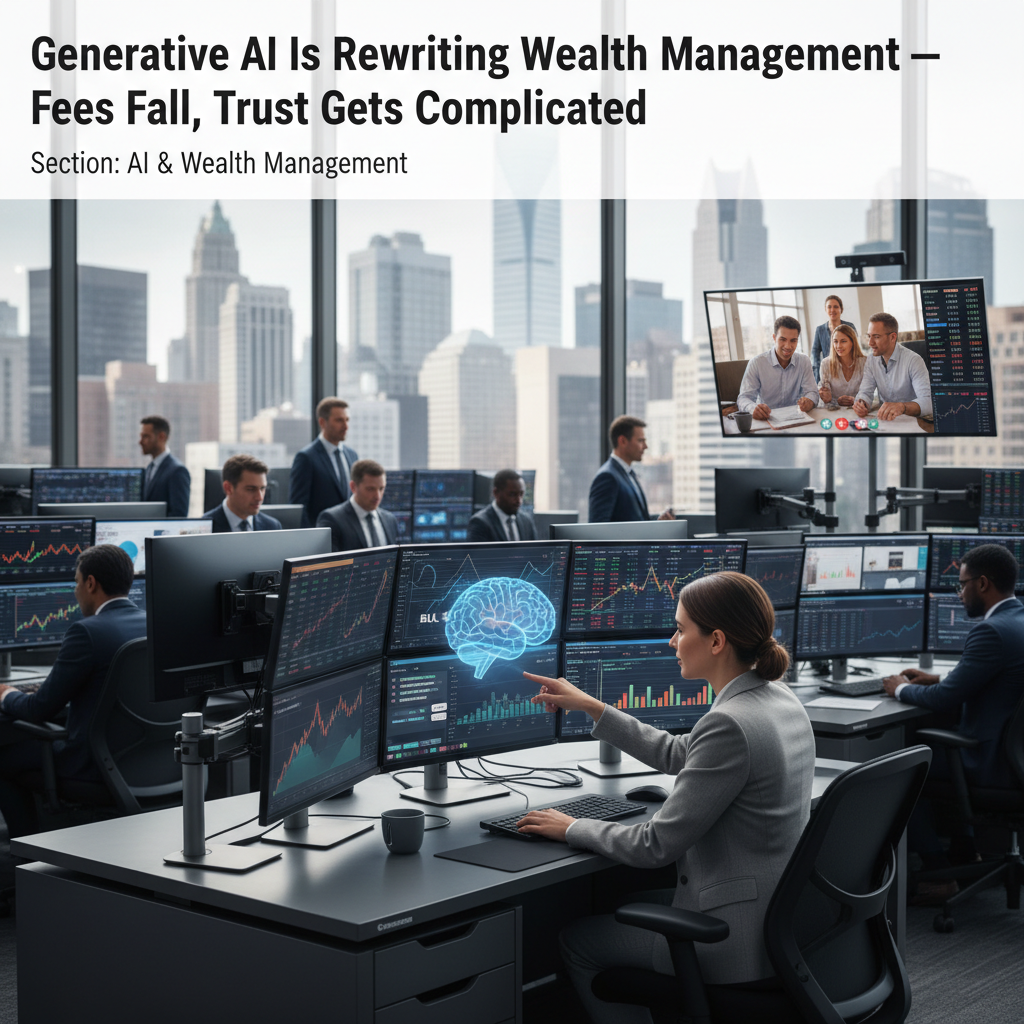
The headline is simple: cheaper, faster advice is coming — though it won't look the same for everyone.
From boutique RIAs to the largest asset managers, teams are quietly folding generative AI into core workflows: portfolio construction, tax-loss harvesting, client reporting, even conversational financial planning. The immediate payoff is obvious — automation that shaves hours off routine work. The second-order effects are trickier.
What changes, practically
- Faster personalization. Models can ingest a client’s inputs, holdings and goals and spit out tailored allocation scenarios in seconds. That opens bespoke-style planning to mass-affluent clients who used to sit on long waitlists.
- Fee pressure. Remove labor from the value chain and margins for mid-tier managers get squeezed. Not every firm will cut prices, but competing on cost will become harder to avoid.
- New products. Expect AI-driven subscriptions: ongoing, affordable planning; scenario simulators; on-demand tax help. Think a la carte pieces pulled out of what used to be full-service advice.
Why now
Three things converged: stronger foundation models that handle complex inputs; cheaper, faster compute from cloud and chip vendors; and richer financial APIs and data feeds. The tech is finally inexpensive and integrated enough to slide into advisory workflows without blowing up budgets.
Where the risks live
- Model risk and auditability. Large language models can sound confident and still be wrong. For fiduciaries—whose value often rests on being able to explain recommendations—that opacity is a real problem.
- Regulatory attention. Regulators are watching algorithmic advice, model governance and disclosure. Firms that wing it may face enforcement, not just bruised reputations.
- Behavioral gaps. Advice is partly about managing client behavior. AI can nudge, but it doesn’t have the credibility that comes from years of relationship-building. That shows up in panics and life-altering decisions.
A short historical anchor
This feels a bit like the arrival of low-cost index funds and robo-advisors a decade ago. Technology re-priced simple investing and pushed incumbents into tiered services. AI is the next nudge: it won’t replace high-touch managers, but it will eat routine, commoditized tasks and create new premium offerings.
Signals worth watching
- Who partners with major cloud and chip vendors. Firms that outsource model hosting to established infra players will scale latency-sensitive use cases faster.
- Pricing experiments. Look for subscription tiers, AI-linked performance fees, or flat rates for continuous planning.
- Disclosure and governance. Responsible adopters will publish testing, oversight and human-review frameworks. Others will stay vague.
Still: why human advisors matter
Not every client wants instant model output. Complex estate plans, cross-border tax problems, concentrated stock positions and the soft skills of a coach-like advisor still count. High-net-worth clients will pay for nuance, access and guarantees—things AI cannot reliably deliver today.
What to do now
- Investors: ask if your advisor uses AI, where it touches advice, and how outputs are audited. Push for transparency around tax, retirement and concentrated-position guidance.
- Advisors: prioritize model governance, explainability and a hybrid client experience. Use AI to remove grunt work, but keep humans accountable for judgment.
Where this lands
This is not an apocalypse for wealth management. Think of it as a classic technological shake-up that favors scale and punishes sloppy incumbency. Firms that pair AI with disciplined governance and clear human accountability will pick up clients. Firms that treat AI as merely a cost-cutting widget risk losing trust — and clients — faster than they expect.
Pedro Marini