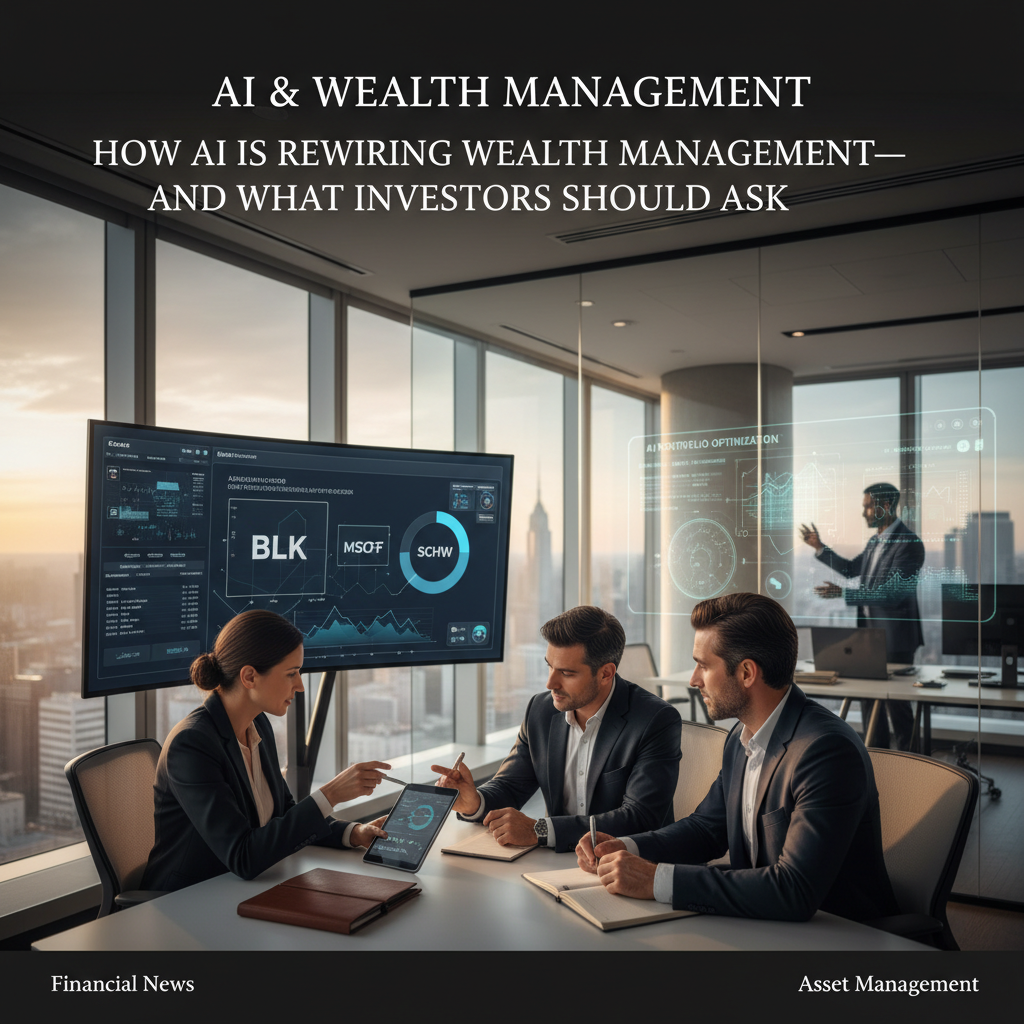
The headline is simple and a little unsettling: wealth advice is getting smarter and cheaper. Not because people stopped thinking, but because modern generative models can fuse client context, tax rules, market inputs, and behavioral prompts into a single conversational output.
This is not the robo-advisor of 2008. Back then automation meant cheap ETF bundles and simple rebalancing rules. What's different now is qualitative: models can run plain-English scenarios, draft tax-aware trade paths, and surface timely behavioral nudges—things that used to require a senior planner and an afternoon with spreadsheets.
Why this matters
- Cost pressure. AI-driven workflows shave time off onboarding, client reporting, and basic planning. Expect margin pressure on traditional advisory fees and new subscription or outcome-based pricing to appear.
- Much finer personalization. Instead of a one-size glidepath, an agent can crank out dozens of tax- and cash-flow-aware variants for a single household.
- Compliance and audit trails, if firms do them right. The same logs that produce explanations can help compliance teams. Do it poorly, and you get opaque justifications regulators will want to see through.
Concrete examples you’ll recognize
- Scenario storytelling. A retiree gets a narrative about sequence-of-returns risk plus three tactical adjustments, not just a dry probability number.
- Tax-smart trading. Households with multiple accounts receive prioritized loss-harvesting steps that respect wash-sale rules and real cost-basis issues.
- Prospect triage. Junior advisors use models to pre-digest documents so human time goes to judgment calls, not data entry.
Not everything improves
- Model error is real. Generative systems hallucinate or misapply tax rules when fed incomplete data. Human-in-the-loop is non-negotiable.
- Trust and accountability are fragile. Clients want to know who is responsible when advice goes wrong — the memo’s author matters.
- Concentration risk. If everyone buys the same third-party stacks, you raise systemic vulnerabilities and crowding in style.
A short history explains the tempo
Wealth management has always borrowed from trading desks and enterprise tech: execution algorithms in the 1990s, risk engines in the 2000s, low-cost indexing after the crisis. This wave is different because it amplifies client-facing judgment, not just back-office efficiency. That shift matters more than it initially seems.
What investors should do now
- Ask whether your advisor uses models for recommendations or just for admin tasks. Ask how humans audit and sign off.
- Clarify data use and retention. Your financial data is the raw material; who owns the outputs matters.
- Push for fee alignment. If advisor time drops, either lower fees or contract for better, outcomes-based services.
Quick checklist to bring to your next meeting
- Do you use generative models for planning or only for administrative work?
- Who signs off on AI-generated trade recommendations?
- Where is my data stored, and can I opt out?
A slightly contrarian final note: AI can be a force multiplier for both good advice and bad process. The winners will be firms that keep humans in judgment roles while using machines to remove grunt work and surface testable choices. Investors should welcome smarter tools — but insist on clearer accountability, otherwise cost savings may arrive alongside opaque risk.