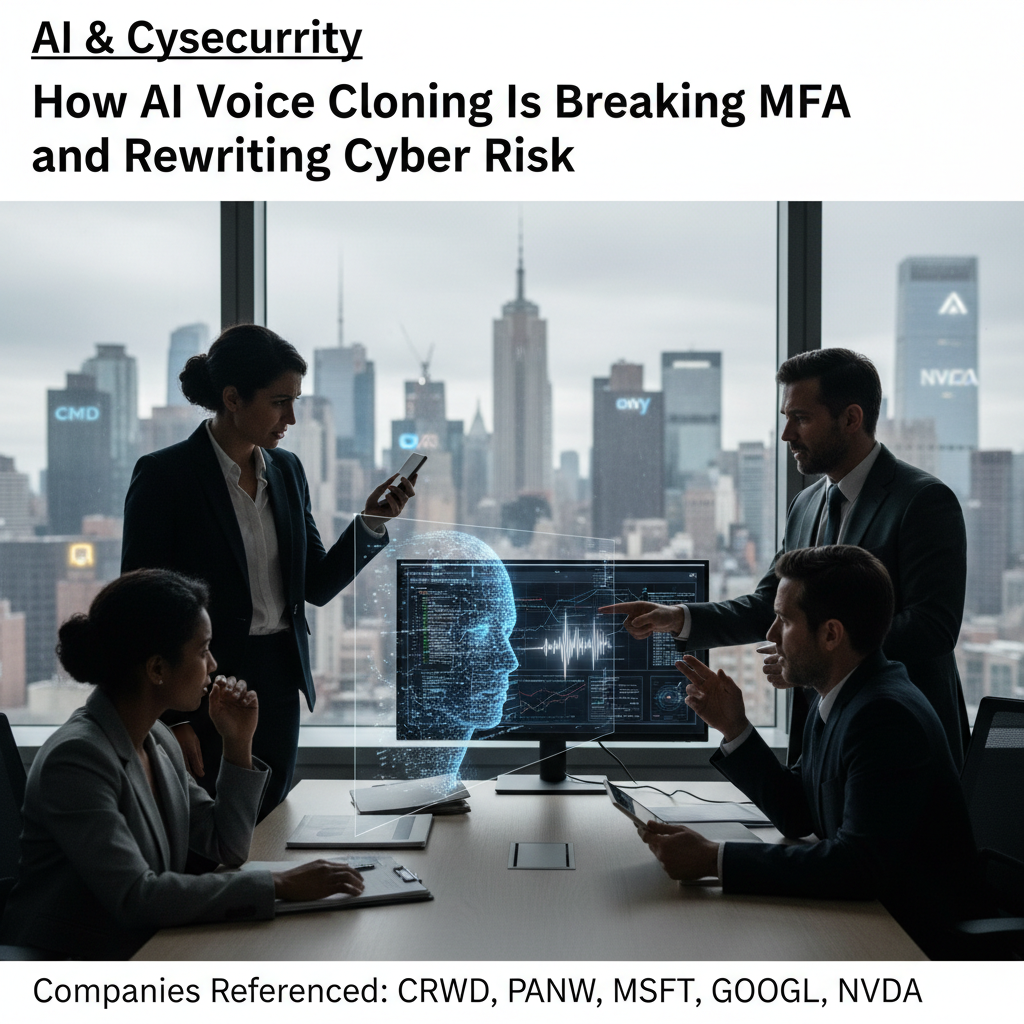
A phone call used to feel low-tech. Not anymore.
Voice cloning paired with large language models that spin believable scripts has shifted social engineering from email into live conversations. Security teams that shrug off voice as an afterthought are already feeling the consequences.
What changed
- Real-time voice synthesis can imitate someone convincingly in seconds. Couple that with LLMs and attackers can generate context-aware scripts mid-call.
- Automated dialers and bot farms can launch thousands of targeted vishing attempts per hour, personalizing each call with scraped data.
- Old protections — single-factor voice checks or phone-based OTPs — crack under this pressure.
What’s interesting is how quickly the tactics moved from novelty to scale. The tooling is cheap, and the workflows are automated.
A short, relevant history
Not science fiction. In 2019 a cloned voice convinced a finance team to wire hundreds of thousands of euros. Think of that as phishing v1.0; cloned voices are the next, faster iteration — same social engineering logic, different medium and much more automation.
Why enterprise risk just rose
Attackers no longer need physical proximity or deep insider access to create believable social proof. The fallout goes well beyond wire fraud:
- CFOs and treasury teams are prime targets for fraudulent transfers.
- Call centers and customer-support portals become vectors to reset credentials.
- Supply-chain operators get tricked into shipping goods or handing over access tokens.
For regulated firms the compliance implications are immediate: incident response, breach notifications, even executive liability can be triggered by a single persuasive-sounding call.
Defender playbook — practical steps
Stop treating voice like legacy tech. Start with things that actually change attacker economics:
- Replace or augment voice-only authentication with multi-modal checks: push notifications to registered devices, cryptographic tokens, or biometrics that include liveness verification.
- Force out-of-band confirmation for high-risk actions: a secure portal approval, dual sign-offs logged on a ledgered system.
- Add analytics to call centers to surface abnormal call volumes and speech features associated with synthetic audio.
- Run tabletop exercises that include AI-driven vishing scenarios. If attackers are scripting conversations, defenders should script responses and test them.
Small wins here compound. And then test again.
Why investors should care
Markets often miss step-changes in attacker sophistication. Expect budget shifts toward:
- Behavioral and voice-biometrics vendors.
- Cloud and AI firms offering detection-as-a-service for communications.
- Cyber insurers tightening underwriting, which will push enterprises to increase security capex.
If you follow cybersecurity stocks, favor vendors that can add detection on top of voice and comms channels — not just on network telemetry.
Counterpoints
Not every cloned-voice call leads to loss. Social engineering still needs human error. Detection teams are also using machine learning to spot artifacts in synthetic audio. The race is dynamic: defenders can slow attackers down, but complacency is dangerous.
Policy and posture — what to do now
Treat voice as a first-class risk vector. Update authentication rules, harden workflows with real confirmations, and run realistic exercises that include AI-driven social engineering. For executives and boards the request is straightforward and urgent: invest in voice-resilient controls now, or plan for a steady rise in costly, reputation-damaging incidents.
Pedro Marini’s take: this is a generational pivot in fraud tactics, not a brief flare-up. Organizations that adapt quickly will avoid headline losses and reset their security economics for the era ahead.