On-Device AI
How On-Device AI Is Quietly Rewriting Big Tech’s Playbook
Smartphones, chips and lean models are pushing intelligence off the cloud—here’s what that means for privacy, latency, and investors.
P
Pedro Marini
July 5, 2026 · 4 min read
Smartphones, chips and lean models are pushing intelligence off the cloud—here’s what that means for privacy, latency, and investors.
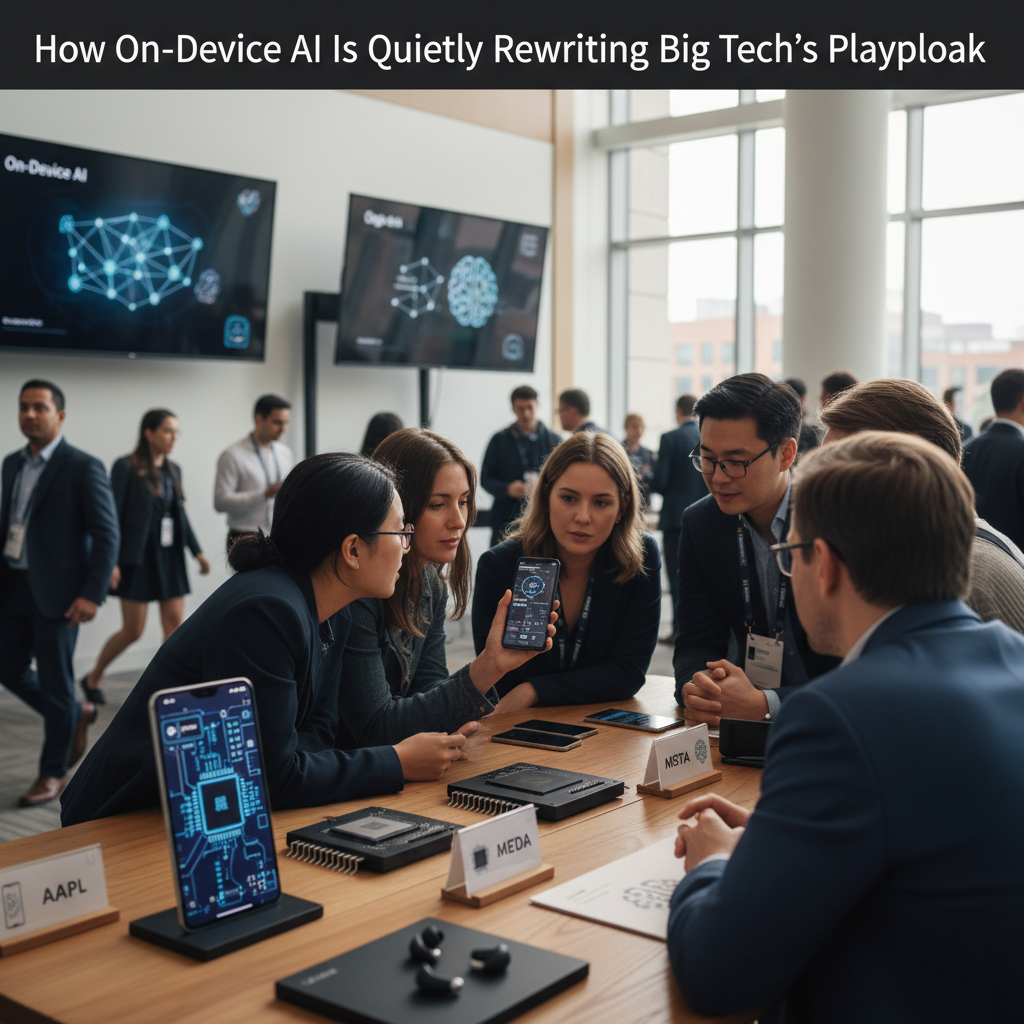
Illustration by IMF Alpha editorial · Reviewed by Pedro Marini
The mood has shifted. For the last half-decade, AI implied massive cloud models, multi-GPU training runs and latency you could feel in your bones. Now a different story is unfolding: capable, compressed models running entirely on the device in your pocket.
This is not nostalgia for old mobile apps. It’s a practical rewrite of trade-offs. On-device AI delivers three immediate, tangible wins:
You can see the trend across layers. Chip teams have spent years adding NPUs and tensor accelerators to phones. Model engineers have gotten better at pruning, quantizing and re-architecting LLMs so they fit in a few hundred megabytes. And developers are shipping features that actually matter: offline transcription, instant image edits, assistants that learn your quirks without ever leaving the device.
What’s interesting is how this echoes earlier shifts. Think back to the move from mainframes to PCs in the 1980s: compute decentralized for speed and autonomy. Now intelligence is decentralizing for latency and privacy. That shift nudges value toward silicon designers, OS-level integration and the middleware that makes local models usable by apps.
That does not mean the cloud disappears. Expect hybrid architectures for the foreseeable future. Small models on device will handle latency- and privacy-sensitive work. Cloud models will still do the heavy lifting: long-context reasoning, massive personalization and large-scale analytics. Not cloud versus edge so much as choreography between them.
Key tensions and blind spots
Who gains and who falls behind
Signals product teams and investors should watch
A quick, practical example: a note-taking app that used to stream audio to servers for transcription can now run a compressed speech-to-text model locally. It cuts per-user costs and becomes a privacy selling point. For users it’s convenience; for the business it reshapes unit economics.
My read: this is a structural shift, not a fad. On-device AI does not make cloud AI obsolete — far from it — but it redraws where value and control sit. For consumers the clearest wins are speed and privacy. For investors the interesting bets sit at the intersection of silicon, OS integration and the middleware that makes local models as manageable as cloud services.
Watchlist thinking: favor companies that control both silicon and software stacks; monitor startups solving deployment and update mechanics for edge models; assume hybrid approaches win in practice.
Pedro Marini

As privacy rules tighten and models hunger for edge-case examples, synthetic data is becoming the secret fuel for AI — and Wall Street is sitting up.

Quantized models, faster NPUs and a privacy-first narrative are remaking apps, cloud economics and what your smartphone can do offline

Large language models are reshaping both offense and defense. Here’s what security teams and investors need to know right now.