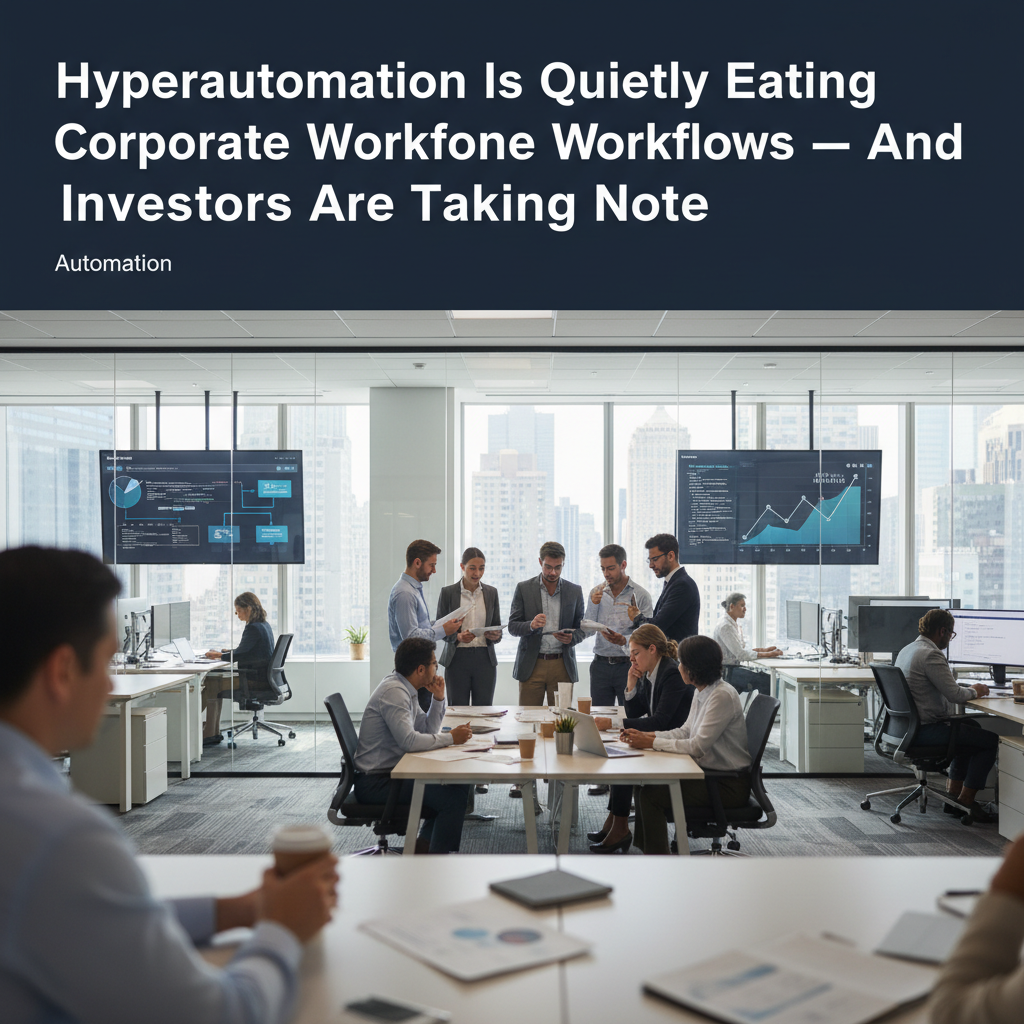
Hyperautomation is no longer a trendy word you can safely file away. Two years after the pandemic pushed CFOs toward digitize-or-die choices, a quieter shift is happening: RPA, generative AI, and low-code tools are snapping together into systems that can replace whole swaths of back-office work — from invoice reconciliation to first-pass underwriting.
It isn’t just smarter bots this time. What matters is composability: modular AI services, out-of-the-box connectors to enterprise apps, and citizen developers who can stitch workflows without a PhD in integration. That accelerates rollouts. It also produces brittle architectures when governance is thin. Expect both rapid wins and sudden headaches.
Why investors should pay attention
- Bigger market, fewer winners. The addressable market expands as automation stops needing bespoke engineering. Still, scale and platform reach concentrate value. The firms that control an ecosystem tend to capture the juiciest margins — unless open standards or a new entrant upend that power dynamic.
- Margin upside — when it actually materializes. For a large buyer, automating a 40-person back office can move operating profit in a meaningful way. That lifts free cash flow and can compress multiples — especially for SaaS platforms that charge for integrations and extras.
- Execution risk remains. Failed pilots, messy data, and shadow IT routinely turn projected savings into sunk costs. This is the reason system integrators and consultancies still get paid: to stop rollouts from imploding.
A quick analogy helps. Early 20th-century assembly lines automated physical tasks one piece at a time. Hyperautomation is doing something similar to cognitive workflows. The cadence is slower and messier, but the ripple effects are familiar — job roles get reclassified, skills that command a premium change, and long-lived industries are forced to adapt.
Who’s likely to win
- Platform owners with deep enterprise footprints and partner ecosystems: think Microsoft (Office + Azure), Salesforce (CRM platform + MuleSoft), and ServiceNow. Clients are more inclined to bolt automation onto stacks they already trust.
- Pure-play vendors that nailed developer experience and connectors can still scale quickly. UiPath showed how to build an RPA franchise; the open question is whether it can remain the integrator of choice as cloud and AI providers move closer to customers.
- Consultancies and systems integrators that pair domain knowledge with implementation scale will keep getting paid to reduce rollout risk.
Risks and caveats
- Not every task should be automated. Creativity, nuanced judgment, and regulatory interpretation still need humans. Over-automation can make customer experience worse when edge cases aren’t handled cleanly.
- Regulation and data governance will tighten as AI components make consequential decisions. Firms that skimp on explainability may face fines — or more damagingly, lose customer trust.
Practical signals for investors to watch
- Contract cadence: are CIOs consolidating automation spend with one platform, or splintering across many point tools?
- Integrations and AI depth: how native are AI features versus heavy reliance on third-party models?
- Implementation metrics: time to first automated transaction, exception rates, and improvements in cost per transaction.
The core point: hyperautomation is not a single product; it’s an operating strategy. If you want exposure, the lower-risk route is platform leaders with sticky enterprise relationships and a clear path from automation to recurring revenue. If you’re more active, track execution metrics and partner dynamics closely — that’s where winners and also big losers will be separated.