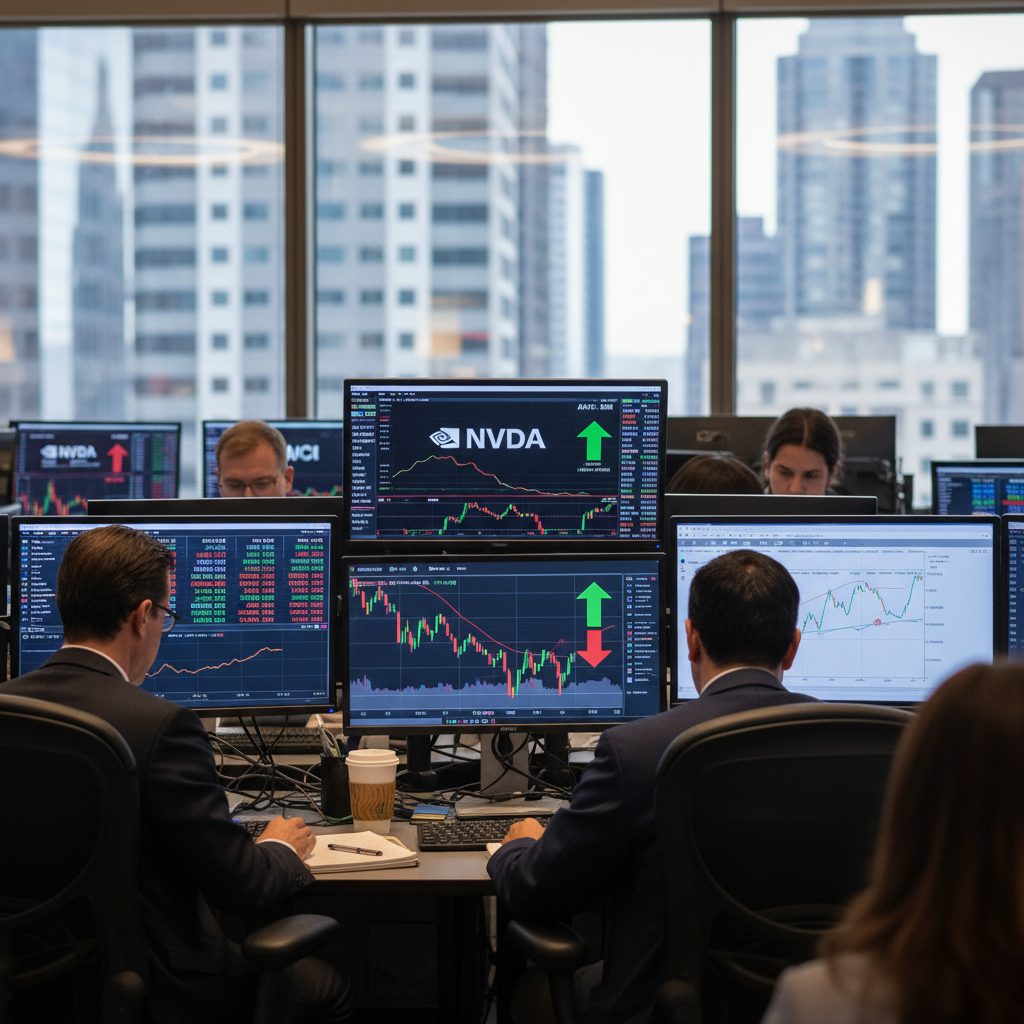
The headline is simple: after a long Nvidia-led run, money managers and retail traders are quietly redeploying capital into smaller AI-infrastructure and edge-compute names. This rotation isn’t just momentum chasing — it’s a mix of valuation math, product cycles and fund flows.
Why now?
- Valuation fatigue. Nvidia’s multiples (and those jaw-dropping returns) have pushed some investors to lock gains. It’s not new to sell a winner and buy a hope, but now it’s happening at scale.
- Earnings season nuance. A handful of smaller companies reported better-than-feared AI revenue trends — not tsunami-sized beats, but steady, compounding growth that portfolio managers can underwrite when building models.
- ETF mechanics. New AI-themed ETFs and rebalanced funds are stuffing more small- and mid-cap pro-RAM, server, and edge-compute stocks into their baskets. That’s a mechanical bid that lifts prices, sometimes regardless of immediate fundamentals.
Who’s drawing attention (examples, not endorsements)
- SMCI (Super Micro Computer): Winning work as customers diversify beyond hyperscalers and buy custom AI racks from multiple suppliers.
- AMBA (Ambarella): No longer just a vision-chip story; increasingly credited for specialized edge inferencing silicon.
- MRVL (Marvell): Network accelerators and Ethernet silicon quietly determine datacenter AI throughput—important, even if less glamorous.
- C3.ai (AI) and PLTR (Palantir): Software plays that can scale AI-driven revenue without the capital intensity of chipmakers.
A few contrarian points
- This isn’t a knockout punch to the mega-caps. Nvidia still controls the high-end GPU stack, key channel relationships and software optimizations that are hard to replicate quickly.
- Small names trade on thinner liquidity and can be swept around by thematic flows. A single headline miss or a slowdown in hyperscaler spending can reverse gains fast.
What to watch next
- Guidance, not slogans. Look for quantified commentary: do companies break out incremental AI revenue or bookings? That’s where the signal is.
- Supply-chain signals. If chip supplies loosen, expect another leg for megacaps. If bottlenecks or demand for specialized silicon persist, infrastructure names keep their edge.
- Fund flows. Big, sustained inflows into AI ETFs that overweight mid- and small-caps are the clearest near-term catalyst — and a potential source of quick reversals if flows stop.
How to think about it: this rotation is logical and real, but it isn’t a paradigm shift by itself. Think of it more like a tide revealing new rock formations than an earthquake remapping the coast. For investors: be selective, size positions for higher volatility than the megacaps, and read the guidance carefully.