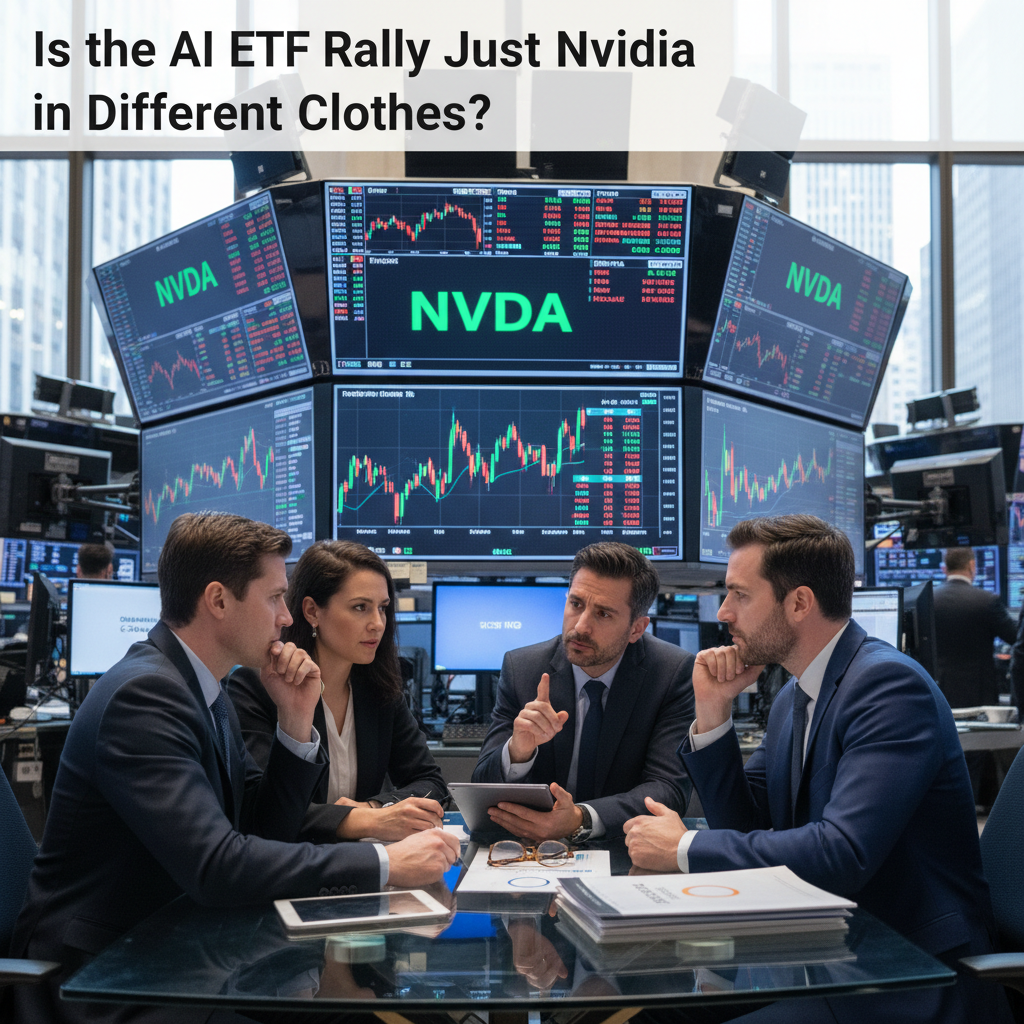
The headline is simple: Nvidia keeps sprinting, and AI-branded ETFs are getting left behind. What looks like broad thematic diversification often compresses into a handful of mega-cap names. The irony: investors buy variety and wind up with the same single bet repeated.
Why this matters now
- A bunch of AI ETFs either launched or ballooned after Nvidia’s recent earnings and product cycles. The fund brochures talk AI; the real driver is how the fund is weighted.
- Passive, market-cap rules tend to funnel gains into the biggest components. When a rally forms, concentration risk accelerates faster than most people expect.
A quick anatomy of the problem
- Cap-weighted AI ETFs naturally tilt to the largest winners. So a fund that promises broad AI exposure can still be dominated by Nvidia, Microsoft and Alphabet.
- Alternatives — equal-weighted or custom-factor products — do spread exposure more evenly. They come with trade-offs: more turnover, higher fees, sometimes bumpier short-term returns.
History whispers, but it’s not the whole story
The dot-com era offers a useful warning: thematic fervor can end badly when expectations outrun reality. That said, the comparison is imperfect. Today’s AI tailwinds — cloud infrastructure, GPUs, enterprise software — are tangible and monetizable. Still, concentration both magnifies macro shocks and hands single-company problems a much louder megaphone. It’s a useful analogy: the same thing that powers gains also amplifies risk.
Concrete investor implications
- Expect overlap. Holding several AI ETFs often means owning the same handful of stocks multiple times over.
- Look through construction. A fund built on a bespoke scoring model will look and behave very differently from one that simply collects tech names with AI mentions.
- Match horizon to reality. Momentum can lift concentrated winners for a while; long-term returns depend on those firms turning AI buzz into repeatable cash flow.
Counterpoints and nuance
- Concentration is not automatically bad. If a small number of firms ultimately capture most of the AI economic value, a cap-weighted approach might be the efficient way to gain exposure.
- Active managers can avoid the top-heavy trap, but they charge for judgement — and that judgement can be late, expensive, or wrong.
What to do next
- Inspect fund holdings and top-10 weightings, not the brochure.
- Measure overlap before you layer exposures; the duplication is often surprising.
- Consider pairing passive AI ETFs with focused active managers or individual names if you want to pick specific exposures.
A closing thought
AI ETFs are not a magic route to diversification. Often they’re a ticket to owning Nvidia through a fund — and paying a fee for the convenience. That’s a legitimate choice, as long as it’s chosen deliberately rather than stumbled into.
Author: Pedro Marini