Where we are now
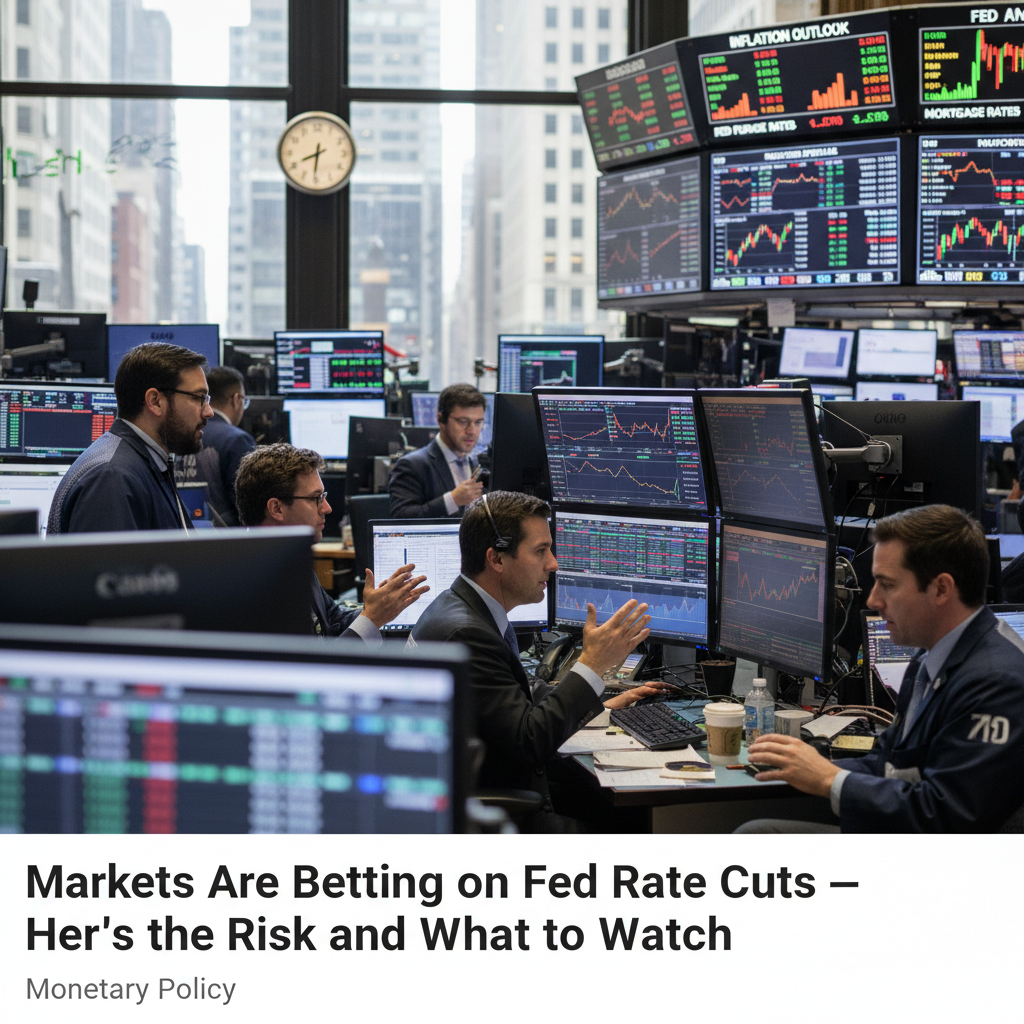
After the 2022 inflation spike the Fed pushed policy rates into territory that, by historical standards, is decidedly restrictive. Over the last year headline inflation eased, markets got optimistic, and futures began to price a series of cuts. It feels less like a tidy finish and more like a tense negotiation between incoming data, politics and market psychology.
Why markets are pricing cuts
- Headline inflation has cooled and goods prices have softened, lowering immediate upside risk.
- Global growth has slowed and financial conditions have tightened, which raises pressure on policymakers.
- Equities and bond markets are telling a straightforward story: lower rates mean cheaper financing and higher valuations.
That story is appealing. It’s also incomplete.
The counterpoint: sticky inflation and the neutral-rate question
Services inflation and wage growth have proven stubborn in many readings. The Fed has signaled some tolerance for a gradual slowdown in hiring — but cooling headline numbers alone may not be enough to justify cuts. Add another wrinkle: the neutral real rate of interest is uncertain. If that neutral rate is higher than previously assumed, the Fed will have to live with higher policy rates for longer.
Think of it like a seesaw. Market-implied cuts sit on one end; persistent services inflation and upward revisions to the neutral rate sit on the other. They can’t both be true without the market repricing itself.
Concrete implications for investors and households
- Mortgages: If markets are right, urgency to lock in a rate drops in the short run. If the higher-for-longer story wins, 30-year rates stay elevated and affordability suffers.
- Banks: Faster cuts compress net interest margins; sustained high rates help banks that’ve built big legacy loan books. Pricing is all about spreads.
- Growth stocks: Tech and long-duration names rally on cut expectations; any hint of Fed skepticism triggers quick de-ratings.
- Treasuries: The belly of the curve is most sensitive to near-term path shifts — volatility here bleeds into other risk assets.
Signals that will actually move expectations
What matters is not the headline so much as the detail.
- Core PCE and core CPI: momentum in services prices, not just the overall reading.
- Wage indicators: average hourly earnings, the employment cost index and shifts in labor-force participation.
- Fed communications: minutes and dot-plot language — watch for subtle changes around patience, conditionality and comments on the neutral rate.
- Market signals: short-end yields and Fed funds futures — real-time bets often lead the narrative.
What’s interesting here is how small wording changes in Fed communications can swing market pricing. In practice, the story is messier than a single print.
Two plausible scenarios
Soft-landing, cuts happen: Services inflation and wages decelerate, payroll growth eases. The Fed is able to cut several times next year. Result: risk assets get multi-quarter support, mortgage rates drift lower and credit conditions ease.
Sticky inflation, hold policy: Services and wages don’t slow enough. The Fed shifts to strict data-dependence and keeps policy tightened. Result: curve steepening, equity multiple compression and renewed pressure on high-growth sectors.
Neither path is guaranteed. Both are plausible.
A short note on probabilities and behavior
Market pricing is not destiny. Positioning, leverage and headline shocks can produce abrupt re-pricings. Treating implied cuts as certainties invites painful snapbacks. A more durable approach is conditional sizing: own rate-sensitive assets but do so with intent and a plan tied to those four data items above.
Where this leaves you
The narrative that the Fed will cut has momentum, but it is far from assured. The tug-of-war between softer goods prices and stubborn services and wage inflation makes the coming months politically and economically fraught. For households and investors the pragmatic move is simple enough: prepare for both outcomes and watch the handful of indicators that will force the Fed to pick a lane.