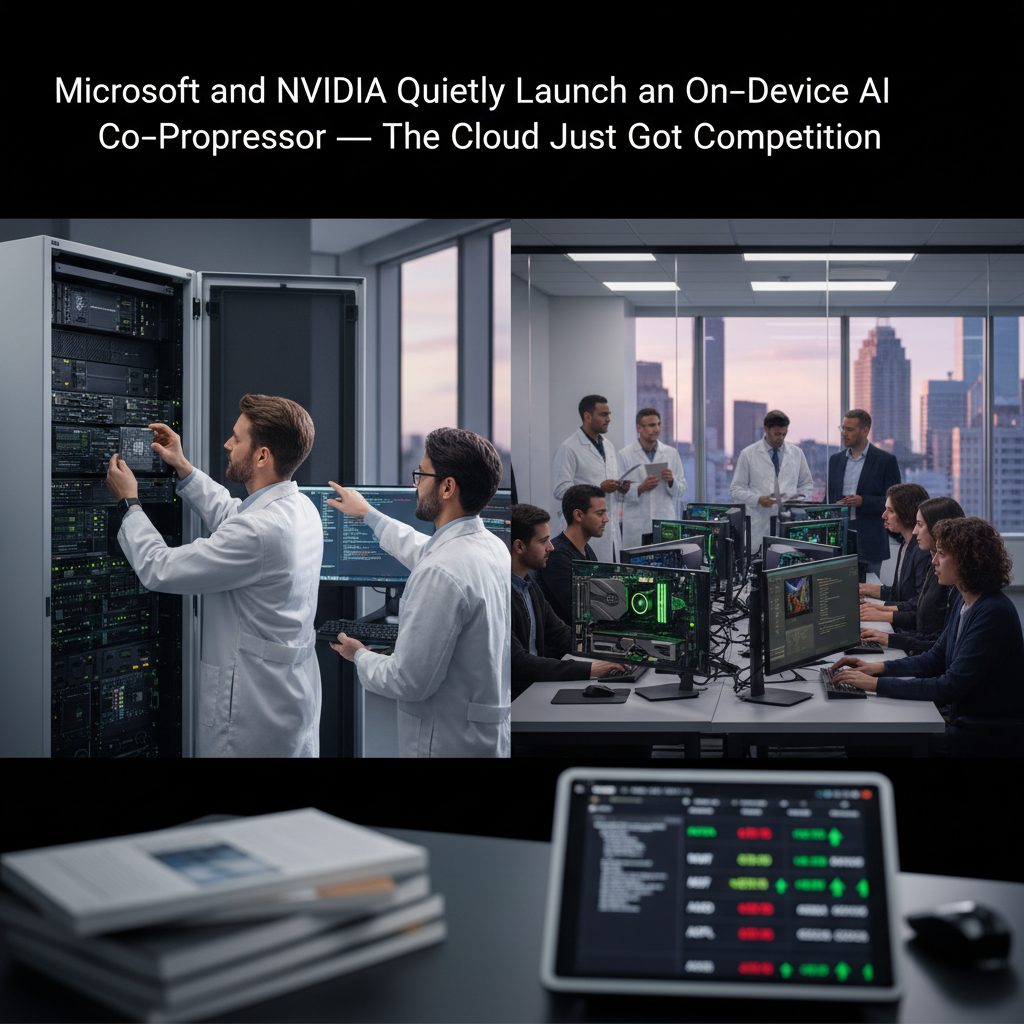
Breaking — Microsoft and NVIDIA just announced a joint effort to ship a dedicated on‑device AI co‑processor to mainstream PCs through OEM partners. It looks like a quiet headline, but it carries weight: the module is meant to run large‑language‑model inference locally, promising faster responses and fewer back‑and‑forths with Azure.
This isn’t a routine chip release. Think of it — awkward comparison, yes — as the Apple Neural Engine moment for Windows. It also directly challenges the centralized inference model that’s been the backbone of cloud providers and GPU demand for years.
Why it matters now
- Latency and cost. The companies claim single‑digit millisecond latency for many generative tasks and materially lower per‑query inference costs versus cloud‑only setups. If those numbers hold up, the UX for assistants and creative apps changes in a meaningful way.
- Privacy and regulation. Local inference sidesteps a host of data‑flow questions regulators are still wrestling with. That’s attractive to enterprises handling sensitive docs — and to consumers who don’t want their typing routed through a server farm.
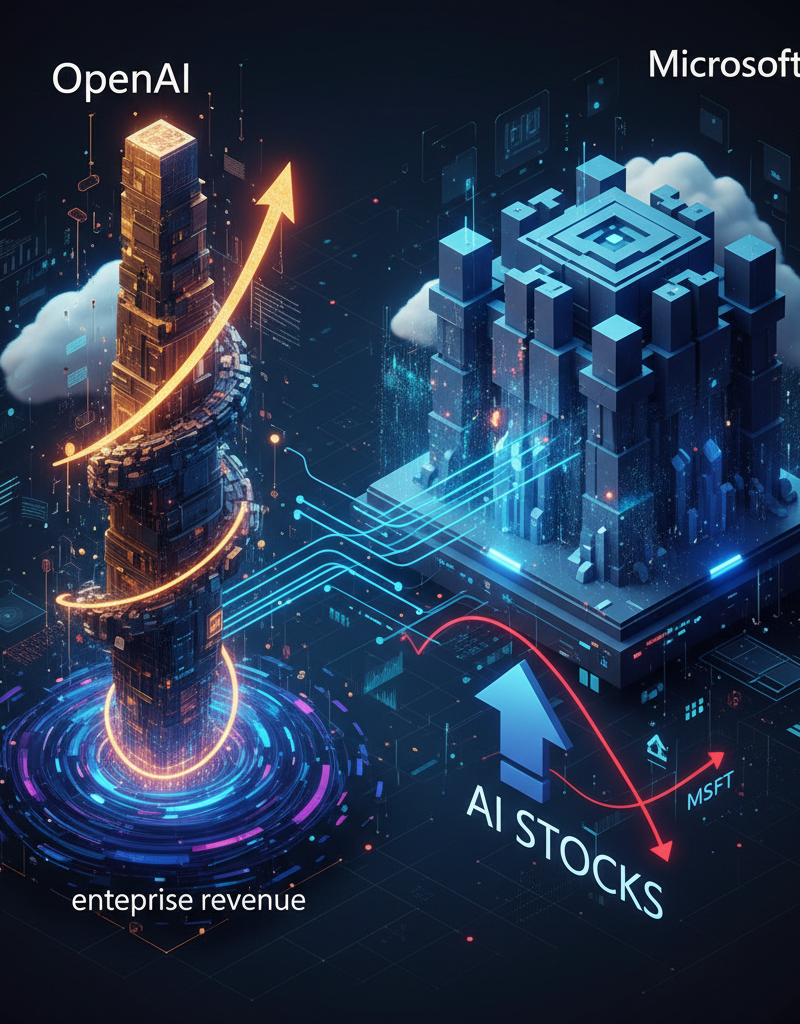
- Market shakeup. This forces a rethink across three stacks: silicon, OS, and cloud. OEMs get a new differentiator. Cloud vendors could see inference revenue shift. Chipmakers will compete on a different form factor.
Context: smartphones adopted NPUs to make camera and voice features feel instant; Apple’s M‑series showed how tight silicon‑software integration pays off; early edge‑AI startups flashed impressive demos. Now a major cloud vendor is embracing edge silicon rather than insisting every inference run in its own data centers.
What Microsoft gains — and risks
- Gains: a closer connection to end users through the PC, a product edge for Windows OEMs, and better positioning to sell AI features that still depend on cloud training.
- Risks: less Azure inference revenue if OEMs and customers choose local processing. The bet seems to be on trading some raw compute sales for stickier software and services.
Technical and product caveats
- Power and thermals still bite. High‑throughput inference is power hungry; thin‑and‑light laptops will probably get scaled‑down variants (battery life matters to buyers).
- Real‑world benchmarks will be the acid test. Marketing claims usually need footnotes about model size, precision, and batch behavior.
- Supply chain timing matters. Foundry and packaging capacity remain chokepoints after years of tight supply.
Who stands to gain or lose
- Likely winners: NVIDIA (a broader market beyond datacenters), Microsoft (a stickier Windows ecosystem), and OEMs with engineering depth.
- Under pressure: cloud inference margins at big providers, and smaller AI chip startups that don’t have scale.
Short examples of user impact
- An attorney drafts and redacts contracts locally without sending client text to the cloud.
- A video editor makes generative edits offline and gets near‑instant previews.
The upshot
This partnership signals a meaningful pivot: GPUs and AI software are being engineered for desktops as well as racks. It doesn’t undo the cloud — training, large datasets, and massive scale still live there — but it reallocates where inference happens and where money flows. Watch OEM announcements, independent benchmarks, and Azure’s revenue commentary in the coming quarters to see whether adoption is fast or whether this ends up as another headline ahead of reality.
I’ll be watching benchmarks and OEM rollouts closely — expect more granular breakdowns as units ship.