What a personal AI agent actually is
Not just another chat window. Think of an agent as a persistent, task-focused assistant that hooks into your email, calendar, files and web tools and then acts—scheduling meetings, summarizing long threads, drafting replies or running multi-step searches—without you having to type every single command.
Why the moment arrived
This didn't appear out of nowhere. A few technical and commercial threads came together:
- Smaller, cheaper models: lightweight LLMs and quantization make local runs possible, or at least cheap cloud inference.
- Tool ecosystems: straightforward APIs and orchestration layers let agents call maps, payments, databases—or chain several services together (and that chaining is where most value shows up).
- UI shift: voice, command palettes and ambient assistants move interaction beyond forms into immediate actions.
It’s not just smarter autocomplete. Agents stitch actions across apps and turn repetitive workflows into one request.
Real examples, and why they matter
Vendors are moving fast. Practical use cases already running in the wild:
- Auto-scheduling that negotiates with multiple attendees and proposes optimal blocks.
- Project agents that pull status from PRs, messages and docs to assemble concise updates.
- Personal research agents that fetch, cite and summarize the latest papers or regulatory changes.
These are early, but for knowledge workers the productivity upside is obvious. For enterprises, agents can be a cheaper, more flexible form of automation than traditional RPA.
Winners and losers — a quick markets read
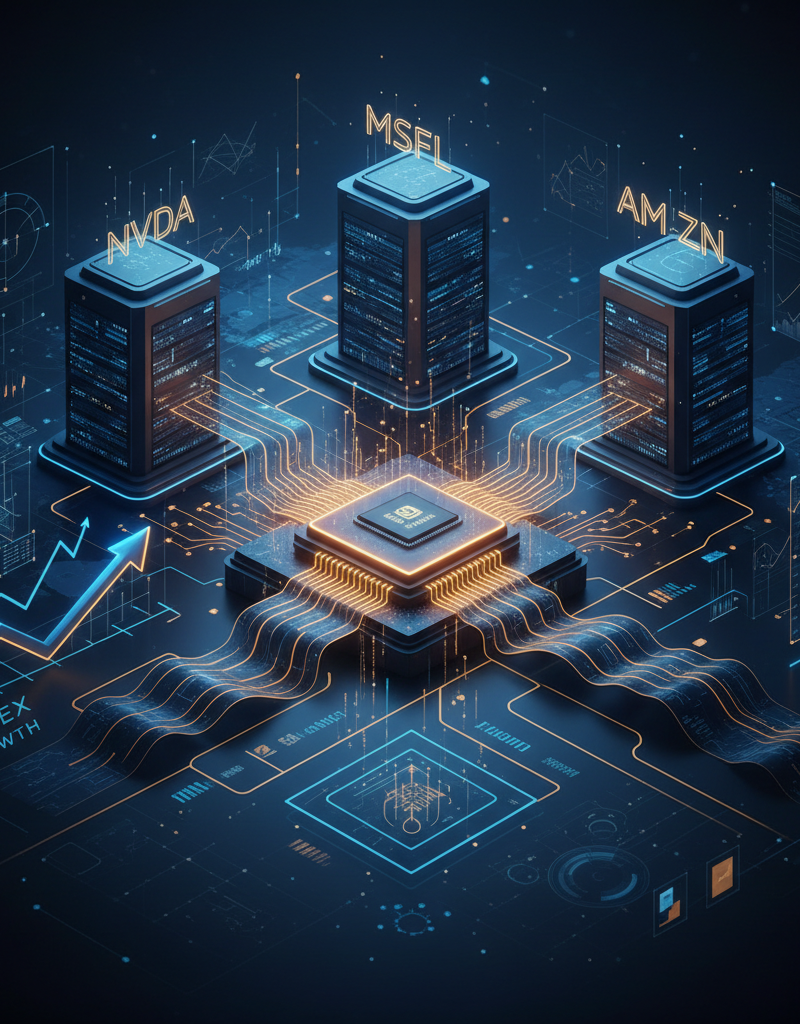
Infrastructure wins when agents scale: GPUs, inference chips and cloud orchestration matter. Expect sustained investor interest in companies that own model distribution, developer platforms and data connectors.
At the same time, smooth integrations into daily workflows will let user-facing apps capture subscription and platform revenue. Network effects and first-mover integrations will matter more than elegant pitch decks.
Risks and the darker corners
Agents amplify both gains and failures. A few immediate problems to watch:
- Confident-but-wrong actions: an agent that executes an incorrect instruction at scale is worse than a mistaken suggestion.
- Privacy creep: deep app permissions are required; defaults will shape adoption much more than feature lists.
- Monoculture and lock-in: if most agents run on a few models or platforms, switching costs can rise fast.
None of these are fatal, but they’re tricky and easy to underestimate.
A brief historical lens
Think of agents as a hybrid of two past waves: the consumer convenience of the mobile app boom and the back-office automation of RPA. They bring immediacy and orchestration together—which is why uptake could be both rapid and sticky.
What to watch next
- Product signals: enterprise calendar and email integrations rolling out at scale.
- Monetization: subscription and pay-per-use vs ad- or data-driven business models.
- Regulation: data-protection rules that push inference local or require explicit connector consent.
- Procurement behavior: how enterprises write SLAs and who they let touch the data.
What this means for users and investors
Agents are one of the biggest UI shifts in knowledge work since the smartphone. They can raise productivity ceilings, introduce new privacy trade-offs, and shift value toward whoever owns the connectors and the inference stack. Savvy users will start by testing permissions and demanding transparency. Savvy investors will watch integrations, recurring revenue and whether a vendor controls any part of the model-to-data path.
If you care about both productivity and privacy, treat agents like power tools: incredibly useful when you know how they work, and risky when you don't.