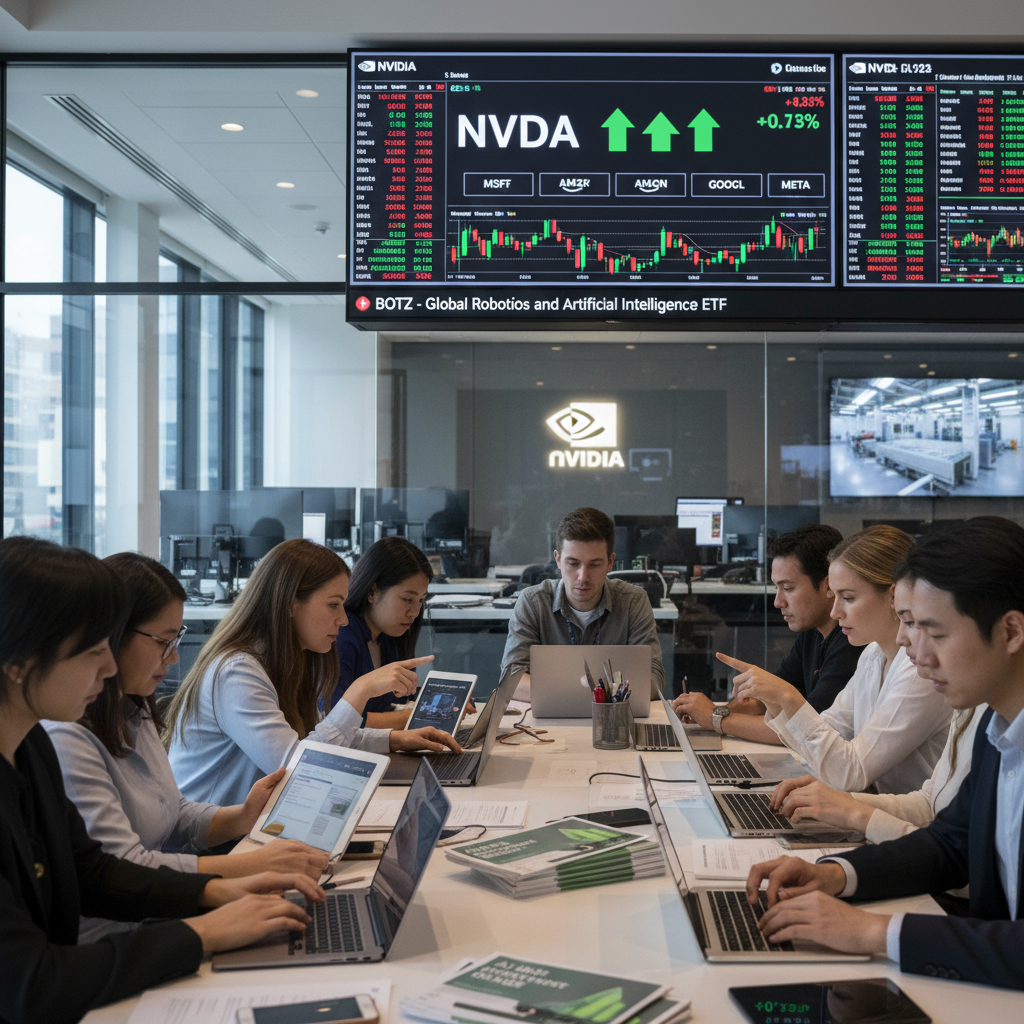
The headline: everyone wants AI exposure — and most of them are getting Nvidia.
You’ve seen the charts: blistering flows into AI-themed ETFs and funds, daily social posts celebrating the latest breakout, broker-app banners promising easy AI exposure. That flood of retail and ETF money has a simple effect: concentration. A handful of companies — and one chipmaker above all — now anchor what gets sold as “AI.”
Why it matters
- Weight of a single name. Several AI ETFs and thematic funds put Nvidia (NVDA) at the top, often 20–40% of the portfolio. When an ETF is essentially a NVDA trade, diversification becomes marketing.
- Volatility by association. Build a portfolio around one high-multiple stock and expect sharp two-way moves tied to earnings, supply updates, or data-center commentary. It’s not subtle.
- Signal vs. noise. Much retail flow chases momentum and headlines, not genuinely differentiated exposures like edge AI, inference software, or semiconductor equipment. That’s a different bet altogether.
What’s interesting is how familiar this looks. In the late 1990s tech boom a few winners pulled funds along with them — and when the winners stumbled, so did the funds. The present twist: AI has an industrial backbone now. Hardware capacity, data-center contracts and chip manufacturing cycles matter as much as product adoption.
Who’s actually capturing the economics?
- Nvidia (NVDA): The default inference and training GPU provider. H100s, Grace families, CUDA and the surrounding software stack create a tightly interwoven ecosystem — a real competitive advantage, and one that’s been priced in.
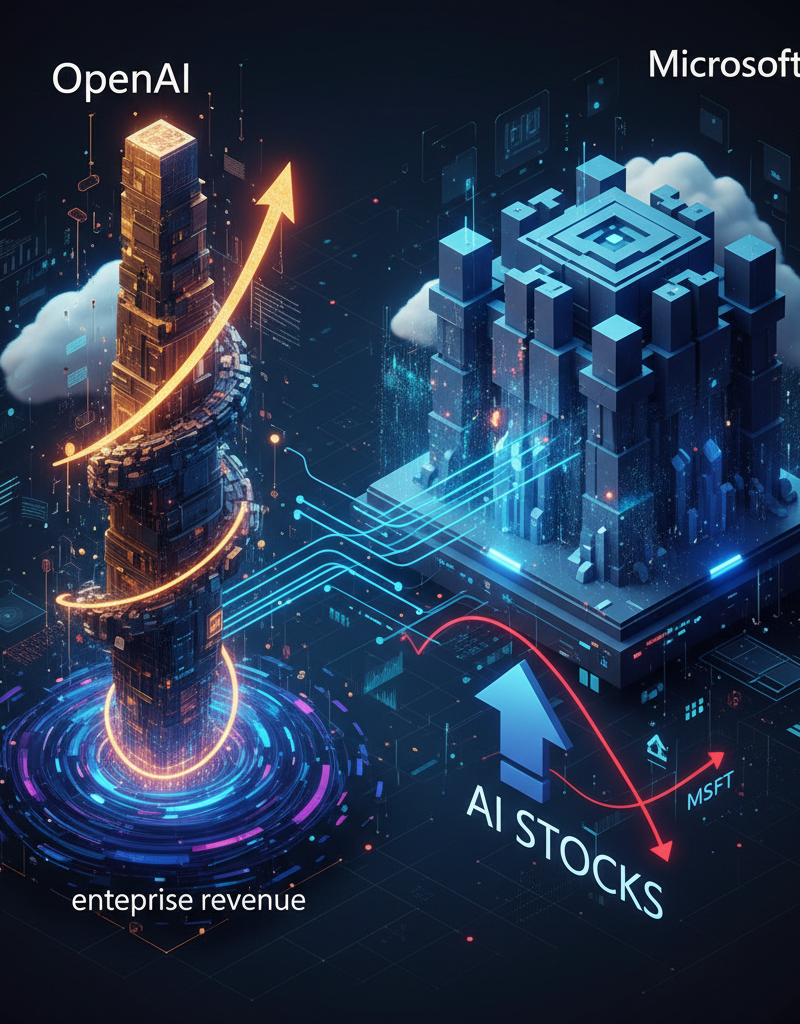
- Microsoft (MSFT) and Amazon (AMZN): Cloud platforms that package AI into services and, increasingly, custom silicon. They’re where much enterprise spend ends up.
- Alphabet (GOOG) and Meta (META): Heavy R&D, massive training runs, and ongoing experiments to turn models into revenue.
Quieter, durable plays deserve attention too: TSMC (TSM) on the foundry side, ASML in lithography, and a set of software firms building model-ops, deployment and observability tools. They don’t headline as often, but they’re part of the chain and less likely to be priced purely for hype.
Trade-offs to keep in mind
- ETFs are convenient — but that convenience hides concentration. Many thematic funds overweight a few winners. Active managers who can trim the hottest names or rotate into underowned suppliers may avoid big drawdowns.
- Hardware-cycle risk. Demand for AI is huge, but capex cycles can stall if cloud customers pause purchases. Chip-makers face asymmetric downside in that scenario.
- Regulatory and product risk. Antitrust scrutiny, tightening privacy rules, or the commoditization of baseline models could knock multiples around.
Practical checks for investors
- Scan the top-10 holdings of any AI ETF. If one name is >25%, you’re basically long that stock, not a diversified theme.
- Compare expense ratios and overlap with broad tech ETFs. You may already own the exposure, cheaper.
- Watch capex and data-center guidance from cloud providers — they’re the demand engine, and their cadence matters more than pure hype.
- Think about spreading risk across the stack: software, IP, foundries, and equipment, rather than only GPUs.
A contrarian note
Not every small-cap AI company is vaporware. Some niche software vendors that enable model deployment and observability are quietly profitable and lower-beta than GPU makers. If you’re patient, those businesses can compound while the headlines chase the next megacap move.
My read: buying “AI” today often means buying Nvidia plus a collection of other names that may or may not have durable moats. Fine, if you accept concentrated bets and the volatility that comes with them. But that isn’t the same as owning a broad, durable exposure to the changes AI will bring. For most investors, a blend of broad tech exposure, selective thematic tilts, and attention to hardware cycles will probably be wiser than piling into the ETF that behaves like a NVDA lever.