What changed — and why you should care
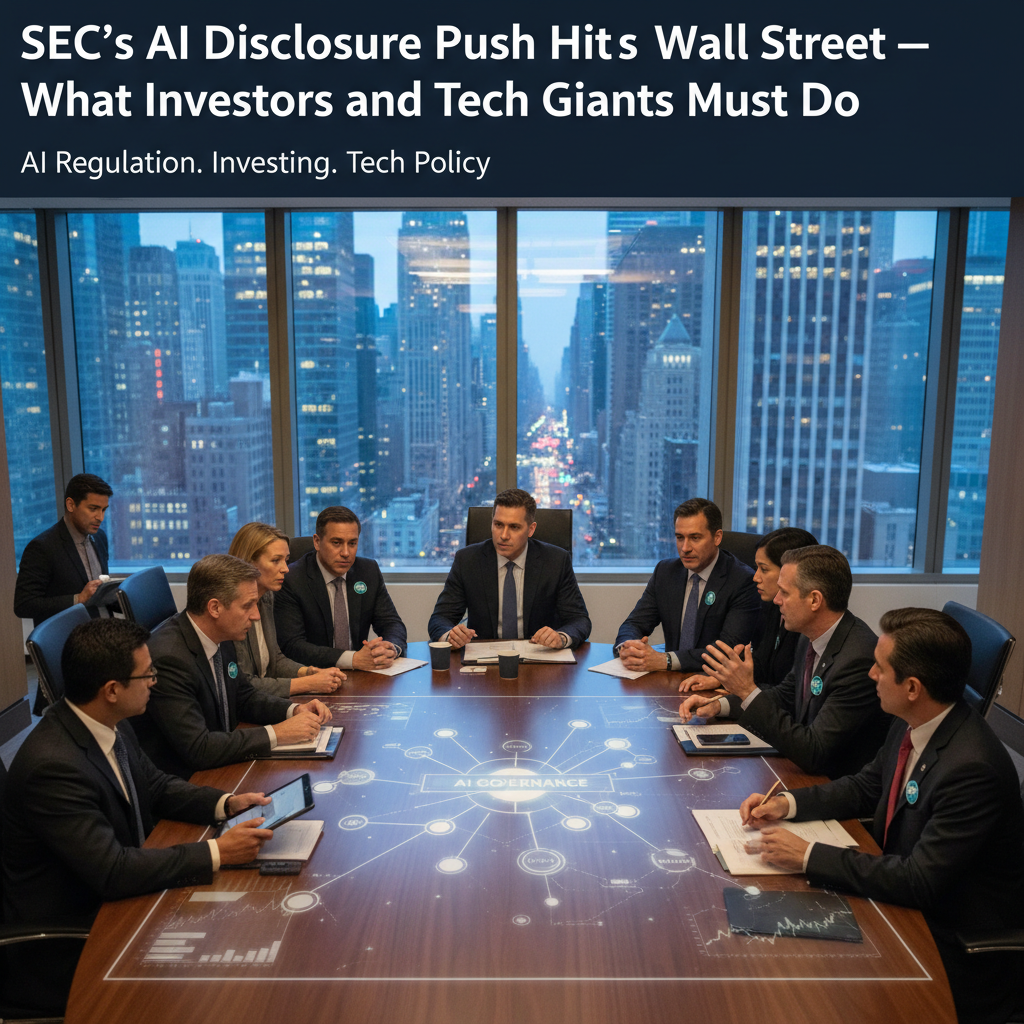
The SEC has shifted from asking questions to proposing rules. Early probes about risk controls have turned into draft expectations: if a model meaningfully affects investment decisions, pricing, or client outcomes, firms will likely have to disclose that fact. For investors, regulators and vendors this changes the calculus. Performance alone won’t cut it; transparency, governance and the ability to audit models are moving to the same level of importance.
A brief history for context
Algorithmic risk has been with us for a while. The 2010 Flash Crash showed how automation can amplify shocks. The arrival of large language models in 2022 pushed these systems deeper into client-facing and investment workflows — customer service, research, even signal generation. The current SEC push reads less like a surprise and more like catching up: regulators want to close governance gaps before a high-profile AI mishap causes market‑wide fallout.
What the draft expectations require
The draft centers on three practical requirements:
- Disclosure: be clear when AI meaningfully shapes trading signals, advice, or portfolio decisions.
- Governance: maintain model inventories, version controls and a named senior officer responsible for oversight.
- Auditability: keep logs, test records and provenance for the training data behind any model that matters.
Expect phased rollouts. Big broker‑dealers and advisers will face earlier deadlines; smaller firms will likely see scaled obligations.
Winners, losers — and the invisible cost
Winners are predictable: infrastructure vendors — chips, clouds and firms that sell explainability, observability and provenance tooling — will see stronger demand. Companies that can show both model performance and governance will attract capital.
Losers are the nimble shops that depend on opaque third‑party models. Small fintechs and boutique quants face a hard choice: preserve agility or take on heavier compliance burdens.
There’s also a hidden tax. Slower deployments, higher legal and audit bills, and more conservative trading after extra checks will all reduce short‑term alpha. That friction is real, even if it buys resilience.
How this compares abroad and across states
This isn’t only a U.S. story. The EU AI Act already imposes risk‑based controls and transparency, so many European firms are a step ahead on playbooks. Meanwhile, state-level rules targeting consumer-facing AI add patchiness for national players. Expect fragmentation and compliance complexity.
Concrete scenarios worth watching
- A hedge fund using a black‑box third‑party LLM misses a regime shift. Losses follow, and investors sue for nondisclosure.
- A robo‑adviser that relies on proprietary models to rebalance portfolios must now explain, in plain language, the model’s role in client materials.
These situations force firms to revisit vendor contracts, tighten data provenance, and rethink who bears liability.
Pushback — and the balancing act
Industry groups will argue that broad disclosure undermines trade secrets and competitiveness. That objection has merit. At the same time, investors need to know when machine judgment materially shapes outcomes. The policy challenge is to protect sensitive IP while providing enough information for meaningful oversight. Good rules could thread that needle; clumsy ones will either choke innovation or leave investors exposed.
Practical moves for executives and investors
- Assemble a model inventory and classify models by how materially they affect financial outcomes.
- Rewrite vendor contracts to ensure audit rights and traceability of training data.
- Run routine red teams and backtests that simulate market stress, not just benign conditions.
- Budget for compliance: legal fees, audit work and observability tooling belong in operating plans from now on.
The upshot
Regulation won’t stop AI on Wall Street, but it will change incentives. Firms that combine sophisticated modeling with strong governance and explainability will pull in capital; those that treat compliance as an afterthought risk fines, lawsuits and reputational damage. For investors, this is a reframing of operational risk — governance will matter as much as speed.
What to watch next
- Final SEC rule text and the phased compliance schedule.
- Industry standards emerging from trade groups and auditors.
- Growth of an AI assurance market — think the way cybersecurity insurance matured.
This rulemaking arc will separate firms that can use AI safely from those that pay for shortcuts. Expect bumps along the way.