Lead
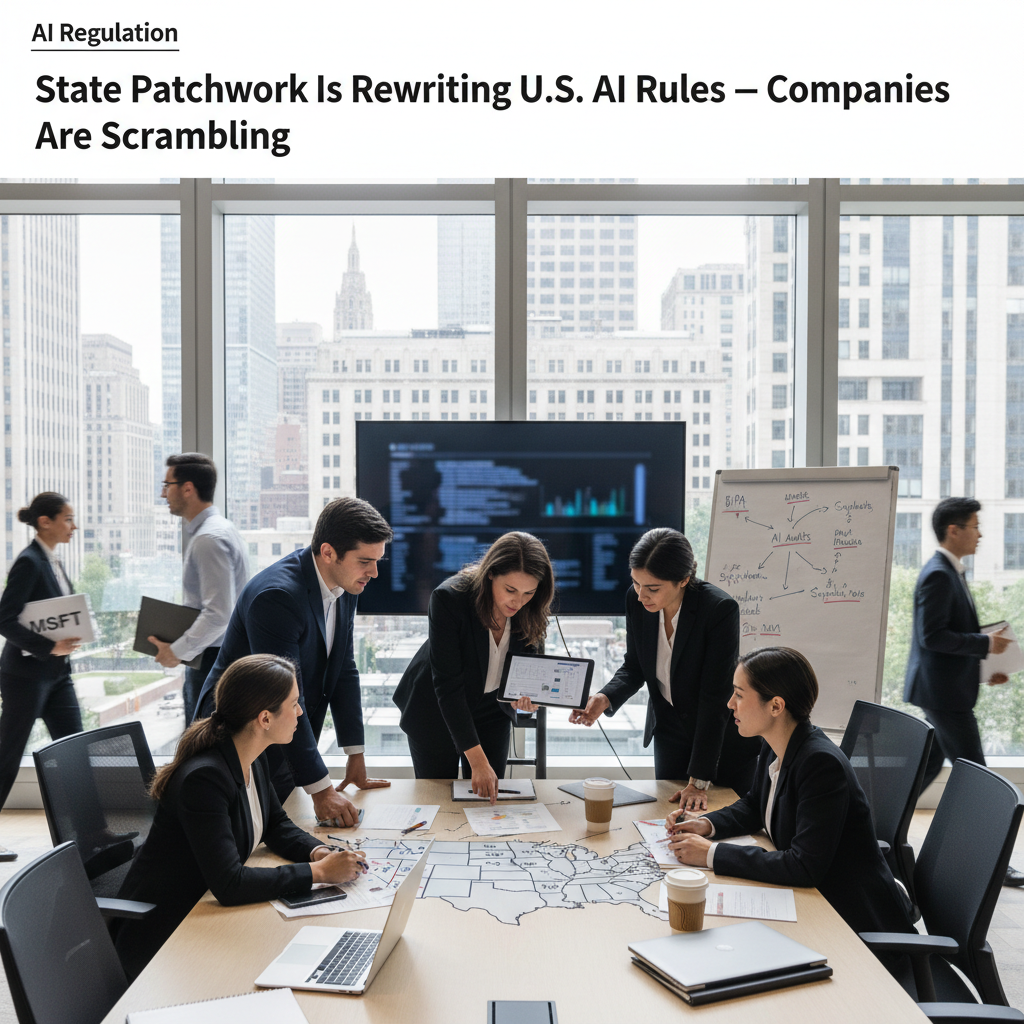
For companies building or buying AI, the biggest compliance headache in 2026 may not come from Washington at all. Expect it from Sacramento, Albany and a scattering of city halls. With Congress gridlocked and a single federal framework still months or years away, states and municipalities are writing their own rules. The result is a patchwork already steering product roadmaps, hiring practices and dealmaking.
How rules are changing on the ground
- Local hiring and audit mandates. A growing number of cities require bias audits or explicit notices when employers use automated decision tools for hiring. What was an HR automation feature now becomes a legal checklist — and a potential liability for vendors.
- Biometric and privacy litigation. Old statutes, like biometric privacy laws, are being applied to facial recognition and identity features embedded in services. That’s producing lawsuits and forcing contract redrafts.
- Disclosure for synthetic content. Several states are debating or passing requirements to label AI-generated content and deepfakes. Platforms and advertisers will need new operational steps to comply.
- Limits on government procurement. Some states are banning or conditioning their use of certain surveillance tools. Vendors that depend on public-sector contracts are already asking how to adapt.
What's interesting here is the echo of early GDPR days: fragmented rules, a rush to the strictest standard, frantic legal advice. But this isn’t only privacy. Regulation now cuts across products, employment law, consumer protection and securities rules. That widens the compliance front and tilts the table toward bigger incumbents who can absorb audits and legal teams. Startups, by contrast, face buyer gatekeeping and cloud-provider constraints.
Real implications for companies and investors
- Compliance budgets will climb. Firms need models that can be audited, provenance metadata, and sometimes external bias assessments for specific jurisdictions. This is engineering work, not a neat legal line item.
- Contracts get messier. Customers ask for geography-specific warranties, indemnities and data-use limits. Expect longer M&A diligence and more price friction.
- Consolidation pressure rises. Buyers prefer vendors with compliance baked in. That nudges the market toward a few dominant platform providers.
- Timing matters for finance firms. Banks and fintechs using automated credit decisions must reconcile state-by-state consumer protections with uncertain federal guardrails. Not trivial.
A short, practical checklist for C-suite and legal teams
- Map where models are used and where users or customers live.
- Prioritize bias audits for high-stakes systems: hiring, lending, parole, health and insurance.
- Add provenance tracking: dataset sources, model versions and markers for synthetic content.
- Revisit vendor contracts and cloud SLAs for jurisdictional carve-outs and obligations.
- Talk to state regulators early. Yes, federal advocacy is useful — but it moves slowly.
Counterpoints and caveats
Not everyone thinks the patchwork is all bad. Privacy and civil-liberties groups argue state action fills a democratic gap and can push companies toward safer products. Some startups are already turning compliance into a sales point, touting auditability and transparency. And targeted local rules could serve as experiments — small-scale regulations that a future federal law might scale. In practice, though, the story is messier: experiments produce uneven results and winners can entrench.
A historical analogy, with a twist
Remember the post-Enron, Sarbanes-Oxley era? The shock improved governance but also raised costs and favored big firms. Expect something similar here — except the technology is embedded in consumer apps, government decisions and markets all at once. That speeds both potential harm and regulatory reaction.
Practical takeaway
A national law would simplify things, but that horizon is uncertain. Meanwhile, companies that treat state and local rules as the floor — building transparency, logging and bias testing into products from the start — will avoid costly retrofits. For investors, teams that understand regulation and startups that design for audits look safer in a world where rules can change county by county.
What I’ll be watching next
- State bills that mandate provenance metadata for synthetic media.
- Test cases under biometric privacy laws that could redefine how face-based features are sold.
- Procurement trends: will states consolidate on a handful of vetted vendors, or keep the market open?
This is no longer a compliance footnote. It is the operating environment.